A tire can have full tread, never touch the road, and still be several years old. That is the point behind the question, what does NOS tire mean? In the tire trade, NOS usually means New Old Stock: unused inventory manufactured in an earlier production run and held in storage before being offered for sale.
For buyers sourcing military, commercial truck, agricultural, industrial, off-road, or specialty tires, NOS can be a practical way to find a discontinued size, matching tread, military-spec casing, or hard-to-source wheel-and-tire combination. It can also be a poor fit if the tire’s storage history, age, or condition has not been properly checked. “New” describes prior use. It does not automatically describe current production.
What Does NOS Tire Mean in Practical Terms?
New Old Stock tires were made for a previous order, contract, product line, warehouse program, or surplus release. They may have sat in a dealer warehouse, government inventory, fleet stockroom, manufacturer distribution center, or covered storage facility. The tire was not mounted and run in normal service, but it may have been stored for years.
NOS is common in specialty inventory because demand is not always steady. A military vehicle tire, flotation tire, aircraft tire, OTR tire, or older commercial size may be produced in batches and kept until the right buyer needs it. When a contract ends, equipment is retired, or a warehouse is liquidated, that inventory can enter the surplus market.
The term does not mean a tire is obsolete, unsafe, or damaged. It means the buyer needs to look beyond tread depth and confirm the actual condition. A properly stored NOS tire may be an excellent purchase. A poorly stored tire may show age-related deterioration despite having never been used.
NOS also has another meaning in automotive culture: nitrous oxide systems. In tire inventory, “NOS tire” almost always refers to New Old Stock, not nitrous.
NOS Tires vs. Used Tires vs. Current Production
A used tire has been mounted and operated. Its condition is evaluated through remaining tread, repairs, casing health, uneven wear, sidewall damage, bead condition, and prior service history. A used tire may be a sound value, but it has accumulated real-world stress.
An NOS tire generally has full or near-full original tread and no road mileage. It should retain its original manufacturing features, such as molding nibs in some cases, factory paint markings, and an unused bead area. It may still have cosmetic warehouse dust, handling marks, or light surface scuffing from moving and stacking.
A current-production tire is recently manufactured and sold through the normal supply chain. It is often the simplest option when the exact size and specification remain available. The trade-off is price and availability. Specialty tires may carry long lead times, minimum order quantities, or may no longer be produced at all.
For a restoration project, NOS can preserve the correct period tread pattern or original fitment. For a contractor with an older machine, it may be the only realistic way to get a matching tire quickly. For a fleet that runs daily at highway speed, the decision may favor newer production, depending on service demands, manufacturer guidance, and the tire’s date code.
The DOT Date Code Matters
Every road-going tire sold for use in the United States carries a DOT tire identification number on at least one sidewall. The final four digits identify the week and year of manufacture. For example, a code ending in 2321 was made in the 23rd week of 2021.
That date tells you when the tire was built, not when it was placed into service. A tire made in 2018 and stored indoors is different from a tire made in 2018 that spent years mounted on a vehicle in sun, heat, and changing loads. Still, the manufacturing date is central to evaluating NOS inventory.
Some specialty, agricultural, industrial, and off-road tires are used in conditions where fitment, ply rating, load capacity, and casing condition matter more than a simple calendar rule. Highway service brings different heat cycles, speeds, and liability considerations. There is no substitute for matching the tire’s age and condition to the job it will do.
If the full DOT code is only visible on the inward-facing sidewall after mounting, ask for the available date information before purchase or plan to verify it during installation. Buyers ordering multiple tires should also ask whether the date codes are matched or from mixed production periods.
Storage Can Make or Break an NOS Tire
Storage conditions have a major effect on rubber. Tires last best when kept clean, dry, covered, and away from direct sunlight, ozone sources, petroleum products, and major temperature swings. Electric motors, welding equipment, battery charging areas, and certain chemical environments can expose rubber to ozone or contaminants that accelerate degradation.
A tire stored upright in a controlled warehouse is generally a better prospect than one stored outdoors under a tarp. Outdoor storage can expose sidewalls to ultraviolet light, standing water, heat, and repeated freeze-thaw cycles. Even if the tread looks untouched, the rubber compound can harden or develop cracking.
Do not judge a surplus tire from a single tread photo. Ask about storage location and handling. Clear photos of both sidewalls, the bead area, tread blocks, and the DOT code are more useful than a general statement that the tire is “new.” For a high-value set or a tire intended for demanding service, a hands-on inspection by a qualified tire professional is money well spent.
What to Inspect Before Buying NOS Tires
NOS inventory should be evaluated like specialized equipment, not like a generic consumer tire. Confirm the exact size, load range or ply rating, speed symbol where applicable, tread design, rim width requirements, and any tube-type or tubeless requirement. A correct-looking tire can still be wrong for the wheel, axle load, or application.
Before committing to a purchase, verify these points:
- The DOT date code and whether all tires in the order are from similar production periods.
- The condition of both sidewalls, including dry cracking, weather checking, cuts, bulges, flat spots, and discoloration.
- The bead area for damage, distortion, corrosion transfer, or signs that the tire was previously mounted.
- The storage history, including whether the tires were kept indoors and protected from sunlight and chemicals.
- The tire’s fitment details: overall diameter, section width, load rating, approved rim range, tread type, and intended service.
Sidewall cracking deserves special attention. Light mold lines are normal and are not cracks. Fine surface checking, deep cracks around lettering, cracking between tread blocks, or damage near the bead can signal a tire that needs further evaluation or should be avoided for the intended application.
For military and heavy-duty inventory, check for markings that affect your purchase decision. Some tires are non-directional, while others must be mounted according to a directional arrow. Some are designed for tube use, central tire inflation systems, run-flat assemblies, or specific multipiece wheel arrangements. Those details matter more than whether the tire is labeled NOS.
When NOS Is a Strong Buy
NOS is often a strong option when you need an uncommon tire that is no longer in regular production. It can make sense for military vehicle collectors seeking correct equipment, farms keeping older implements in operation, industrial users needing a specific carcass or lug pattern, and tire dealers filling a customer’s difficult fitment request.
It can also be useful for matching an existing tire. Replacing one damaged tire on an older machine may be more practical with a surplus match than replacing an entire set. That said, match diameter and rolling circumference carefully, especially on four-wheel-drive equipment, dual assemblies, and vehicles with differentials that are sensitive to tire size variation.
Price is another reason buyers look at NOS. Surplus inventory can offer real value compared with scarce new production, particularly in commercial and specialty categories. The best value is not always the lowest sticker price. Freight, mounting requirements, tube and flap needs, wheel compatibility, and the cost of downtime all belong in the calculation.
When to Pass on an NOS Tire
Walk away when a seller cannot provide basic size, condition, and date information for a tire intended for serious service. Be cautious with visible cracking, questionable storage, bead damage, or tires that have been exposed outdoors for an unknown period. Full tread does not correct structural concerns.
NOS may also be the wrong choice when your application runs long highway miles, carries maximum rated loads every day, or operates at sustained high speeds. In those cases, recent production may offer more confidence and easier access to manufacturer support. The same is true when a matched set is required but only one or two surplus tires are available.
For aircraft, commercial transport, and other regulated applications, follow the applicable manufacturer, operator, and regulatory requirements. A tire’s NOS status does not override inspection standards, approved fitment, retread policy, or service-life procedures.
Before you order, treat the tire’s date code, storage record, and fitment specs as part of the product description. The right NOS tire can keep a hard-working machine or rare vehicle moving without paying current-production prices. The wrong one can turn a bargain into downtime before it ever leaves the shop.


 20x10 Steel Beadlock Wheel
1 × $245.00
20x10 Steel Beadlock Wheel
1 × $245.00 
 14.00R20 Michelin XL
1 × $400.00
14.00R20 Michelin XL
1 × $400.00 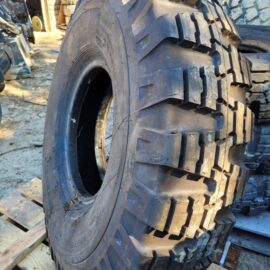 14.00-20 General
1 × $425.00
14.00-20 General
1 × $425.00