

Uncategorized
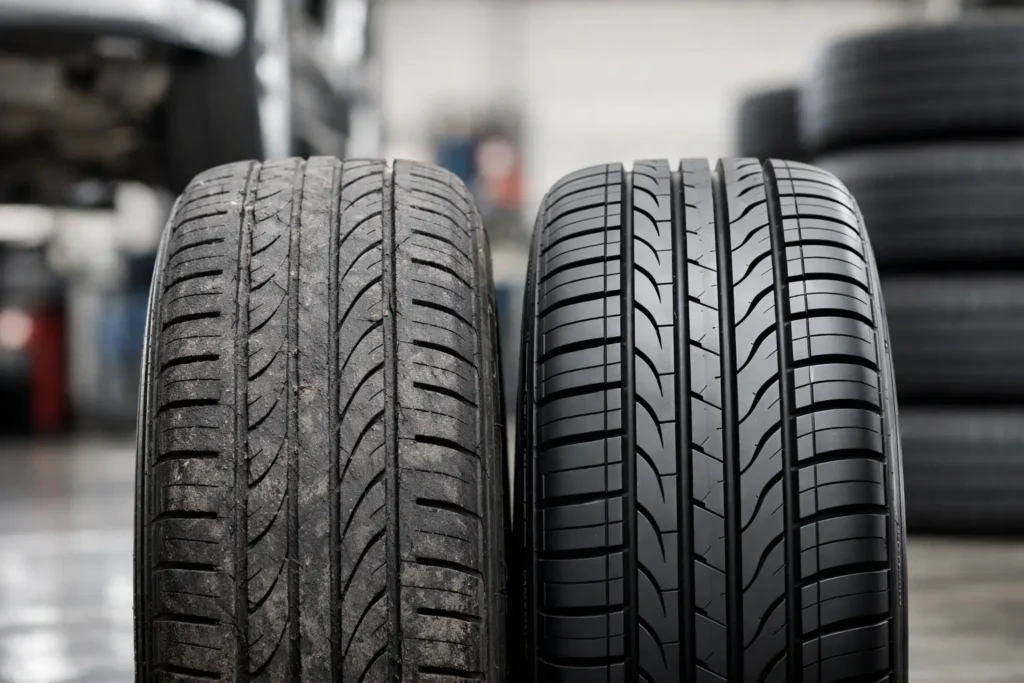
Used Tires Versus New Tires: Which Fits?
Jun
A tire buyer usually knows the real question before the quote even comes back. It is not just price. It is whether used tires versus new tires makes sense for the job, the equipment, and the risk you can actually afford to carry.
That question matters more in surplus, commercial, off-road, agricultural, and specialty tire categories than it does in everyday passenger car shopping. A highway tractor, a skid steer, a military truck, or a farm rig does not get judged by showroom logic. It gets judged by load, terrain, service hours, downtime, and whether the tire you need is even available when the machine is parked and waiting.
Used tires versus new tires depends on the job
If you are buying for a pickup that stays on pavement and sees family duty, new is usually the cleaner answer. If you are buying for a project truck, a yard trailer, an off-road rig, a military vehicle restoration, or equipment that needs a hard-to-find size fast, used may be the practical answer.
That is the core difference. New tires buy you maximum tread life, a full service history from day one, and fewer unknowns. Used tires buy you lower entry cost, possible access to discontinued or specialty sizes, and a way to keep equipment moving without tying up unnecessary cash.
Neither option is automatically better. The right choice depends on the application, how hard the tire will be worked, and how much uncertainty your operation can tolerate.
When new tires earn the higher price
New tires make the most sense when failure cost is high. If a tire problem can shut down a route, delay a delivery, sideline a crew, or create a safety issue on public roads, paying more upfront often saves money later.
You are getting full original tread depth. You also know the tire has not been exposed to unknown storage conditions, impact damage, poor inflation practices, or previous repairs unless it is older stock with disclosed age. For fleets and operators who track maintenance carefully, that clean starting point matters.
New tires also tend to be the better fit for high-mileage use. A commercial truck running steady pavement miles can justify the higher purchase price because tread life and retread value may pencil out better over time. The same goes for equipment that runs daily and cannot afford surprise replacements in the middle of a work cycle.
Then there is consistency. If you need multiple units with matching tread patterns, uniform wear expectations, and predictable service intervals, new inventory is easier to standardize around. That matters for fleets, resellers, and buyers trying to keep maintenance planning tight.
Where used tires make solid business sense
Used tires are not just a budget fallback. In many categories, they are a practical sourcing tool.
If you are dealing with surplus wheels, military applications, agricultural fitments, off-road builds, or older commercial equipment, new replacement options may be limited, expensive, or completely unavailable. A quality used tire can solve a fitment problem that a standard retail tire dealer cannot solve at all.
Used also makes sense when the equipment itself does not justify a premium tire. A farm wagon, yard truck, low-speed industrial machine, or restoration project may need a serviceable tire, not maximum tread life at top retail pricing. In those cases, buying new can be overkill.
There is also the simple math of cash flow. Not every buyer needs the longest possible life from every casing. Sometimes the priority is getting a machine back to work this week without overspending on an asset that runs limited hours. A lower-cost used tire can free up budget for brakes, hydraulics, suspension, or other repairs that are more urgent.
That is especially true in niche inventory markets, where recognized brands in used condition can still offer serious value compared with buying lesser-quality alternatives just because they are technically new.
The real risks with used tires
The problem with used tires is not that they are used. The problem is that condition can vary a lot.
A good used tire has measurable remaining tread, a sound casing, and no issues that make it unfit for the intended service. A bad used tire may have irregular wear, weather checking, sidewall damage, prior repairs in questionable areas, impact breaks, or internal casing problems that are not obvious at first glance.
This is why condition descriptions matter. Buyers should pay attention to tread depth, age when available, prior service type, and visible defects. A tire pulled from controlled use with even wear is a different product than a heavily stressed casing with a rough history.
Application matters here too. A used tire that is acceptable for low-speed off-road or yard use may not be the right choice for steer position highway service. Those are not the same risk category, and they should not be priced or evaluated the same way.
For buyers who know what they are looking at, used inventory can be a strong value. For buyers who treat all used tires as equal, it can get expensive fast.
How to compare used tires versus new tires on value
Price alone is the wrong metric. Cost per remaining service hour, cost per mile, and failure risk are more useful.
A new tire that costs twice as much but delivers three times the working life may be the better buy. On the other hand, a used tire at a fraction of the cost may be the smarter purchase if the equipment only runs seasonally or in limited-duty conditions.
You also need to factor in availability. A cheap tire is not cheap if it keeps a truck, tractor, or trailer parked for two extra weeks while you hunt down the right size. In specialized categories, inventory access has value of its own.
This is one reason surplus-focused sellers matter in the market. A source like MilitaryTires.ca is built around hard-to-find inventory, including both used and new old stock, which gives buyers more room to match condition and price to the actual job instead of forcing a one-size-fits-all purchase.
What buyers should inspect before making the call
Whether you are buying one tire or a truckload, a few checks tell you a lot.
Start with the basics: size, load rating, speed rating if relevant, tread pattern, and overall application. Then look harder at the casing. Check for sidewall cracking, exposed cords, uneven shoulder wear, puncture repairs, chunking, bead damage, and signs of underinflation or overloading in prior service.
For used inventory, ask how much tread is left in terms that can be measured, not guessed. Ask whether the tire came from fleet service, off-road use, military surplus, or a mixed source. If the seller knows the history, that information helps. If they do not, the condition inspection matters even more.
For new inventory, especially surplus or new old stock, the tire may be unused but not freshly manufactured. That does not automatically make it a bad buy, but storage conditions and intended application should be part of the decision.
Which option fits common applications
For long-haul highway service, new tires usually make the strongest case because reliability, tread life, and consistent wear matter more than initial savings. For local vocational trucks, the answer can go either way depending on route severity and downtime tolerance.
For agricultural and industrial equipment, used tires often make more sense than buyers expect. Many machines run lower annual mileage, and specialty fitment can outweigh the benefits of paying top dollar for new. The same goes for military vehicle restorations and older off-road platforms where exact replacements are limited.
For trailers, yard equipment, and secondary units, used can be a very efficient option if the casing condition is right. For steer tires and critical high-speed road positions, buyers should be more conservative. That does not mean used is never appropriate. It means standards need to be higher.
The best choice is the one that matches your risk tolerance
Some buyers want maximum lifespan and minimum uncertainty. They should lean new. Others are managing mixed equipment, specialty applications, or hard budget limits and need workable inventory now. They should not rule out used just because the word sounds second-best.
The smart move is to buy the tire that fits the machine, the service, and the consequences of failure. If the tire is mission-critical, heavily loaded, and road-driven at speed, new often justifies itself. If the tire is for limited use, off-road work, rare fitment, or cost-controlled equipment, used can be the better piece of business.
The market is full of buyers who waste money in both directions – overspending on premium new tires for low-demand jobs, or gambling on poor used casings where reliability matters. The better approach is simpler: buy for the work, not for the label. That is how tire inventory turns into uptime instead of guesswork.
