

Uncategorized
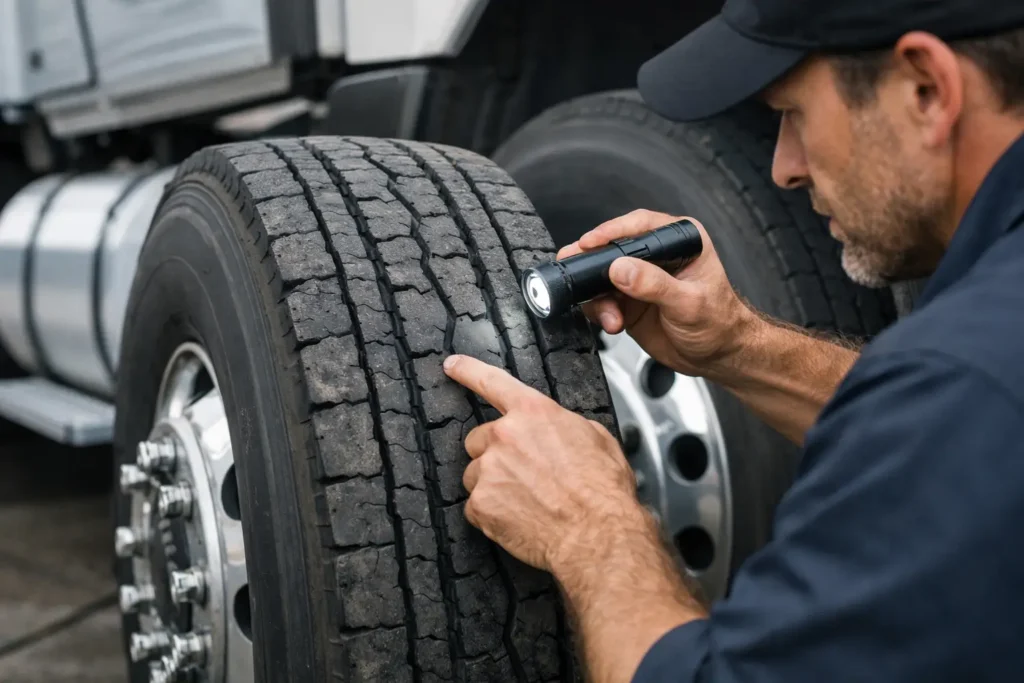
How to Inspect Used Truck Tires Right
Jun
A used truck tire can look serviceable from ten feet away and still be a bad buy. That is the whole reason knowing how to inspect used truck tires matters. If you are buying for a fleet, a farm truck, a dump trailer, a service body, or a single off-road build, the wrong casing costs more than the discount saves.
Used inventory can deliver real value, especially in hard-to-find sizes and commercial applications. But value only shows up when the tire still has casing integrity, usable tread, and the right spec for the job. A clean sidewall and a cheap price do not tell you enough.
How to inspect used truck tires before you buy
Start with the basics before you get pulled in by brand name or price. Confirm the tire size, load range, ply rating if listed, speed rating where relevant, and overall application. A used regional steer tire is not the same buy decision as a mixed-service drive tire or an off-road flotation tire.
If the tire does not match the vehicle’s load demand and intended service, the inspection stops there. Even a tire in decent condition is the wrong purchase if the capacity or tread type is wrong. Commercial buyers already know this, but it is where expensive mistakes still happen, especially when sourcing surplus or takeoff inventory.
After fitment, inspect the casing. The casing is the real asset in a used truck tire. Tread depth matters, but casing condition determines whether the tire can be run safely and whether it has any long-term value. Look at the tire in good light and inspect both sidewalls, the bead area, the shoulder, and the full tread face.
Check tread depth, but do not stop there
Tread depth is the first number most buyers ask about, and for good reason. More remaining tread usually means more usable life. Still, tread depth by itself can hide a lot.
Measure across multiple points, not just one spot that shows the deepest groove. Inner shoulder wear, outer shoulder scrub, or river wear across the tread can point to alignment issues, inflation problems, suspension wear, or previous service conditions that shortened casing life. If one area is significantly lower than the rest, the tire may not wear evenly in its next application either.
For highway truck use, watch for irregular wear patterns that suggest the tire was pulled for a reason. Feathering, cupping, diagonal wear, and one-sided shoulder wear all tell a story. Sometimes the story is about the truck, not the tire, but you are still buying the result.
Look closely for cuts, cracking, and exposed cords
This is where many used tires fail inspection. Small cosmetic scuffs are one thing. Deep cuts, weather checking, chunking, or exposed belts are another.
Sidewall cuts deserve extra attention because sidewall repairs are far more limited than tread-area repairs. A tire with a deep sidewall injury may hold air today and still be a poor commercial buy. Cracking also needs context. Light surface weathering can be acceptable on some surplus or older inventory, depending on intended use. Deep cracking around the sidewall flex zone, bead, or between tread blocks is a different risk level.
If cords or belts are visible anywhere, pass. The same goes for bulges, bubbles, or raised sections in the sidewall or tread. Those signs can indicate internal ply separation or impact damage, and that is not where you try to save money.
Inspect the sidewall markings and tire age
A proper used tire inspection includes reading the sidewall, not just looking at it. Verify the brand, model, size, load index, load range, and DOT code. The DOT date code tells you when the tire was manufactured.
Age is not an automatic disqualifier, but it changes the buying decision. A six-year-old tire stored well and used lightly may still be workable in some applications. An older tire with unknown storage history, visible ozone cracking, and commercial road use ahead of it is a different calculation.
This is where application matters. A buyer sourcing a slow-speed yard trailer tire may accept age that a fleet manager would reject for highway service. The inspection standard should match the real duty cycle, not wishful thinking.
Check for repairs and ask where they are
A proper repair in the tread area is not necessarily a deal breaker. A poor repair, multiple repairs, or a repair in the wrong area usually is.
Inspect the inside if possible. If you cannot inspect the interior liner, ask directly whether the tire has patches, plugs, section repairs, or previous puncture work. On commercial truck tires, the quality and location of the repair matter more than the fact that a repair exists. A professionally repaired tread puncture may still leave useful service life. A shoulder repair or questionable sidewall work should make you cautious fast.
Also look for signs of run-flat damage. A tire that was operated underinflated can have internal damage even if the outside still looks acceptable. Wrinkling near the sidewall, liner damage, excessive shoulder wear, or heat-related discoloration can all point in that direction.
Watch the bead area and inner liner
The bead area is easy to overlook and expensive to ignore. Damage here can create mounting issues, air leaks, or structural weakness. Inspect for torn rubber, wire damage, severe chafing, or deformation.
If the tire has been dismounted carelessly, the bead may show cuts or exposed bead wire. That does not always appear dramatic in photos, which is why detailed condition notes matter when buying remotely. On tubeless truck tires, the inner liner should also be checked for damage, patch quality, and signs of air migration or separation.
For wholesale and surplus buyers, this step matters even more. Inventory may come from fleet pull-offs, military takeoffs, mixed lots, or liquidation channels. That creates buying opportunities, but it also means condition can vary from tire to tire, even within the same size and brand line.
Match wear patterns to likely service history
A good used tire inspection is partly pattern recognition. The tire tells you how it was used.
Center wear often points to overinflation. Both shoulders worn down can point to underinflation. One shoulder worn harder than the other may suggest alignment issues. Heel-to-toe wear on lugs can show drive axle service. Scrub and tearing across lugs may indicate aggressive mixed-service or off-road use.
None of these signs automatically mean the tire is unusable. They do mean you should buy with clear expectations. A casing that lived a hard life on rough surfaces may still be fine for a lower-speed application, but it may not be the tire you want going back into heavy highway rotation.
Buying online or from photos only
If you are not inspecting in person, ask for close photos of the tread face, both sidewalls, bead area, and DOT code. Ask for actual tread depth, not just good tread. Ask whether the tire holds air, whether there are repairs, and whether there is any exposed cord, cracking, or irregular wear.
For niche inventory, surplus stock, or hard-to-source commercial sizes, experienced sellers make this easier by listing condition clearly. MilitaryTires.ca, for example, works in categories where buyers often care as much about size, casing type, and availability as they do about cosmetics. That is why detailed condition notes and application fitment matter more than polished presentation.
Red flags that should stop the deal
Some issues are not worth debating. Pass on used truck tires with visible cord, deep sidewall cuts, bulges, major bead damage, severe dry rot, or obvious separation. Be cautious with tires that show uneven wear severe enough to suggest structural stress, or with sellers who cannot provide basic age and condition details.
Also be careful with deals that only make sense if the tire has far more life left than the inspection supports. Price does not fix a bad casing. If the tire is near the end of its useful life, the cheaper purchase can still be the more expensive one once mounting, balancing, downtime, and replacement are factored in.
How to inspect used truck tires with the right buying standard
The best way to inspect used truck tires is to judge them against the actual job they need to do. A farm trailer, an off-road service truck, a commercial steer position, and a military vehicle restoration do not all require the same threshold. Buyers get into trouble when they use one standard for every application.
Be strict on structural condition. Be realistic on tread life. Be honest about service demands. That is how you separate usable inventory from false economy.
A good used tire is not just one that looks decent. It is one that fits the equipment, carries the load, shows sound casing condition, and still offers enough service life to justify the total cost. Buy with that standard, and the value is real.
