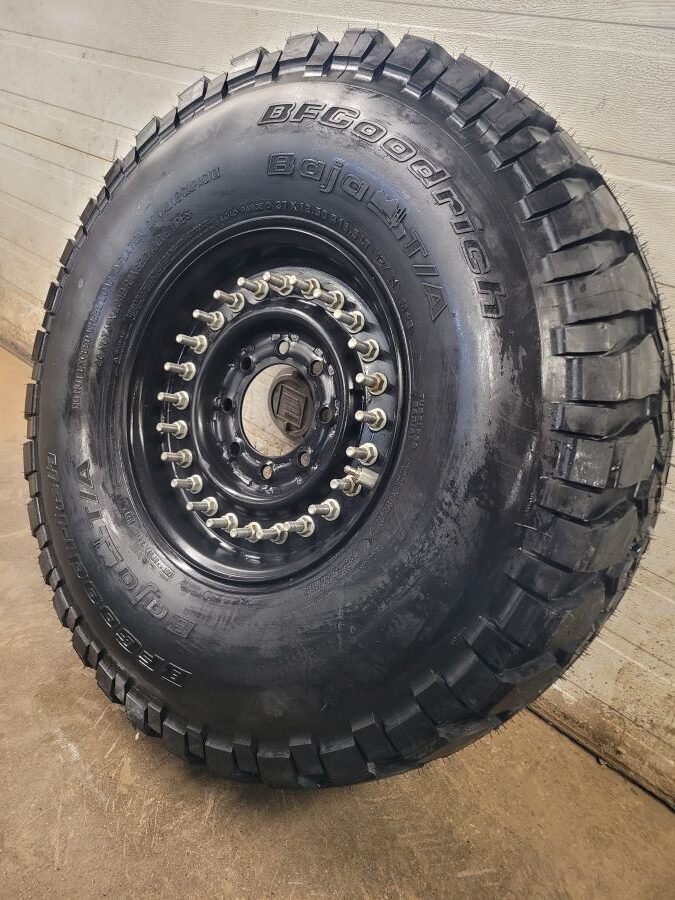
If you are looking at new old stock tires, you are probably not shopping for a basic commuter car. You are trying to solve a sourcing problem – a discontinued size, a military fitment, a restoration project, a farm application, or a specialty wheel and tire setup that regular retail channels do not carry. In that market, NOS inventory can be a smart buy. It can also be the wrong buy if you treat “new” as the whole story and ignore age, storage, and application.
What new old stock tires actually are
New old stock tires are unused tires that were manufactured years ago and then held in inventory without ever being sold into service. They are not used. They are not retreads. They are not takeoffs. They are old inventory that stayed on the shelf, in a warehouse, in military storage, or in surplus channels until they re-entered the market.
That distinction matters because condition and age are not the same thing. A tire can be physically unused and still be several years old. For some buyers, that is not a dealbreaker. For others, it should be.
In surplus and specialty categories, NOS stock exists because demand is uneven. Certain military sizes, aircraft tires, farm tires, industrial fitments, and older commercial applications were produced in batches, stored long term, and never moved through standard retail. When that inventory comes available, it fills a gap the mainstream market cannot.
Why buyers look for new old stock tires
The main reason is simple: availability. If you need an oddball size, a military-spec tire, or a tread pattern that has been out of regular production, NOS may be the only practical option short of changing wheels, changing axle setup, or abandoning an original-spec build.
That is especially true for military vehicle collectors, heavy equipment owners, ag users, and commercial buyers trying to keep older equipment running without expensive conversions. In those cases, the value is not just price. It is avoiding downtime and getting the correct fitment.
There is also a pricing angle. Surplus inventory often lands below the cost of newly manufactured specialty tires, assuming a new equivalent even exists. For wholesalers, resellers, and fleet buyers working on niche applications, that can make NOS attractive when the tire still fits the job and the storage history checks out.
When NOS tires make sense
The right use case depends on what the tire is going on and how hard that equipment is worked. A low-speed off-road application is different from a highway steer axle. A parade vehicle is different from a daily work truck. A static display aircraft is different from an aircraft in active service.
NOS tires usually make the most sense when original fitment matters, operating speeds are limited, replacement options are scarce, and the buyer understands how to evaluate age and condition. They can also make sense for equipment that sees seasonal or occasional use, where the priority is correct size and load capability rather than maximum service life from a fresh production run.
For restoration work, new old stock tires can be one of the few ways to stay close to original equipment without compromising appearance or changing the wheel setup. For farm, industrial, and military applications, they can be a practical way to keep equipment in service when modern retail channels do not carry what you need.
When NOS tires are the wrong choice
If the tire is going on a highway vehicle that runs at speed, carries consistent loads, or sees daily service, age becomes a much bigger concern. Rubber compounds age over time even if the tire has never been mounted. Internal materials can also be affected by storage conditions.
That does not mean every older unused tire is automatically bad. It means the margin for error gets smaller as speed, heat, and duty cycle go up. A buyer running commercial road miles should be a lot more cautious than a buyer fitting a low-use trailer or a collector vehicle that sees limited operation.
You should also be careful when the seller cannot clearly state the DOT date code, storage conditions, or condition details. In specialty surplus, specifics matter. Vague descriptions do not help when the product itself may have been in storage for years.
How to inspect new old stock tires before buying
Start with the DOT date code
The first check is the DOT date code. That tells you when the tire was manufactured. It does not tell you whether the tire is usable, but it does tell you its age. If a seller cannot provide the date code, ask again or move on.
Check storage history
A tire stored indoors, away from sunlight, ozone exposure, moisture, and temperature swings is a very different product from one that sat in poor conditions. Proper warehouse storage helps preserve unused tires. Bad storage speeds up deterioration.
Look for visible aging
Inspect for sidewall cracking, weather checking, bead damage, flat spotting, dry rot, distortion, and any signs that the casing shape is compromised. An unused tire can still be unsuitable if the rubber surface or structure shows age-related damage.
Confirm the application
Load range, ply rating, tread type, size, speed expectations, and actual service environment all matter. A tire that works for a yard truck may not be appropriate for a road-going truck. A military tread may be right for off-road use and wrong for regular highway use.
Ask whether the tire has ever been mounted
True NOS should be unused, but in surplus channels, terms are not always handled consistently. Make sure you know whether the tire is genuinely unmounted stock, a takeoff, or used inventory being sold alongside NOS stock.
Age versus condition – the real buying decision
A lot of buyers want a single rule, but this is where it depends. There is no honest way around that. Some older unused tires stored correctly may still be viable for the right application. Some younger tires stored badly are junk.
The reason buyers get into trouble is assuming that age alone decides everything or that “new” overrides age completely. Neither is true. Age gives you one part of the picture. Storage and intended use fill in the rest.
For specialty buyers, the better question is not “Are new old stock tires good or bad?” The better question is “Are these specific tires, with this date code and this storage history, right for this exact job?” That is the commercial way to look at it.
Why NOS tires stay relevant in surplus markets
In regular passenger tire retail, buyers expect current production and fast replacement cycles. In surplus and hard-to-find categories, the market works differently. Inventory depth matters more than model-year freshness when the alternative is no inventory at all.
That is why NOS stock continues to move in military, industrial, agricultural, and restoration channels. It solves fitment problems. It supports older equipment. It gives buyers access to tread designs and casing sizes that are no longer easy to source. For some applications, that is the whole game.
A seller with deep specialty inventory can offer choices the standard market cannot: NOS, used, takeoffs, rims, wheel assemblies, and discontinued fitments across multiple brands. That matters more than polished marketing if you are trying to get a machine back in service or complete a build without wasting weeks chasing one size.
Buying NOS tires without making an expensive mistake
Treat the purchase like a spec-driven inventory decision, not an impulse buy. Verify the date code. Verify condition. Verify storage history. Match the tire to the actual duty cycle. If you are buying in volume, ask whether the production dates are consistent across the lot.
It also pays to be realistic about expectations. NOS inventory is often attractive because it is available and priced competitively, not because it is identical to buying a fresh production tire from the factory this quarter. If you need maximum road-life performance on a high-speed daily-use application, current production may be the better call. If you need hard-to-find fitment, original-spec sizing, or a workable solution for specialty equipment, NOS may be exactly the right inventory.
At MilitaryTires.ca, that is the type of decision buyers make every day – balancing fitment, condition, price, and availability against real-world use.
The best purchase is the one that fits the machine, the job, and the risk level you can actually live with after the tire is mounted.


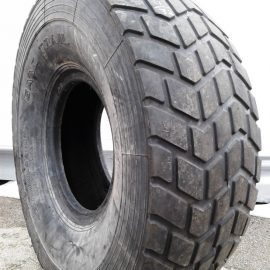 450/80R20 M.O.V. SAND TRAIL
1 × $100.00
450/80R20 M.O.V. SAND TRAIL
1 × $100.00 
 20x10 Beadlock 10 bolt Wheels/ 4000 axle series
1 × $340.00
20x10 Beadlock 10 bolt Wheels/ 4000 axle series
1 × $340.00  24 bolt Beadlock 16.5" x 8.25" HMMWV H1
2 × $115.00
24 bolt Beadlock 16.5" x 8.25" HMMWV H1
2 × $115.00  14.00R20 Michelin XL
1 × $400.00
14.00R20 Michelin XL
1 × $400.00 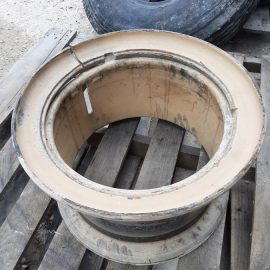 15x7.50 Dayton Wheel
1 × $85.00
15x7.50 Dayton Wheel
1 × $85.00  18x5.7-8 Michelin Air MWL-6
1 × $210.00
18x5.7-8 Michelin Air MWL-6
1 × $210.00  37X12.50R16.5LT Goodyear Wrangler Enforcer MT
1 × $350.00
37X12.50R16.5LT Goodyear Wrangler Enforcer MT
1 × $350.00  8 inch AIRCRAFT WHEEL
1 × $545.00
8 inch AIRCRAFT WHEEL
1 × $545.00  16.5" x 8.25" HMMWV Wheel / 12 bolt style
1 × $75.00
16.5" x 8.25" HMMWV Wheel / 12 bolt style
1 × $75.00  20X4.4 Michelin Aviator MWL-6
1 × $400.00
20X4.4 Michelin Aviator MWL-6
1 × $400.00  16x6.5 Wheel Rim
2 × $100.00
16x6.5 Wheel Rim
2 × $100.00  20x10 Accuride Beadlock Wheel
1 × $200.00
20x10 Accuride Beadlock Wheel
1 × $200.00