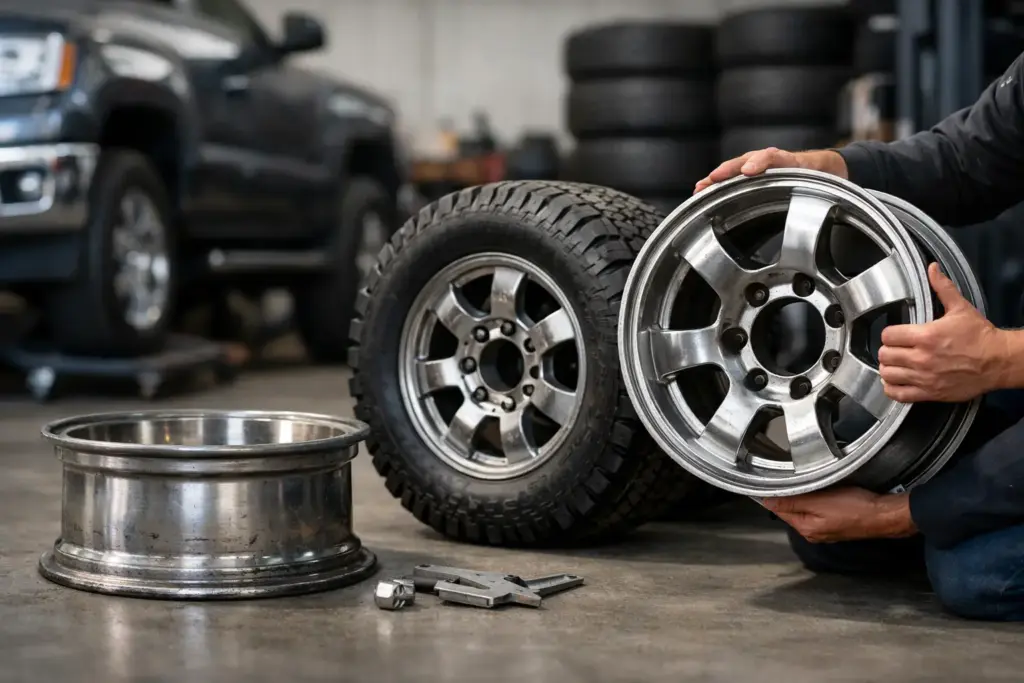
A used wheel that looks clean can still be wrong for the truck. The bolt circle may not match, the center bore may be too small, the offset may push the tire into suspension components, or the wheel may not carry the load your truck sees every day. Used truck wheels are a practical way to replace damaged equipment, build a work truck, keep older fleet units operating, or source hard-to-find military and commercial fitments – provided the specifications are checked before money changes hands.
For commercial operators, contractors, farmers, restoration shops, and off-road buyers, the right wheel is not a cosmetic purchase. It is a load-bearing component. Start with fitment and application, then evaluate condition and price.
Start With Truck Wheel Fitment
A wheel must match more than its stated diameter. A 20-inch wheel, for example, is not automatically suitable for every truck using a 20-inch tire. The critical measurements are bolt pattern, center bore, wheel width, offset or backspacing, load rating, and brake clearance.
Bolt Pattern and Center Bore
Bolt pattern is expressed by the number of studs and the diameter of the circle they form. Common examples include 8-lug heavy-duty pickup patterns, 10-lug commercial patterns, and specialized military bolt circles. Do not rely on appearance or a seller’s description alone. Measure the pattern or confirm it against the vehicle’s manufacturer specifications.
The center bore matters just as much. Hub-centric wheels locate on the hub pilot, which helps keep the assembly centered under load. A wheel with a bore smaller than the truck’s hub will not mount. A larger bore may work with the proper centering method, depending on the application, but it should not be treated as an automatic fit.
On medium-duty, commercial, and military equipment, pilot diameter and stud type are especially important. Budd-style, hub-piloted, and stud-piloted wheel systems are not interchangeable simply because the wheels share a similar bolt count.
Diameter, Width, and Tire Match
Wheel diameter must match the tire’s bead diameter exactly. A 22.5-inch commercial tire requires a 22.5-inch wheel. A 20-inch military tire requires a 20-inch wheel. Close is not close enough.
Wheel width determines which tire section widths can be mounted safely. A wide flotation tire needs a wheel approved for that tire’s bead and section dimensions. Running a tire on a wheel that is too narrow or too wide can change the tread profile, reduce stability, and create mounting problems. For dual-wheel applications, wheel width and offset also affect the gap between tires. That clearance is necessary to prevent sidewall contact under load.
Offset, Backspacing, and Clearance
Offset and backspacing control where the wheel and tire sit relative to the hub. Too much positive offset can pull the tire inward and create contact with steering, brakes, springs, or frame components. Too little offset can move the tire outward, increase scrub radius, load wheel bearings, and put the tire outside the body or fender line.
This is where used takeoffs can create trouble. A wheel removed from one truck may be in excellent condition but still be unsuitable for another model. Check the wheel’s stamped specifications when available, then compare them to the vehicle requirements. If a wheel is intended for a dual setup, confirm it is the correct inner, outer, or reversible configuration.
Match Load Rating to Real Work
A wheel should be rated for the actual axle load, not just the truck’s empty weight. A work truck may be light when parked and heavily loaded by noon. Add payload, trailer tongue weight, equipment, tools, body modifications, and the operating environment before selecting wheels.
Steel wheels remain a common choice for commercial and off-road work because they are durable, repairable in some situations, and generally less expensive to replace. They are also heavier. Aluminum wheels reduce weight and resist corrosion well, but they need careful inspection around bead seats, mounting holes, and spoke areas. Neither material is automatically better. The right choice depends on duty cycle, load, terrain, and replacement cost.
For severe service, confirm that the wheel rating meets the tire rating and the axle requirement. The tire’s maximum load does not increase the capacity of an under-rated wheel. The lowest-rated component in the assembly sets the limit.
Inspect the Condition Before You Buy
Used does not mean worn out. Surplus and takeoff inventory can offer substantial value, especially for obsolete, specialty, and fleet fitments. Condition needs to be assessed honestly, though. A cosmetic scratch is one thing. A structural issue is another.
Inspect the wheel closely for cracks around the lug holes, valve stem opening, bead seat, welds, and center disc. Cracks are a reject condition. Look for bent flanges, impact damage, severe corrosion, elongated lug holes, or evidence that a wheel has been run loose. On split-rim, multi-piece, or specialty wheel systems, every component must be correct, matched, and serviceable. These assemblies require trained handling and proper safety equipment.
Check the bead seat carefully. Rust scale, pitting, old sealant buildup, and damaged flange edges can cause recurring air loss. Light surface rust on a steel wheel may be manageable. Deep corrosion at the bead seat or around structural areas is not a bargain.
Ask whether the wheel has been tested for runout if that information is available. Excessive radial or lateral runout can create vibration, uneven tire wear, and steering complaints. A wheel can hold air and still produce a bad ride.
Know What You Are Buying: Takeoff, Surplus, or Used
Condition labels should guide the inspection, not replace it. A takeoff wheel was removed from a vehicle or piece of equipment, often after an upgrade, fleet change, or equipment retirement. It may have limited use, but mileage and operating history can vary.
Surplus inventory may be unused old stock, military stock, overrun inventory, or equipment removed from service before the wheel reached the end of its useful life. New old stock can be an excellent option for uncommon applications, but storage conditions still matter. Inspect coatings, corrosion, and any rubber or sealing components included with the wheel.
A standard used wheel may show normal service marks and may be priced accordingly. That can make sense for a spare, trailer, farm implement, off-road build, or fleet repair where exact appearance is not the priority. The key is to buy on specification and condition, not paint quality.
Consider the Full Cost, Not Only the Wheel Price
A low purchase price can disappear quickly if the wheel needs blasting, refinishing, machining, adapters, unusual hardware, or repeated mounting attempts. Freight also matters. Heavy truck wheels are expensive to move, particularly when purchasing one unit at a time across long distances.
For operators buying multiple wheels, compare the delivered cost per usable wheel. Matching sets can reduce balancing variables and simplify tire rotation. If you are buying for a fleet, record the wheel part number, size, offset, and load rating so future replacements do not turn into a measurement exercise in the yard.
MilitaryTires.ca supplies specialized surplus, takeoff, and hard-to-source wheel inventory for buyers who need commercial, off-road, military, agricultural, and industrial fitments without relying on standard retail stock. Auction opportunities can also make sense for buyers who know the exact specification they need and can evaluate condition from the listing details.
Questions Worth Answering Before Purchase
Before committing to a wheel, verify the diameter and width, bolt pattern, center bore, offset or backspacing, load rating, and wheel construction. Confirm whether it is designed for single or dual use. Ask about visible repairs, cracks, runout, corrosion at the bead seat, and included hardware.
If the wheel will carry a highway commercial tire, operate in a dual position, or support heavy payloads, be stricter. A wheel for a low-speed farm trailer or restoration project may allow more flexibility, but fitment and structural condition still come first.
The best used wheel is usually not the cheapest one listed. It is the one that matches the truck, carries the load, mounts without modification, and keeps the equipment working when replacement parts are hard to find.


 20 inch BFGoodrich AIRCRAFT WHEEL
1 × $1,100.00
20 inch BFGoodrich AIRCRAFT WHEEL
1 × $1,100.00 
 56x16-28 Goodyear Aircraft
1 × $2,500.00
56x16-28 Goodyear Aircraft
1 × $2,500.00  4 tires 14.00R20 Michelin XZL on Clearance
1 × $1,000.00
4 tires 14.00R20 Michelin XZL on Clearance
1 × $1,000.00  24 bolt Beadlock 16.5" x 8.25" HMMWV H1
1 × $115.00
24 bolt Beadlock 16.5" x 8.25" HMMWV H1
1 × $115.00  14.00R20 Michelin XL
1 × $400.00
14.00R20 Michelin XL
1 × $400.00