

Uncategorized
Used Farm Tires: What Smart Buyers Check
May
A rear tractor tire that looks fine from ten feet away can still be the wrong buy. Sidewall weathering, bead damage, uneven lug wear, or an old repair in the wrong spot can turn a cheap replacement into downtime in the field. That is why buying used farm tires is not just about price. It is about getting workable rubber, correct fitment, and enough service life to justify the purchase.
For many operators, used inventory makes sense. A hay operation with older tractors, a mixed fleet with seasonal use, or a piece of equipment that does not justify premium new rubber can all benefit from a lower-cost tire. The key is knowing where used makes sense, where it does not, and what condition details matter most before money changes hands.
Why used farm tires still have a strong market
New ag tires are expensive, and large rear tractor sizes can put real pressure on an operating budget. If the machine is not running high annual hours, buying new is not always the best value. Used farm tires give buyers another lane – especially when they need a specific size quickly, want to match an older tire on the opposite side, or are trying to keep an older machine in service without overinvesting.
There is also the inventory reality. Some farm tire sizes, tread styles, and older fitments are harder to source through standard retail channels. Surplus and secondary markets often carry takeoffs, singles, pairs, and odd lots that solve a problem fast. That matters when a machine is sitting and planting, spraying, or feeding work is waiting.
Used does come with trade-offs. You may save a significant amount up front, but condition can vary a lot, and remaining life is never as predictable as a new tire with full manufacturer backing. Buyers who do well in this market usually know exactly what they need and inspect details closely.
What to check when buying used farm tires
The first job is fitment. Size, ply rating or load index, overall diameter, section width, rim compatibility, and application all need to match the machine and the work. A tire that is close is not good enough if it changes rolling circumference too much on a mechanical front-wheel-drive tractor or creates mismatch issues on a combine or implement. If you are replacing one tire instead of a pair, that measurement matters even more.
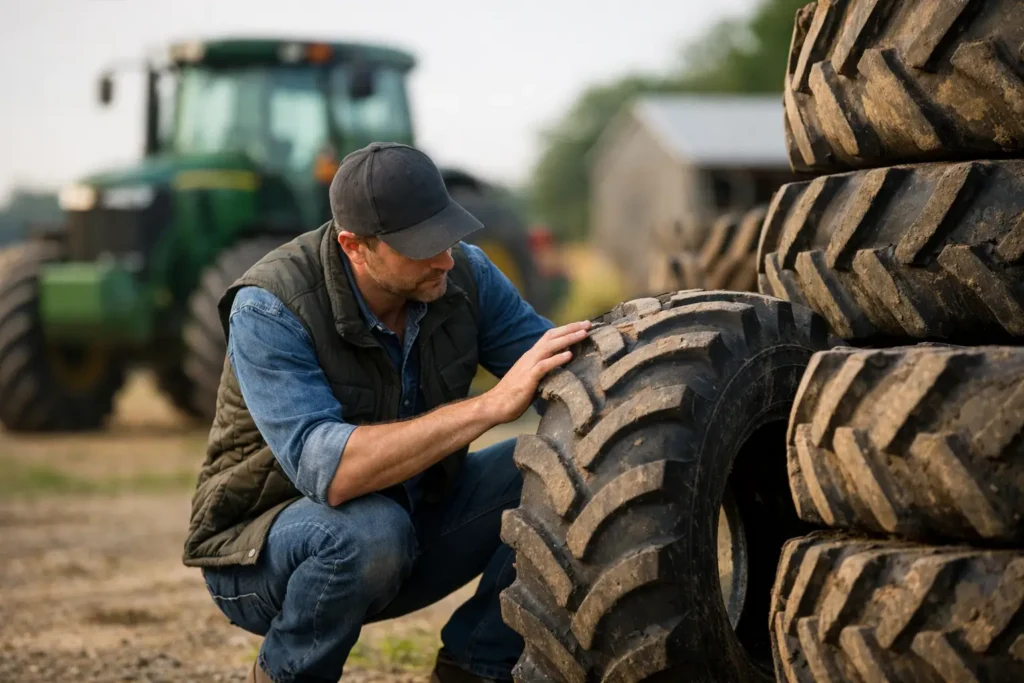
After fitment, focus on carcass condition. Tread depth gets attention because it is easy to see, but carcass integrity is what determines whether the tire is still worth mounting. Check for exposed cords, cuts deep enough to compromise structure, sidewall cracking, bead damage, bulges, impact breaks, and signs of previous run-flat use. A used tire can have decent tread and still be a poor buy if the casing is questionable.
Repairs are not an automatic deal breaker, but location and quality matter. A professional repair in a repairable area may be acceptable for some operations. A patch or boot near the sidewall, shoulder, or bead deserves a harder look. On heavier equipment or road-travel applications, the margin for error gets smaller.
Weathering is another point buyers often underestimate. Farm equipment may spend long periods outdoors, and UV exposure hardens rubber over time. A tire can hold air and still lose flexibility, traction efficiency, and resistance to cracking. Older surplus inventory and used takeoffs both need a close visual inspection for age-related deterioration.
Used farm tires by application
Not every machine puts the same demands on a tire, so the value of used inventory depends on application.
Tractors and loaders
On older utility tractors and chore tractors, used farm tires are often a practical buy. These machines may see moderate hours, mixed surfaces, and work that does not justify the cost of premium new replacements. If the tire has sound sidewalls, solid beads, and enough lug left for traction, it can be a strong value.
Front tires on loader tractors deserve extra caution because repeated weight shifts and hard turning put a lot of stress on the casing. A used front tire that is already fatigued may not stay in service long. In that case, the cheapest option can end up costing more in remounting and replacement.
Combines and sprayers
These applications are less forgiving. Load demands are high, timing is critical, and field failure costs more. Used can still work, especially for replacement takeoffs in the correct size, but condition standards should be stricter. Stubble damage, sidewall fatigue, and any sign of weak casing are bigger concerns here.
Wagons, implements, and lower-speed equipment
This is where used inventory often makes the most sense. Many implements see lower annual miles and lower speeds, and operators are often trying to keep tire costs in line with the age and value of the equipment. As long as load requirements are covered and the tire is structurally sound, used can be a very efficient option.
Tread wear, matching, and ride issues
Lug depth matters, but even wear matters just as much. A tire worn heavily in the center or one shoulder may point to inflation issues, alignment problems, or long use on hard surfaces. Uneven wear can also affect ride quality and traction. On a two-wheel-drive tractor that may be manageable. On a front-wheel-assist setup, mismatched rolling circumference can create drivetrain problems.
Matching a pair is usually the safer route for drive positions. If one tire is badly worn and the other still has life left, some operators try to replace only the failed side with a used match. That can work if dimensions are close enough, but buyers should compare actual measurements, not just sidewall size markings. Two tires marked the same size may not stand equally once wear and brand differences are factored in.
When used farm tires are the right call
Used inventory is usually strongest in three situations. First, when the machine is older and you want practical service life at a lower cost. Second, when you need an uncommon size or hard-to-find replacement without waiting on a new order. Third, when the equipment is seasonal or secondary and does not log enough hours to justify full-price new tires.
It can also make sense for resellers, repair shops, and fleet-style buyers who know condition grading and can evaluate casing quality quickly. Buyers in that group are often less concerned with appearance and more concerned with whether the tire is mountable, serviceable, and priced correctly for the remaining life.
When buying new is the better move
Some jobs do not leave much room for compromise. High-hour primary tractors, heavy loaders, road-travel equipment, and machines working under maximum load day after day are tougher cases for used rubber. If downtime during planting or harvest would cost far more than the savings on the tire, new may be the smarter business decision.
The same goes for buyers who cannot inspect condition details with confidence. Used tires reward experience. If you are unsure how to assess repairs, weathering, or bead damage, the safer move may be buying from a source that provides clear condition notes, actual photos, and accurate specifications – or stepping up to new inventory where uncertainty is lower.
Buying from surplus and specialized inventory sources
The biggest advantage of a specialized seller is not just price. It is access. Hard-to-find ag sizes, branded takeoffs, odd quantities, and mixed-condition inventory do not always show up through mainstream channels. A specialized surplus source may have exactly the pair, single, or replacement casing that fits an older machine and keeps it working.
That said, buyers should still ask direct questions. Confirm the exact size, brand, tread type, load details, condition notes, repair history if known, and whether the listing is for a single tire or a pair. Ask about shipping reach and timing too, especially if the machine is down. For buyers in the U.S. and Canada, sellers with cross-border capability can remove a lot of friction from specialty purchases. MilitaryTires.ca is one example of the type of inventory-focused source buyers use when standard retail options come up short.
Price matters, but cost per season matters more
A cheap used tire is only cheap if it stays in service. If it needs a tube, a repair, extra labor to seat the bead, or replacement after one short season, the value disappears fast. On the other hand, a sound used tire with honest wear and no structural issues can deliver strong cost per hour, especially on lower-use equipment.
The best buyers treat used farm tires like an equipment decision, not an impulse buy. They compare remaining tread, casing quality, fitment, and application risk against the price. That approach usually leads to better outcomes than shopping by size and low number alone.
If you are buying used, buy for the job the machine actually does. A field tractor, a feed wagon, and a backup unit in the shed do not need the same answer, and that is where the best value usually shows up.
