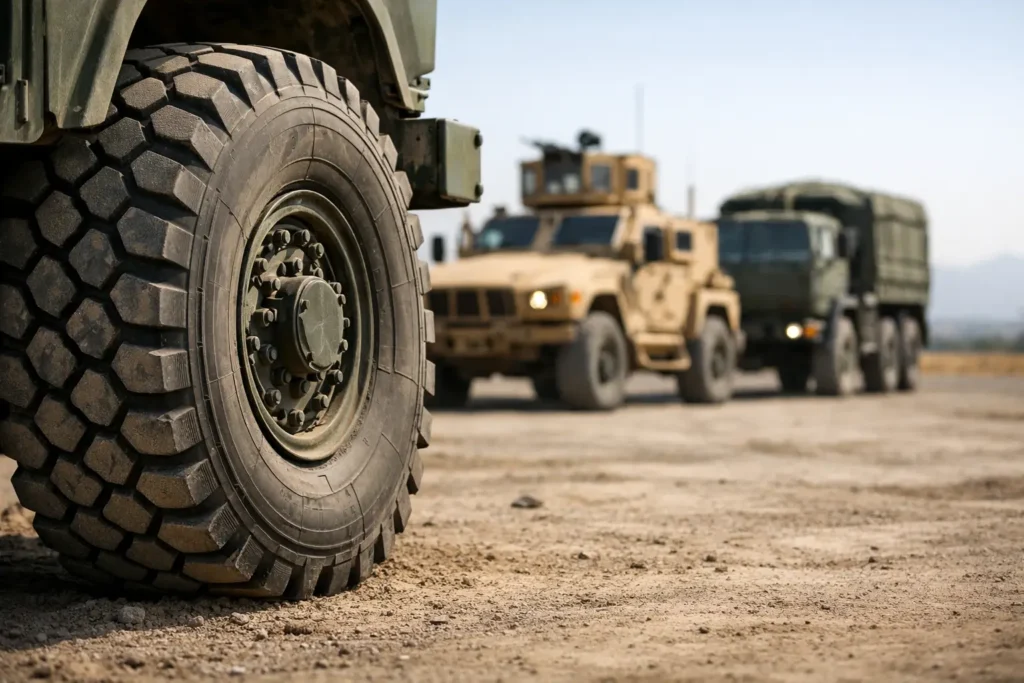
A 395/85R20 that looks right on paper can still be the wrong tire for the job if the load rating, tread type, or wheel compatibility is off. That is the reality with military vehicle tires. Buyers in this market are rarely shopping for appearance alone. They are trying to solve a fitment problem, keep equipment moving, finish a restoration correctly, or source hard-to-find inventory before it disappears.
The challenge is that military tires do not sit in one simple category. Some are built for tactical trucks carrying serious weight over mixed ground. Some are intended for older military platforms where original sizing matters as much as performance. Some are takeoffs with usable life left. Others are new old stock that may never have touched the ground but still need a careful inspection because age matters. If you buy by size only, you can miss the details that determine whether the tire is a bargain or a headache.
What makes military vehicle tires different
Military vehicle tires are built around utility first. That usually means higher load capacity, stronger carcass construction, and tread patterns designed for dirt, gravel, mud, broken pavement, and uneven terrain. Many are made to work on heavier trucks, trailers, and support vehicles where sidewall strength and puncture resistance matter more than quiet highway manners.
That does not mean every military tire is automatically right for civilian use. Some run well on mixed-use trucks and off-road builds. Others are best kept on original equipment or specialty rigs because the ride, speed rating, or footprint may not suit a highway-driven setup. Buyers should expect trade-offs. A tire that performs well in rough ground may wear differently on pavement. A military-spec casing may offer durability, but it can also bring extra weight and a stiffer ride.
There is also the sourcing factor. Many of these tires enter the market as surplus, used inventory, or new old stock. That creates opportunity because availability can be excellent in certain sizes and price points. It also means inventory changes fast, condition varies, and exact replacement later is not always guaranteed.
How to evaluate military vehicle tires before buying
The first checkpoint is fitment. Size is only the start. You need to verify section width, overall diameter, ply rating or load range, wheel diameter, approved rim width, and whether the tire is tube-type or tubeless. On military applications, bead seat design and wheel type can matter more than buyers expect, especially with older split or specialty wheels.
The second checkpoint is use case. Ask what the vehicle actually does. A collector restoring a military truck for shows has a different standard than a contractor using an ex-military platform on job sites. A farm buyer moving equipment around a property may prioritize traction and value. A reseller may care most about recognizable brands, condition consistency, and margin. The right answer depends on whether the tire will spend most of its time on pavement, gravel, mud, storage yards, or mixed off-road routes.
Condition comes next, and this is where surplus buying requires a clear head. Used tires can offer real value if tread depth, sidewall condition, repairs, and casing integrity check out. New old stock can be appealing because it may show little or no service wear, but storage history still matters. A tire that sat in poor conditions is not automatically a better buy than a clean used takeoff from a reputable source. Date codes, visible cracking, flat spotting, weathering, and bead condition should all be reviewed before purchase.
Brand still matters in surplus. Michelin, Goodyear, Bridgestone, BFGoodrich, and Hutchinson all carry weight because buyers know what they are looking at. That does not remove the need for inspection, but it helps when you are evaluating expected construction quality, replacement value, and market demand.
Military vehicle tires for surplus and restoration buyers
Restoration buyers usually care about two things at the same time – correct appearance and workable service condition. That can be a hard combination to find. Original military tread patterns, sidewall markings, and period-correct sizing are not always available in freshly manufactured inventory, which is why surplus channels remain so important.
The trade-off is simple. If originality matters, you may have to accept older stock, limited quantities, or used takeoffs. If regular road use matters more, a close modern equivalent may be the smarter move even if it is not exact. Some collectors want the correct look for events and static display. Others want to drive their trucks regularly and would rather have dependable, easier-to-source rubber under the vehicle. Neither approach is wrong, but mixing those goals without thinking through the compromise usually leads to overspending.
Buyers restoring multiple vehicles or sourcing for clubs and specialty shops should also pay attention to inventory depth. One or two matching tires may help with a project. A larger lot matters if you need a full set, a spare strategy, or backup stock for later.
Military vehicle tires for working equipment
For commercial and agricultural users, the buying logic is more practical. The question is not whether the tire is historically correct. The question is whether it can carry the load, clear the chassis, handle the surface conditions, and deliver value compared with standard commercial or off-road alternatives.
This is where surplus military tires can make sense. Heavy-duty construction and recognizable industrial brands often put these tires in play for service trucks, yard equipment, off-road haulers, and utility applications where buyers want function over polish. If the tire matches the wheel and load requirements, surplus inventory can solve a sourcing problem quickly and often at a better price than niche new production.
Still, there are limits. A military tread that shines in mud may not be ideal for long paved runs. An aggressive casing can produce more vibration and noise. Some military sizes also create fitment issues on civilian trucks because of gearing changes, clearance problems, or wheel mismatch. It depends on how the equipment is used. Buyers who know their actual duty cycle usually make better decisions than buyers who shop by appearance alone.
Why availability matters more than marketing claims
In this segment, inventory is often the product. Hard-to-find tires do not stay in stock forever, and replacement channels are not always broad. That is why serious buyers pay attention to real availability, condition notes, and quantity on hand rather than polished claims.
A supplier with deep surplus access can be more valuable than a seller with a narrow catalog of special-order items. If you run a fleet of specialty equipment, restore military trucks, or resell uncommon sizes, consistent access matters. The same goes for cross-border shipping. A lot of buyers in the US and Canada are not looking for local convenience. They are looking for someone who actually has the tires and can move them.
That is one reason buyers come to marketplaces like MilitaryTires.ca. The appeal is straightforward – hard-to-source inventory, recognized brands, used and NOS options, and buying flexibility through direct purchase or auction.
Common buying mistakes with military vehicle tires
The most common mistake is assuming every military tire is interchangeable because the size looks close. Load, wheel fit, and actual measured dimensions can vary enough to cause problems. The second mistake is treating used and NOS as simple labels instead of starting points for inspection. Condition is not a slogan. It is the real value driver.
Another mistake is ignoring age because the tread looks excellent. Tread depth alone does not tell the full story on surplus stock. Storage history, sidewall health, and intended use matter just as much. Finally, many buyers wait too long on uncommon inventory. If you need a matched set in a niche size, hesitation can cost you more than acting decisively.
What smart buyers look for first
Smart buyers start with the basics and get specific fast. They verify size, wheel type, load needs, and application before comparing price. Then they look at condition, quantity, and brand. After that, they think about replacement strategy. Can they buy a full set now? Should they add a spare? Is this a one-time opportunity or a size that turns up regularly?
That approach matters because military tire buying is rarely casual. Whether you are outfitting a restored truck, buying for a farm, sourcing for resale, or keeping specialty equipment in service, the right purchase is the one that fits the work and the inventory reality. The best tire is not the one with the loudest description. It is the one that matches the machine, the job, and the stock available when you need it.


 15x7.50 Dayton Wheel
1 × $85.00
15x7.50 Dayton Wheel
1 × $85.00 
 20x10 Titan Beadlock Wheel
3 × $275.00
20x10 Titan Beadlock Wheel
3 × $275.00  20x10 Beadlock 10 bolt Wheels/ 4000 axle series
3 × $340.00
20x10 Beadlock 10 bolt Wheels/ 4000 axle series
3 × $340.00  24 bolt Beadlock 16.5" x 8.25" HMMWV H1
3 × $115.00
24 bolt Beadlock 16.5" x 8.25" HMMWV H1
3 × $115.00  Hutchinson Beadlock 20″x10″ for Tubeless set up
1 × $55.00
Hutchinson Beadlock 20″x10″ for Tubeless set up
1 × $55.00  25x14 TU 3-piece Wheel
1 × $225.00
25x14 TU 3-piece Wheel
1 × $225.00  7.00-6 BFGoodrich aircraft tire on wheel
1 × $415.00
7.00-6 BFGoodrich aircraft tire on wheel
1 × $415.00