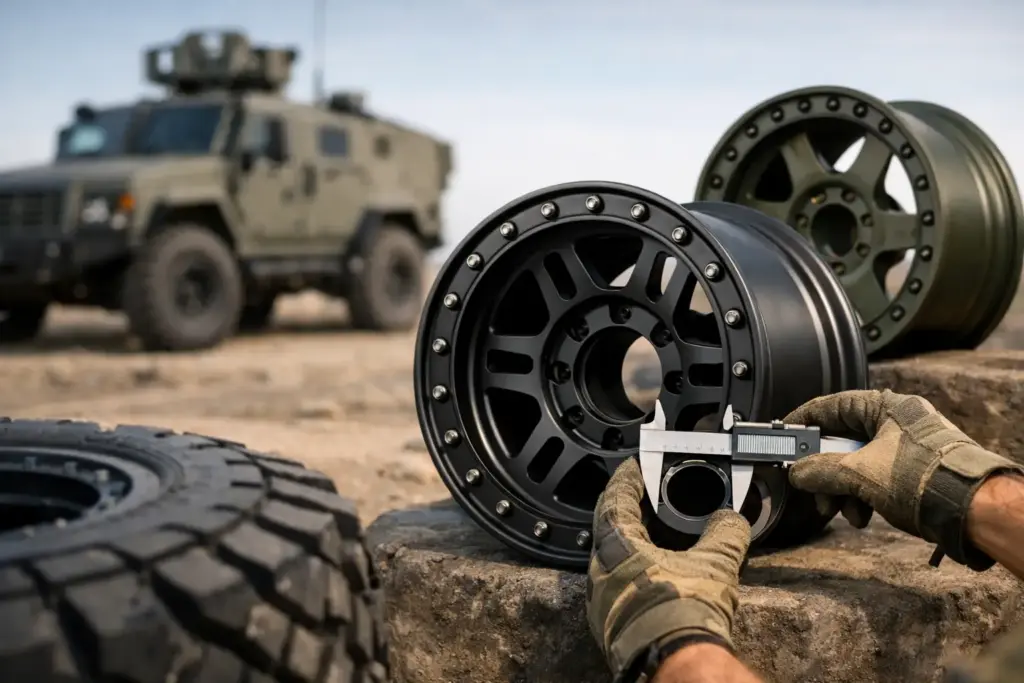
A set of military rims for sale can solve a hard sourcing problem fast, but only if the wheel matches the vehicle, tire, and job. Surplus wheels often offer serious value, especially for military vehicle restorations, off-road builds, work trucks, trailers, and industrial applications. The wrong bolt pattern or center bore, however, turns a bargain into expensive shop inventory.
Military-spec wheels are built for use, not showroom appeal. Buyers may find steel combat rims, split rims, beadlock-style assemblies, heavy-duty truck wheels, and takeoffs from military or commercial applications. Specifications matter more than paint, surface rust, or whether the wheel came from a known platform.
Start With the Fitment, Not the Wheel Price
Before comparing condition or pricing, confirm the basic dimensions. Wheel diameter and width must match the tire size you intend to run. A wheel that accepts a 16.5-inch military tire is not interchangeable with a 16-inch wheel, even if the tire sizes look close on paper.
Bolt pattern is the next non-negotiable item. Count the wheel studs and measure the bolt circle correctly. A five-lug pattern with a 5.5-inch bolt circle is different from a five-lug pattern with a 5-inch bolt circle, and forcing the fit is not an option. Heavy truck and military wheels may use eight, 10, or more mounting holes, often with stud-piloted or hub-piloted designs that require matching hardware.
Center bore also matters. Some wheels center on the hub, while others are centered by the lug hardware. If the center hole is too small, the wheel will not seat. If it is too large on a hub-centric setup, the wheel may not run true without the proper support. Confirm the vehicle hub diameter before buying.
Backspacing and offset deserve the same attention. These measurements determine where the wheel sits relative to brakes, steering components, fenders, and suspension. A wide military wheel may look right on a restoration project but contact a tie rod or leaf spring at full steering lock. On a working truck, incorrect offset can increase bearing load and cause tire interference under suspension movement.
What to Check on Military Rims for Sale
Surplus inventory is not one condition category. Buyers should expect new old stock, used takeoffs, repainted wheels, assemblies with old tires, and rims removed from serviceable equipment. Each can be the right purchase depending on application and budget.
New old stock usually appeals to restoration buyers and operators who need unused inventory from an older specification. It may show storage marks, faded finish, or light surface corrosion from long-term warehousing. That is different from structural damage, but it should still be reviewed before installation.
Used military rims can provide strong value when they are straight, complete, and suitable for the intended load. Look closely at the bead seats, mounting holes, stud holes, valve area, and inner barrel. Damage around the bead can prevent proper tire sealing. Elongated bolt holes, cracked welds, deep impact dents, or heavy corrosion at critical mounting surfaces are reasons to stop and inspect further.
For multi-piece wheels, condition checks go beyond the main wheel center. Lock rings, side rings, flanges, and retaining components must be the correct type and in serviceable condition. Do not mix parts from different wheel systems because they appear similar. Multi-piece wheel service carries real risk and should be handled by trained personnel using the proper inflation equipment and procedures.
Paint can be corrected. A bad bead seat or bent mounting face cannot be ignored. For commercial, agricultural, or industrial work, structural condition and fitment are the purchasing priorities.
Load Rating and Application Are Not Guesswork
Military wheels are commonly heavy-duty, but that does not mean every rim is suitable for every load. A wheel intended for a light tactical vehicle may not carry the axle weight of a loaded service truck, equipment trailer, or agricultural implement. Match the wheel rating to the vehicle’s axle capacity and the tire’s load capacity.
This is especially important when changing tire sizes. A wider tire can require a wider approved rim range. A larger-diameter tire can add leverage, alter gearing, affect brake performance, and create clearance problems. Off-road enthusiasts may be focused on flotation and ground clearance, while fleet operators may be focused on legal load capacity and tread life. The wheel still has to support the complete application.
Consider the operating environment as well. A wheel used in slow-speed off-road service may be a practical choice for a farm, hunting property, trail rig, or military vehicle collector. That same wheel may not be the best option for extended highway use if the tire, wheel design, balance requirements, or vehicle setup are not intended for it.
Tire Compatibility Comes Before Mounting
Not every military tire fits every military wheel. Tire bead type, wheel diameter, approved rim width, and inflation requirements must line up. This is critical with specialty sizes, nonstandard military tires, run-flat systems, and older wheel designs.
Some military wheel assemblies use internal run-flat components or specialized bead retention systems. These systems are valuable for certain applications, but they add complexity. The tire, wheel, run-flat insert, and installation method need to be compatible as a package. Buying a rim because it matches the outside diameter of a tire is not enough.
A buyer replacing wheels on an existing vehicle should record the current tire size, wheel size, bolt pattern, center bore, backspacing, and load information before shopping. Photos of the mounting face, wheel stampings, and any part numbers can prevent a costly mismatch. For restoration projects, original equipment manuals and vehicle-specific forums may help identify the correct wheel family, but physical measurements should still be confirmed.
When Surplus Wheels Make the Most Sense
Surplus military rims often make the most sense when availability is more valuable than cosmetic perfection. A contractor with a remote-service truck may need a matching spare wheel quickly. A collector may need period-correct wheels that are no longer available through ordinary retail channels. A tire shop or reseller may need quantity inventory for customers running military, industrial, or commercial equipment.
They are also a practical option for buyers who can work with used condition, older finishes, and specialized fitments. Auction inventory can be especially useful for wholesale buyers, project builders, and operators purchasing multiple units. The trade-off is that surplus stock can change quickly. When a hard-to-find size, bolt pattern, or wheel type becomes available, waiting for a cleaner or cheaper example may mean losing the exact fitment.
For cross-border buyers, verify shipping cost, delivery requirements, and whether the wheels are shipping individually, on pallets, or with tires mounted. Heavy rims can be expensive to move, particularly in quantity. A low unit price does not always mean the lowest landed cost. For commercial purchases, calculate the full cost per usable wheel after freight, mounting, inspection, and any refinishing work.
Questions Worth Asking Before You Buy
Ask for the wheel’s complete size, bolt pattern, center bore, offset or backspacing, and any visible part number. Confirm whether the listed item is one rim, a pair, a complete set, or a wheel-and-tire assembly. If the wheel is used, ask whether it has been checked for cracks, bends, damaged bead areas, or repaired sections.
For a multi-piece wheel, ask whether all matching components are included. For a run-flat or beadlock-style system, confirm whether inserts, hardware, and related pieces are present. If you are buying for a specific vehicle, provide the application details instead of assuming that “military” means universal.
MilitaryTires.ca carries specialized surplus wheels and tires for buyers who need uncommon sizes, heavy-duty construction, and inventory beyond standard consumer fitments. That matters when downtime, restoration accuracy, or a hard-to-source tire size is driving the purchase.
The best wheel is not always the cleanest one or the cheapest one. It is the rim that fits the hub, clears the vehicle, supports the load, matches the tire, and can be put into service safely. Measure first, verify the details, and buy the wheel that keeps the equipment moving.


 8.50-10 Aviator Helicopter
1 × $75.00
8.50-10 Aviator Helicopter
1 × $75.00 
 355/65R15 Michelin Stabil'X XZM on Wheel
1 × $800.00
355/65R15 Michelin Stabil'X XZM on Wheel
1 × $800.00  10R22.5 Continental HSR2
1 × $135.00
10R22.5 Continental HSR2
1 × $135.00  21x6.5-10 Goodyear Flight Eagle LT
1 × $300.00
21x6.5-10 Goodyear Flight Eagle LT
1 × $300.00  28x9-15 NHS Wide Wall Hauler LT
1 × $150.00
28x9-15 NHS Wide Wall Hauler LT
1 × $150.00  VF380/105R46 Trelleborg TM150
1 × $1,070.00
VF380/105R46 Trelleborg TM150
1 × $1,070.00  450/80R20 M.O.V. SAND TRAIL
1 × $100.00
450/80R20 M.O.V. SAND TRAIL
1 × $100.00  14.00R24 Bridgestone VUT
1 × $250.00
14.00R24 Bridgestone VUT
1 × $250.00  37x13.50r18LT Mickey Thompson Baja MTZ on Wheel
1 × $300.00
37x13.50r18LT Mickey Thompson Baja MTZ on Wheel
1 × $300.00  22X6.75-10 MICHELIN AIR
1 × $300.00
22X6.75-10 MICHELIN AIR
1 × $300.00