

Uncategorized
When Should Aircraft Tires Be Replaced Safely?
Oct
A tire can look serviceable from a few feet away and still be unfit for the next landing. Aircraft tires absorb high loads, heat, braking force, and repeated deflection in a very short operating cycle. The real question of when should aircraft tires be replaced is not answered by tread depth alone. It comes down to the approved maintenance data for that aircraft and tire, the tire’s condition, and what happened during service.
For aircraft owners, maintenance shops, and fleet buyers, the rule is straightforward: replace a tire when it no longer meets the aircraft manufacturer’s, wheel manufacturer’s, or tire manufacturer’s published limits. A tire that is questionable on the ramp is not a place to save money.
When Should Aircraft Tires Be Replaced?
Aircraft tires must be removed from service when inspection shows damage, wear, or deterioration beyond published limits. The applicable aircraft maintenance manual, component maintenance manual, and tire manufacturer instructions are the final authority. Requirements can vary by tire size, construction, aircraft type, wheel assembly, and whether the tire is new or retreaded.
In practical terms, replacement is commonly required when there is exposed fabric or cord, excessive tread wear, structural damage, unacceptable pressure loss, bead damage, or evidence of heat and separation. A tire may also need replacement after a severe flat spot, locked-wheel event, high-energy rejected takeoff, hard braking event, or suspected foreign-object damage.
Do not rely on a generic automotive wear rule. Aircraft tires are designed, approved, inspected, and serviced under different operating conditions. A groove that appears shallow may still be within limits on one tire model and below limits on another.
Tread Wear Is Only One Part of the Decision
Tread grooves help move water, support braking performance, and provide visible wear reference. On many aircraft tires, wear is assessed by the remaining groove depth or the condition of the wear bars, depending on the tire design and maintenance instructions.
Replace the tire when the tread is worn to the manufacturer’s minimum limit, when wear bars are reached, or when the grooves are no longer deep enough to meet the approved requirement. Do not wait for cords to show. Once reinforcing fabric or cord is visible, the tire is unserviceable and requires immediate removal.
Uneven wear matters as much as total wear. Excessive shoulder wear, center wear, cupping, or localized bald areas can point to incorrect inflation, braking issues, wheel alignment concerns, worn gear components, or repeated high-speed taxi operations. Installing a replacement tire without correcting the cause may shorten the life of the new tire.
Flat Spots and Locked-Wheel Damage
A flat spot is not always a cosmetic issue. A brief skid can remove rubber, generate intense heat, and damage the casing beneath the tread. If the flat spot reaches fabric, exposes cords, creates a depression beyond limits, or shows heat damage, replace the tire.
Even when cord is not visible, a substantial flat spot should be evaluated against the tire manufacturer’s repair and service criteria. The same applies after a suspected locked-wheel landing, aggressive braking event, or anti-skid malfunction. A tire can retain pressure after a skid and still have internal damage that makes it unsuitable for continued aircraft service.
Damage That Calls for Immediate Removal
Some defects leave little room for judgment. Remove the tire from service and have the wheel assembly inspected by qualified personnel if you find exposed cord or fabric, bulges, sidewall separation, deep cuts, bead damage, or signs of ply separation.
The following conditions generally require replacement rather than continued operation:
- Exposed casing cord, fabric, or belt material
- Cuts, punctures, or chunks of missing rubber beyond approved repair limits
- Bulges, blisters, waviness, or separations in the tread or sidewall
- Damaged, distorted, or leaking beads
- Severe flat spots or skid damage
- Heat damage, burned rubber, or evidence of a thermal event
- Repeated unexplained pressure loss
A bulge is especially serious because it can indicate broken or separated structural plies. Do not treat it as ordinary sidewall scuffing. Likewise, a tire that loses pressure repeatedly should not simply be aired up and returned to service. The leak may come from the tire, valve, wheel, O-ring, corrosion, or wheel damage, and the complete assembly needs inspection.
Inflation Problems Can Shorten Tire Life Fast
Correct inflation pressure is one of the biggest factors in aircraft tire life. Underinflation causes excess flexing and heat buildup. Overinflation can reduce the contact patch, contribute to harsh wear, and increase stress from runway debris. Either condition can reduce tread life and damage the casing.
Pressure must be checked cold using calibrated equipment and maintained to the approved value for the aircraft configuration. Do not use a pressure number taken from a similar aircraft, a truck application, or a general tire chart. Tire pressure is tied to the approved tire size, load, wheel, and operating configuration.
A tire that has been operated significantly underinflated may require removal even if it has not yet failed visibly. Excessive flexing can damage internal cords and plies. Maintenance personnel should use the applicable maintenance data to determine whether continued service is permitted.
Do Not Ignore Wheel and Brake Heat
Heat is hard on aircraft tires. Long taxi distances, frequent stop-and-go operations, heavy braking, high ambient temperatures, and rejected takeoffs can raise tire and wheel temperatures quickly. Heat can accelerate rubber deterioration, reduce casing life, and contribute to pressure changes.
After an overheated brake or wheel event, follow the aircraft manufacturer’s cooling, inspection, and maintenance procedures. Do not approach or service a hot wheel assembly casually. Aircraft wheels and tires may incorporate thermal plugs and other safety features, but those do not eliminate the need for proper post-event inspection.
Age Matters, But There Is No Single Calendar Rule
Aircraft operators often ask whether a tire should be replaced after a set number of years. There is no universal age limit that applies to every aircraft tire in every operation. The correct answer depends on the tire manufacturer’s instructions, aircraft maintenance program, storage history, tire condition, and applicable regulatory requirements.
A low-hour tire that has spent years exposed to sunlight, ozone, moisture, fuel, hydraulic fluid, or extreme temperature swings may deteriorate faster than a frequently used tire stored and serviced correctly. Look for cracking, weather checking, hardening, surface deterioration, and signs that the rubber has lost its serviceable condition.
For surplus or new old stock aircraft tires, age alone does not automatically make the tire unusable. However, buyers should verify the tire’s date code, storage conditions, manufacturer guidance, correct part number, load rating, speed rating, and approved application before installation. A bargain tire is not a bargain if it does not meet the aircraft’s approved requirements.
Retreaded Tires Need the Same Discipline
Retreaded aircraft tires are common in many commercial and utility operations because a qualified casing can deliver cost-effective service. But a retread must be an approved aircraft tire product from a qualified source, installed and inspected according to applicable maintenance requirements.
Replace a retread when its tread reaches the published removal limit or when casing-related damage, separation, cuts, bead defects, or other unserviceable conditions are found. Do not assume a worn tire is automatically eligible for another retread cycle. Casing acceptance is determined by the retreader’s inspection process, not by appearance alone.
For operators managing multiple aircraft, keeping records of tire position, pressure checks, removals, retread cycles, and recurring wear patterns can reduce avoidable tire losses. A repeated problem on one landing gear position often points to an operational or mechanical issue worth correcting.
Use a Consistent Inspection Routine
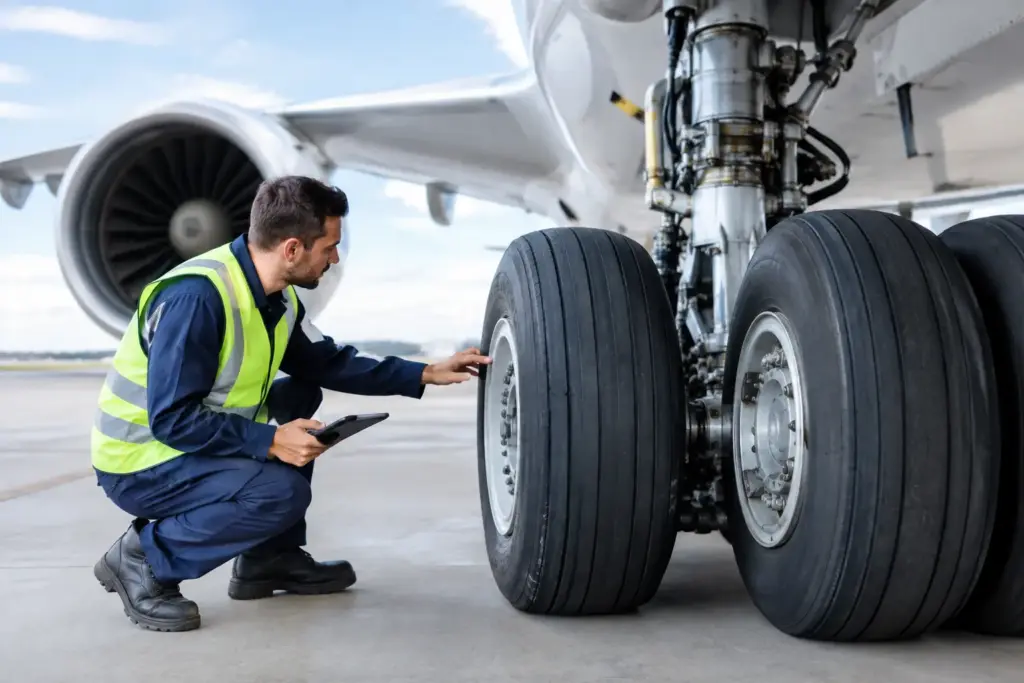
Aircraft tires should be checked during scheduled maintenance and preflight walk-arounds, with closer inspection after abnormal events. Look across the entire visible tread and sidewall, not just the portion facing outward. Check for cuts, embedded debris, rubber transfer from skids, cracks, uneven wear, low pressure, and contact damage.
If there is any doubt about airworthiness, remove the decision from guesswork. Refer the tire and wheel assembly to appropriately qualified maintenance personnel and use current approved data. Tire replacement also involves correct mounting practices, compatible wheel components, proper torque procedures, leak checks, inflation procedures, and required post-installation inspections.
The best time to replace an aircraft tire is before a borderline condition becomes a runway problem. Buy the correct size and specification, protect the casing with proper inflation and inspections, and treat visible damage as a maintenance decision, not a cosmetic one.
