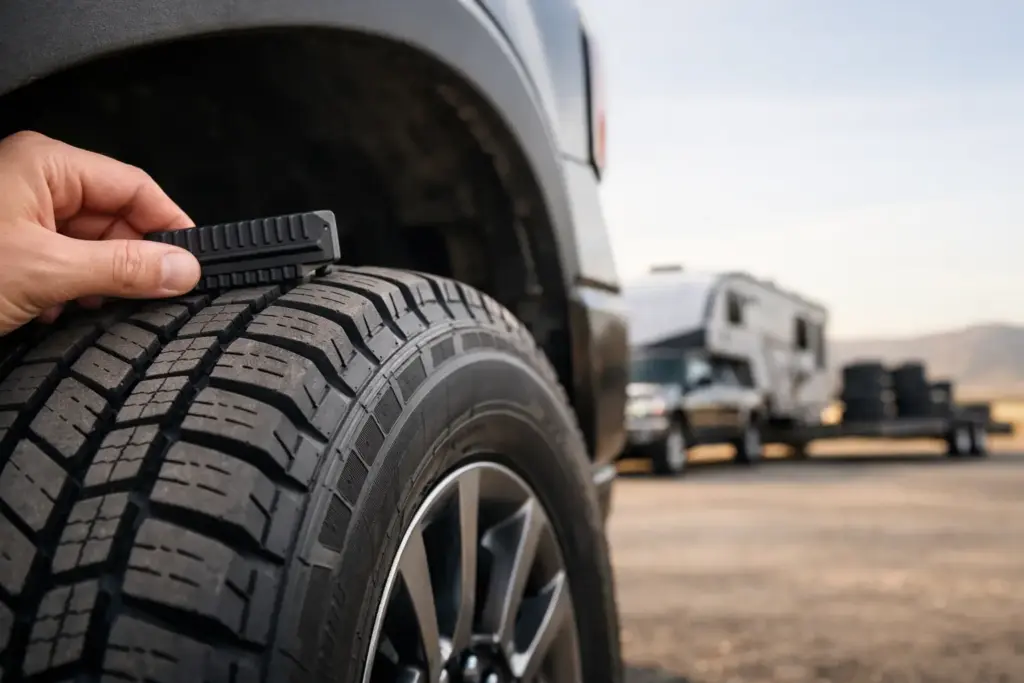
A tire can have aggressive tread, plenty of remaining rubber, and the right wheel diameter – then still be the wrong tire for the job. What does tire load rating mean? It tells you how much weight a tire is designed to carry when inflated to its specified maximum pressure. For work trucks, trailers, military vehicles, farm equipment, and off-road rigs, that number is a safety and operating requirement, not a minor line in the spec sheet.
A load rating only makes sense when it is matched to the vehicle, axle, wheel, inflation pressure, and intended use. That is especially true with surplus tires, takeoffs, and specialty applications, where a tire may be physically compatible with a vehicle but unsuitable for its actual working weight.
What Does Tire Load Rating Mean in Practice?
In everyday tire buying, “load rating” often refers to the tire’s load index. This is the numerical code molded into the sidewall near the tire size and speed symbol. For example, a marking such as `LT285/70R17 121/118Q` includes two load indexes: 121 for single-tire use and 118 for dual-tire use. Each index corresponds to a maximum load in pounds at the tire’s rated inflation pressure.
A higher load index means a higher carrying capacity. It does not mean the tire can carry that weight at any pressure, on any wheel, or under any condition. The stated capacity depends on proper inflation and use within the tire manufacturer’s specifications.
For common reference, a load index of 120 is rated for 3,086 pounds per tire, 121 is 3,195 pounds, and 126 is 3,748 pounds. Small changes in the index can make a meaningful difference across an axle or a fully loaded commercial vehicle.
The tire sidewall may also show a load range, such as C, D, E, F, G, or H. Load range is related to tire construction and pressure capability, particularly on light-truck, trailer, commercial, and specialty tires. It is not the same thing as load index, although both affect how a tire is selected.
Load Index, Load Range, and Ply Rating Are Different
These terms are often used interchangeably, which creates expensive mistakes. They describe related but separate parts of a tire’s capability.
The load index is the direct capacity code. It tells you the maximum weight a tire can carry under specified conditions. When calculating whether a tire can support a vehicle, this is usually the primary number to check.
The load range indicates the tire’s inflation-pressure and construction class. A Load Range E light-truck tire, for example, is commonly associated with a maximum cold pressure of 80 psi. A Load Range D tire may be rated to 65 psi. But two tires with the same load range can still have different load indexes and different published capacities because size and construction matter.
Ply rating is an older classification carried over from the era when tire strength was described by the number of cotton plies used in construction. A modern 10-ply-rated tire does not necessarily contain 10 physical plies. The term is still useful as a general strength category, but it is not the number to rely on for precise weight capacity.
For equipment that works hard, use the exact sidewall marking and manufacturer load-and-inflation data. Do not assume a tire is adequate because it says 10-ply or because it looks similar to the tire being replaced.
Start With Actual Axle Weight
The vehicle’s gross vehicle weight rating, or GVWR, is a useful starting point, but tire selection should be based on the weight carried by each axle. A truck, trailer, or equipment carrier rarely distributes weight evenly from front to rear. Tongue weight, cargo position, mounted equipment, winches, service bodies, and trailer loading all change the numbers.
The practical method is simple: weigh the vehicle in its heaviest real working condition, then check the front and rear axle weights separately. Divide each axle weight by the number of tires carrying that axle. The selected tire capacity must exceed that result, with room for normal load shifts, uneven terrain, and operating margin.
For example, a rear axle weighing 6,800 pounds on a single-rear-wheel truck places roughly 3,400 pounds on each rear tire. A tire rated for 3,195 pounds is not sufficient, even if the truck is unloaded most of the time. The tire needs to meet the loaded axle requirement, not the best-case parking-lot weight.
Dual rear wheels require another check. A tire’s dual-load rating is often lower than its single-load rating because sidewall spacing and heat buildup become more demanding. Use the dual designation printed in the tire specification, not the higher single-tire number.
Inflation Pressure Is Part of the Rating
A tire does not automatically carry its maximum rated load just because it is mounted. Maximum capacity is generally tied to maximum cold inflation pressure. Run less pressure, and the allowed load may be lower.
That does not mean every tire should be filled to the maximum shown on the sidewall. The correct cold pressure should follow the vehicle placard, tire manufacturer load table, or application-specific recommendation. Overinflation can reduce the contact patch, worsen ride quality, and accelerate center wear. Underinflation builds heat, flexes the casing excessively, and can lead to rapid failure under load.
This matters even more on trailers, commercial trucks, agricultural equipment, and off-road vehicles. A slow leak, an incorrect gauge, or pressure set before a major load change can turn a correctly rated tire into an overloaded one. Check pressure when tires are cold, inspect for cuts or casing damage, and account for the actual operating load before putting the unit back to work.
Specialty Tires Need Application-Specific Judgment
Not all tires are rated and used like highway pickup tires. Military, OTR, agricultural, aircraft, flotation, and industrial tires may list load capacity using different tables, inflation ranges, speed limits, or duty cycles.
An aircraft tire, for example, may carry a high load for a short ground cycle but is not a substitute for a highway tire. An agricultural tire may have a load rating that changes with field speed, road speed, implement use, or cyclic loading. An OTR tire can be designed for severe loads at low speeds, yet be unsuitable for extended highway travel. Military-spec tires may offer excellent durability and traction, but their load, speed, wheel, and fitment requirements still need to match the vehicle.
Used tires and new old stock also deserve a closer inspection. Remaining tread depth is only one part of the decision. Review the sidewall markings, date code, repair history, bead condition, casing integrity, weather checking, and any visible signs of heat or impact damage. A tire cannot safely deliver its rated capacity if its structure has been compromised.
Do Not Forget the Wheels
The tire is only one half of the load-carrying assembly. A wheel must have the correct diameter, width, bolt pattern, center bore, offset, pressure rating, and load rating for the tire and vehicle. High-pressure commercial and military applications can place demands on wheels, valve hardware, and bead retention that standard passenger wheels were never designed to handle.
The lowest-rated component controls the assembly. If a tire is rated for 3,750 pounds but the wheel is rated for 3,000 pounds, the wheel rating is the limit. The same applies to axles, hubs, bearings, suspension components, and trailer frames.
A Straightforward Buying Check
Before buying replacement tires, confirm the exact size, load index, load range, inflation requirement, wheel rating, and axle weights. Then confirm whether the tire will be used in single or dual service, on pavement or off-road, at highway speed or low speed, and with regular heavy loads or occasional light duty.
A higher load rating can provide useful capacity for a service truck, equipment trailer, loaded pickup, or working off-road vehicle. But it may also bring a heavier tire, firmer ride, different wheel requirements, and a higher purchase cost. More capacity is not automatically better if it does not suit the vehicle and job.
When the work is heavy, use the sidewall numbers as operating limits, not sales language. The right tire is the one that fits the wheel, carries the real axle load at the correct pressure, and stays within the demands of the route, terrain, and equipment it supports.


 25X10-12 Goodyear TRACKER MUD RUNNER
1 × $80.00
25X10-12 Goodyear TRACKER MUD RUNNER
1 × $80.00 
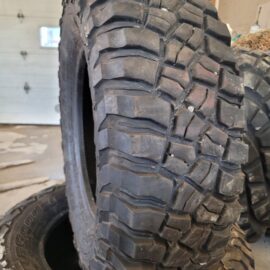 lt245/75r17 bfgoodrich mud terrain km3
1 × $110.00
lt245/75r17 bfgoodrich mud terrain km3
1 × $110.00  14.9-24 C TL Titan Torc Trac R-3
1 × $295.00
14.9-24 C TL Titan Torc Trac R-3
1 × $295.00  12x7 UTV/ATV Wheel
1 × $40.00
12x7 UTV/ATV Wheel
1 × $40.00  25.5X8.0-14 Michelin air MWL-4
1 × $300.00
25.5X8.0-14 Michelin air MWL-4
1 × $300.00