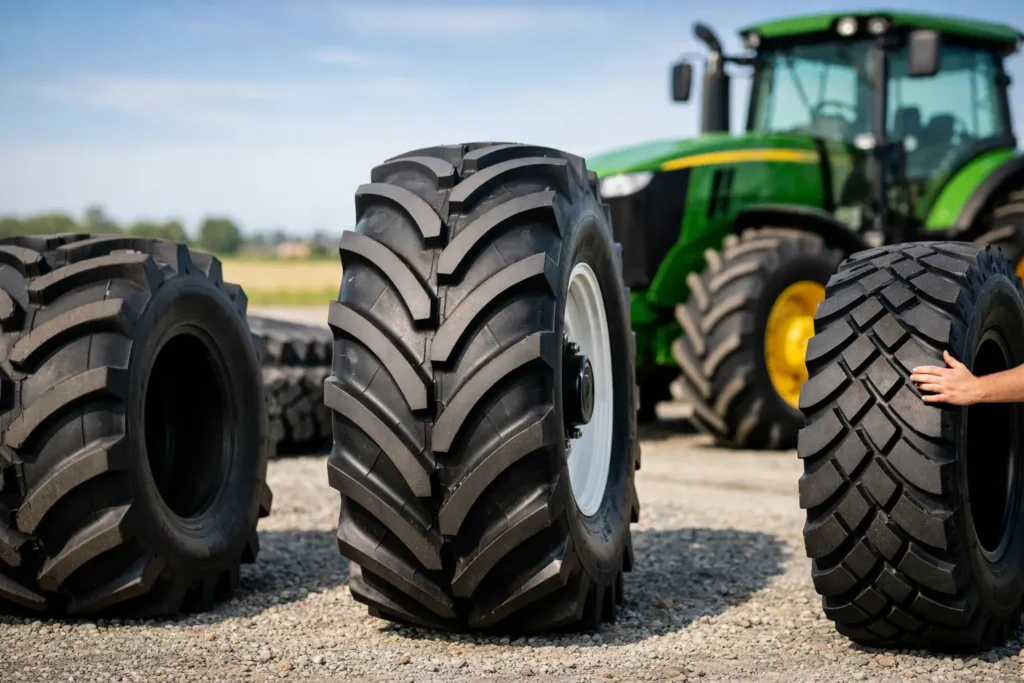
When you are looking at tractor tires for sale, the cheapest option is not always the best buy, and the highest-priced listing is not always the right one either. What matters is fitment, load capacity, field conditions, and how the tire was stored, used, or pulled from service. For farmers, equipment owners, and resellers, the right purchase starts with the specs, not the sales pitch.
A tractor tire has one job on paper – carry weight and put power to the ground. In real use, it has to do more than that. It needs to handle ballast, reduce slip, protect soil structure, hold up under weather changes, and stay dependable through long work hours. That is why serious buyers look beyond brand names and ask better questions before they buy.
Why tractor tires for sale vary so much
Two listings can look similar and still be very different products. One may be new old stock stored correctly and ready for service. Another may be a used takeoff with remaining tread but a shorter working life. Both can have value, but the right choice depends on application.
For example, a row crop operation may care more about lug shape, sidewall flexibility, and minimizing compaction. A utility tractor used around a mixed-use property may put more weight on price and general durability. A loader tractor that spends time on gravel, hardpack, and paved surfaces has a different wear pattern than a field tractor pulling implements through soft ground.
That is why buyers should treat tractor tires as application-specific inventory, not as a generic replacement part. Size, construction, and tread design all affect results in the field.
Start with size and fitment before price
A surprising number of bad purchases happen because the buyer starts with price or availability instead of fitment. If the tire does not match the machine, the rest of the deal does not matter.
Check the current tire size on the sidewall and confirm it against the equipment manufacturer specs if there is any doubt. Pay attention to overall diameter, section width, rim width compatibility, and whether the setup is part of a matched front-to-rear ratio on MFWD or 4WD equipment. On those machines, getting close is not always good enough. The wrong rolling circumference can create driveline strain and uneven wear.
If you are replacing only one tire on an axle, that decision needs extra care. Mismatched wear, height, or tread pattern can affect traction and machine balance. In some cases, replacing in pairs is the smarter move even if the upfront cost is higher.
Tread design matters more than many buyers think
Not every tractor tire is built for the same ground conditions. The most common farm tread patterns may look similar at a glance, but lug angle, lug depth, spacing, and casing design can change how the machine performs.
R-1 tires are common for general agricultural field use. They provide strong traction in loose soil and are often the standard choice for farm work. R-1W tires usually offer deeper tread, which can be a better fit in wetter ground or conditions where extra bite matters. R-4 tires are more common on industrial and utility machines that split time between dirt and harder surfaces. Turf styles have their place too, especially when surface protection matters more than maximum pull.
There is always a trade-off. A more aggressive tread can improve traction but may wear faster on hard surfaces. A tire that performs well in muddy fields may not be the best choice for road travel or loader work on packed ground. Buyers who know their operating conditions usually make better tire decisions than buyers who shop by appearance alone.
New, used, and new old stock all have a place
In this market, condition is not a simple new-versus-used decision. Surplus inventory changes that. New old stock can offer serious value when the tire has been stored properly and inspected carefully. It may never have been placed in service, but storage age still matters. Rubber condition, sidewall integrity, and bead area should all be checked.
Used tractor tires can also make sense, especially for older machines, seasonal equipment, or buyers trying to control operating costs. A good used tire with solid casing condition and usable tread can be the right solution for a work tractor that does not justify premium replacement pricing.
The key is honest evaluation. Look at tread depth, cracking, repairs, weathering, bead damage, and signs of uneven wear. Ask whether the tire was field-used, road-used, or removed as a takeoff. Those details help estimate remaining service life. Buyers who understand condition grading have an advantage, especially when shopping surplus and hard-to-find inventory.
Load rating, ply, and sidewall strength
A tractor tire that fits the rim but cannot handle the working load is not the right tire. Load rating matters, especially if the machine carries front-end loaders, heavy rear implements, tanks, or ballast.
Ply rating still gets used in the market as a quick reference, but modern tires may also be marked with load index and other construction details. What matters is how much weight the tire can safely handle at the intended inflation pressure. Under-spec a tire and you shorten its life. Overbuild it too far for the application and you may give up ride quality, footprint performance, or cost efficiency without much benefit.
Sidewall strength is another practical issue. Tractors working around stubble, rocks, debris, or rough access areas need more than just good tread. They need casings that can tolerate the environment. This becomes more important for mixed-use operators who move between field work, yards, road travel, and job sites.
Buying surplus tractor tires for sale can save money – if you know what to inspect
Surplus inventory is one of the best ways to source value, especially when mainstream sellers do not carry the exact size or tread you need. It is also a market where buyers need to read listings carefully.
Check whether the tire is sold as used, NOS, takeoff, blemished, or clearance inventory. Look for clear photos of tread face, sidewalls, bead areas, and any repairs. If a listing only shows one angle, ask for more detail before you commit. Condition transparency matters more than polished presentation.
For commercial buyers and resellers, surplus can open up access to recognized brands and uncommon sizes without the lead times or pricing that often come with special-order channels. That is a major advantage when equipment is down and replacement options are limited.
MilitaryTires.ca fits this kind of buying well because the inventory model is built around hard-to-find and utility-driven categories rather than standard retail shelf stock. That matters when you need actual availability, not a catalog promise.
For wholesale and fleet buyers, consistency is part of the value
A single tractor owner can shop one tire at a time. A fleet buyer, reseller, or agricultural operation with multiple machines needs a broader view. Consistency across sizes, condition, and brand matters because it affects maintenance planning and future replacements.
If you are buying in quantity, ask whether matching sets, duplicate sizes, or repeat inventory are available. A good deal on one odd tire may not help much if you need ongoing supply. For operations with several tractors or mixed equipment, inventory depth can be more valuable than chasing the lowest unit price.
Cross-border shipping also matters for buyers in the US and Canada who are sourcing specialized stock. Access to broader inventory can solve fitment problems faster, particularly when local channels are thin on agricultural surplus or specialty takeoffs.
Common mistakes buyers make
One of the biggest mistakes is buying by nominal size only and ignoring overall fit. Another is assuming all used tires with visible tread are equal. They are not. Casing history matters. So does storage. So does how the machine was used.
Another common problem is choosing an aggressive tread for a machine that spends too much time on hard surfaces. That can lead to faster wear and rougher operation without delivering much field benefit. On the other side, choosing a less aggressive tread for wet or loose ground can cost you traction when it counts.
Some buyers also underestimate the value of photos and seller details. If the listing does not tell you enough about age, condition, repairs, or application, you are not looking at a complete buying picture.
What a smart tractor tire purchase looks like
A smart purchase is not always the cheapest tire and not always the newest one. It is the tire that matches the machine, the workload, the surface conditions, and the budget. It is bought with clear eyes about condition and expected service life.
For some buyers, that means paying more for stronger casing quality or a better tread design. For others, it means using surplus or used inventory to keep a machine productive without overspending on an older unit. There is no one answer for every farm or every commercial operation.
The best approach is simple. Verify the specs, study the condition, and buy for the job the tractor actually does. If the listing gives you the right information and the tire meets the work requirement, that is where the value is.
Good tractor tire buying is not about chasing hype or guessing from a photo. It is about finding the right inventory at the right time, with enough detail to make the call and keep your equipment working.


 35x11.5-17 Goodyear aircraft rib
1 × $275.00
35x11.5-17 Goodyear aircraft rib
1 × $275.00 
 Hutchinson Beadlock 20″x10″ for Tubeless set up
1 × $75.00
Hutchinson Beadlock 20″x10″ for Tubeless set up
1 × $75.00  16x6.5 Wheel Rim
3 × $135.00
16x6.5 Wheel Rim
3 × $135.00  15.5-25 Loadmaster L-2
1 × $745.00
15.5-25 Loadmaster L-2
1 × $745.00  16.5" x 8.25" HMMWV Wheel / 12 bolt style
1 × $95.00
16.5" x 8.25" HMMWV Wheel / 12 bolt style
1 × $95.00  24R21 Michelin XZL
2 × $850.00
24R21 Michelin XZL
2 × $850.00  10R22.5 Major brand on wheel 5 ton truck
1 × $135.00
10R22.5 Major brand on wheel 5 ton truck
1 × $135.00  7.00-6 BFGoodrich aircraft tire on wheel
1 × $550.00
7.00-6 BFGoodrich aircraft tire on wheel
1 × $550.00  Dexter 17.5x6.75 wheel
1 × $135.00
Dexter 17.5x6.75 wheel
1 × $135.00