-
×
 37X12.50R16.5LT Goodyear Wrangler Enforcer MT
2 × $350.00
37X12.50R16.5LT Goodyear Wrangler Enforcer MT
2 × $350.00 -
×

 20x10 Beadlock 10 bolt Wheels/ 4000 axle series
1 × $340.00
20x10 Beadlock 10 bolt Wheels/ 4000 axle series
1 × $340.00
Subtotal: $1,040.00

 37X12.50R16.5LT Goodyear Wrangler Enforcer MT
2 × $350.00 20x10 Beadlock 10 bolt Wheels/ 4000 axle series
1 × $340.00
37X12.50R16.5LT Goodyear Wrangler Enforcer MT
2 × $350.00 20x10 Beadlock 10 bolt Wheels/ 4000 axle series
1 × $340.00 Subtotal: $1,040.00
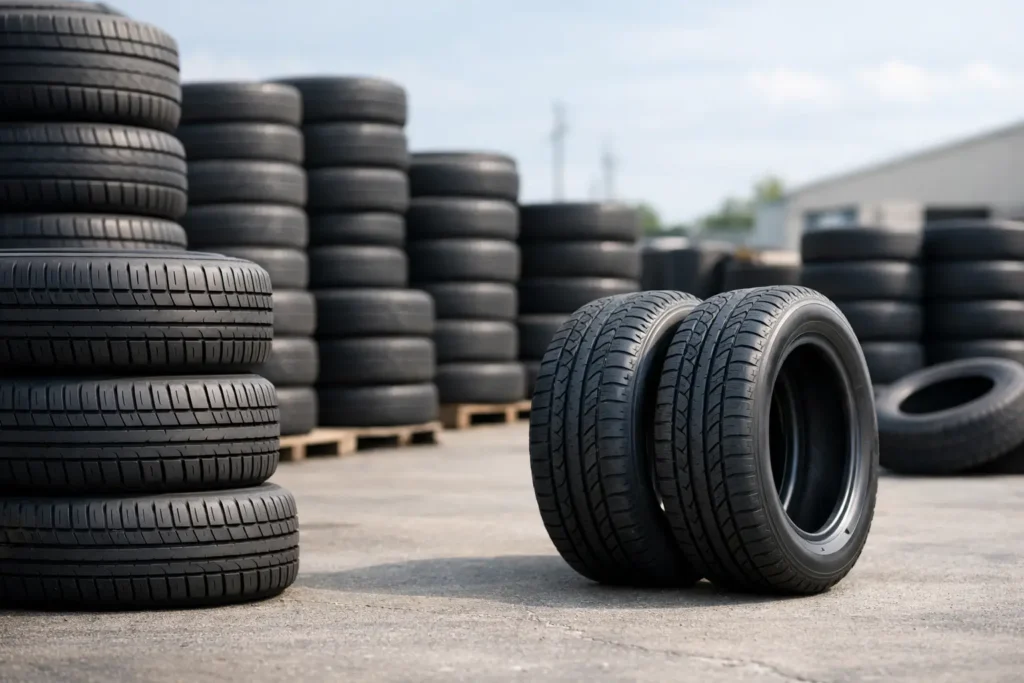
A fleet tire order gets canceled. A military-spec lot gets released. A warehouse clears out new old stock that never made it into regular retail channels. That is usually where the best surplus tires for sale come from, and it is why serious buyers keep an eye on surplus inventory instead of waiting on standard distributors.
If you run equipment, maintain a fleet, restore specialty vehicles, or buy for resale, surplus is not a side market. It is often the fastest way to find odd sizes, discontinued tread patterns, military fitments, and brand-name tires at pricing that makes sense. The catch is that surplus buying rewards buyers who know exactly what they are looking at.
Mainstream tire sellers are built around common passenger and light truck demand. That works if you need a current-production all-season tire in a standard size. It does not work nearly as well when you need 20-inch military wheels, aircraft tires, OTR inventory, agricultural lug patterns, or commercial truck takeoffs from a specific brand.
Surplus fills that gap. It gives buyers access to inventory that may be hard to source through normal channels, including new old stock, used serviceable tires, decommissioned military inventory, overstock, liquidation lots, and takeoffs. In many cases, the value is not just lower pricing. The real value is availability.
That matters to commercial operators trying to keep equipment in service, to collectors trying to match original fitment, and to wholesalers looking for margin on recognizable brands. If the alternative is extended downtime or an expensive custom order, surplus can be the more practical move.
One mistake buyers make is treating all surplus tires as if they fall into one condition category. They do not. Surplus can mean new old stock, which is unused inventory stored over time. It can also mean used tires removed from equipment, retreadable casings, or takeoffs with measurable remaining life.
That distinction changes the buying decision right away. New old stock may appeal to buyers who need unused inventory but can work with older manufacture dates if storage conditions were sound. Used inventory may be the better value for off-road, farm, industrial, or project use where budget matters more than cosmetic appearance. Takeoffs can be especially attractive when they come from controlled fleet or equipment replacements and still offer solid tread depth.
There is no one-size-fits-all answer on which is best. It depends on the application, speed requirements, load demands, and how much risk you are willing to take in exchange for price.
Fitment comes first. Before price, before brand, before tread depth, you need the right size, load range, ply rating, bolt pattern if wheels are included, and the right application. A military tire that looks close is not good enough if the fitment is wrong for your axle, clearance, or load needs.
After that, condition matters. On used inventory, look at tread wear, sidewall condition, weather checking, repairs, bead damage, and signs of uneven wear. On new old stock, the focus shifts more toward storage history, overall casing condition, and whether the tire has remained clean and stable in inventory. Age matters, but age by itself is not the full story. A properly stored surplus tire can be a better buy than a newer tire with poor handling or unknown abuse.
Brand matters too, especially in commercial, industrial, and off-road categories. Buyers generally know the value of names like Michelin, Goodyear, Bridgestone, BFGoodrich, and Hutchinson. That does not mean every branded surplus tire is automatically worth buying, but proven manufacturers tend to give buyers more confidence in casing quality, load performance, and intended use.
Then there is quantity. If you need one replacement for a project truck, your options are broad. If you need a matched set for a machine, trailer group, or fleet position, the available count becomes part of the decision. Surplus buying often moves fast, so quantity on hand can be just as important as price per tire.
Surplus buying is especially practical in categories where common retail inventory is thin or expensive. Military tires and wheels are the obvious example. Buyers working on tactical vehicles, transport platforms, or military restorations often need specific sizes and spec-driven products that ordinary tire shops do not carry.
Off-road and industrial users also benefit. Equipment owners are often less concerned with showroom appearance and more concerned with usable condition, load capability, and cost control. If a surplus tire meets the application and has the remaining life to justify the price, it can be a strong operational buy.
Farm and agricultural buyers are in a similar position. Specialty implement, flotation, and tractor sizes can be costly when bought new through standard channels. Surplus inventory can offer a way to keep machines working without overspending, especially on seasonal or secondary equipment.
Commercial truck buyers often look at takeoffs and surplus casings with the same mindset. The question is not whether the tire is perfect. The question is whether it delivers enough service life, at the right cost, for the lane, load, and duty cycle.
The reason surplus pricing can look attractive is simple. You are not buying the same kind of certainty you get from current retail stock. The tire may be discontinued. The quantity may be limited. Condition may vary from lot to lot. Cosmetic wear may be present even when the tire is serviceable.
That is not a problem if you buy with clear standards. It becomes a problem when buyers chase price without checking application details. A cheap tire that does not fit, cannot carry the load, or creates downtime is not a bargain.
This is where experienced surplus buyers tend to outperform casual ones. They know what they can accept. They understand date codes, storage issues, condition grading, and use-case limits. They also know when to pass. Some jobs require current-production inventory and full uniformity. Others do not.
In this market, selection beats marketing every time. Buyers looking for surplus are usually trying to solve a sourcing problem. They need a specific tire, wheel, or assembly, and they need a seller that actually has inventory instead of a generic listing with no real stock behind it.
That is why inventory depth matters. A supplier with surplus truck tires, military takeoffs, aircraft tires, agricultural inventory, industrial fitments, and hard-to-find wheels is more useful than a general retailer with a broad catalog but no specialty stock. For buyers in the US and Canada, shipping reach matters too. Specialized inventory does not help much if it cannot be moved where it is needed.
This is also where auction and buy-now options can both make sense. Auctions work for buyers with flexibility, bulk interest, or a sharp eye for value. Buy-now inventory works better when time matters and the fitment is too specific to risk losing.
A supplier like MilitaryTires.ca stands out in this kind of market because the value is built around access. The core advantage is not polished sales copy. It is the ability to source and move niche inventory across categories that standard tire channels often miss.
The smartest way to buy surplus is to stay technical and stay disciplined. Start with exact size, load, and application requirements. Check whether you need singles, pairs, matched sets, or full quantity lots. Decide up front whether used, takeoff, or new old stock is acceptable.
Then compare the total value, not just the tire price. Freight, border movement, mounting compatibility, and usable tread life all affect the real cost. A lower-priced surplus tire may still lose on total value if shipping is high or the condition leaves too little service life.
If you are buying for resale or wholesale, consistency matters even more. Mixed-condition lots can work, but only if your downstream buyers understand what they are getting. If you are buying for fleet or equipment use, think in terms of uptime, not just discount percentage.
Surplus is not a gamble when it is sourced well and evaluated correctly. It is a practical channel for buyers who care more about fitment, function, and inventory access than polished retail packaging.
The best surplus buys are usually not the flashiest ones. They are the tires that fit the machine, carry the load, arrive when needed, and go straight to work.
