

Uncategorized
Mounting Split Rim Wheels: Safety Before Speed
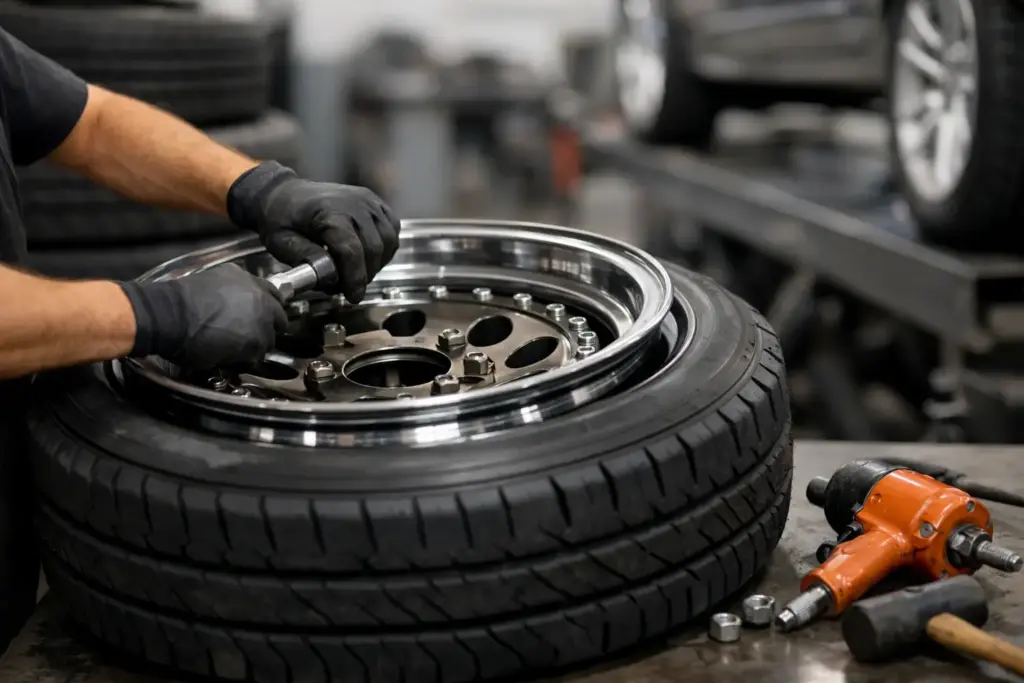
Sep
A split rim wheel can be the right answer for military trucks, agricultural equipment, industrial machines, and older off-road applications. It can also become a serious shop hazard when the wheel components are mismatched, corroded, damaged, or handled without the proper equipment. Mounting split rim wheels is not a routine tire change. Treat it as a controlled service operation from the moment the wheel enters the shop.
For fleet operators, restoration shops, contractors, and resellers, the goal is simple: get the correct tire and wheel assembly back into service without gambling on condition or fitment. That means identifying the wheel correctly, inspecting every component, and using trained personnel with proper inflation restraint equipment.
Why Split Rim Wheel Service Requires Extra Control
The term “split rim” is often used broadly, but it can describe several older or multi-piece wheel designs. Some assemblies use a separate side ring or locking ring. Others include additional components such as flange rings. These parts are engineered to work as a specific matched system at a specified tire size, load range, and inflation pressure.
When an assembly fails during inflation, stored energy can release violently. The danger is not limited to the ring itself. A tire, wheel component, or improperly seated part can become a projectile. That is why experienced commercial tire shops treat multi-piece wheel work differently than a standard passenger or light-truck tire installation.
The practical takeaway is straightforward: if a wheel is a multi-piece design, do not assume a quick mounting job is appropriate just because the tire size appears familiar. Verify the wheel style, components, tire compatibility, and condition first.
Identify the Wheel Before Ordering Tires or Parts
Correct identification prevents a large share of costly mistakes. Start with wheel markings where available, then confirm the overall wheel diameter, width, bolt pattern, pilot or stud-hole configuration, offset, and intended application. Measure carefully. A nominal size on an old wheel does not replace a complete fitment check.
Look closely at the wheel construction. A one-piece tubeless truck wheel, a beadlock wheel, and a multi-piece split rim assembly are not interchangeable categories. They use different service procedures, hardware, and sometimes different tire or tube requirements.
For military surplus and older equipment, previous repairs and field modifications can complicate identification. A wheel may have been repainted, fitted with a different tire, or assembled with components from another wheel. If there is any uncertainty about what you have, stop before ordering replacement rings, tubes, flaps, or tires. A component that looks close is not necessarily a safe match.
The wheel manufacturer’s part numbers and service documentation should govern compatibility. Never mix locking rings, side rings, or wheel sections from different makes, models, or sizes. Similar diameter does not mean the parts were designed to work together.
Check the Intended Tire Construction
Many older multi-piece wheel applications were designed around tube-type tires, tubes, and flaps. Others may be intended for specific tubeless assemblies. Confirm the tire type and recommended rim width before making a purchase.
Load capacity matters just as much as diameter. A tire can physically fit a wheel yet be wrong for the axle load, operating speed, pressure range, or duty cycle. A farm trailer, military cargo truck, airport support vehicle, and rock-crawling rig may all use large tires, but their operating demands are different.
For commercial buyers, document the tire size, load rating, wheel markings, and vehicle application before requesting inventory. That makes it easier to source surplus or takeoff stock that actually fits the job.
Inspection Comes Before Mounting Split Rim Wheels
A clean, close inspection is not optional. Dirt, old paint, corrosion, and grease can hide damage where it matters most. Before any tire work begins, the wheel assembly should be disassembled and assessed by a qualified technician using the applicable manufacturer and workplace safety procedures.
Pay particular attention to the locking ring or side ring, ring groove, bead seat areas, welds, bolt holes, and valve opening. Any crack, distortion, deep pitting, worn retaining surface, bent component, or questionable prior repair is reason to remove the assembly from service until it can be evaluated properly.
Corrosion deserves more respect than it often gets. Surface rust may be manageable when it can be cleaned without affecting the component profile. Severe rust scale or pitting at a ring seat, gutter, or locking surface is a different situation. Those areas are critical to keeping the assembly correctly engaged under pressure.
Do not try to save a damaged wheel with improvised welding, grinding, heating, or parts substitution. A low-cost wheel repair can turn into an expensive injury, equipment loss, or downtime event. For hard-to-find military and industrial wheels, the pressure to reuse marginal parts is understandable. It is still the wrong trade-off.
Equipment and Shop Setup Matter
Qualified personnel should use proper inflation restraint equipment, remote air controls, and a suitable gauge system. The purpose is to keep people outside the likely danger area while the assembly is being inflated and checked. Follow current OSHA requirements, manufacturer instructions, and your company’s tire-service policies.
A clear work area also matters. Keep bystanders away, remove loose tools and obstructions, and make sure the wheel is positioned according to the approved service procedure. This is not work to perform against a wall, near a vehicle lift, or in a busy aisle where someone can walk into the hazard zone.
The tools must match the wheel system. Makeshift bars, damaged hammers, unapproved clamps, or hardware-store substitutes have no place in multi-piece wheel service. The same applies to air chucks and hoses that force the technician to stand too close during inflation.
If your shop does not have the correct cage or restraint system, tools, documentation, and trained technician, send the assembly to a commercial tire service provider that does. The cost of outsourcing is usually far lower than the cost of getting it wrong.
Common Problems That Should Stop the Job
Some issues are obvious, such as a visibly cracked ring. Others show up only after cleaning and dry inspection. Stop work when the ring will not seat correctly, the tire bead does not match the wheel specification, the components cannot be confirmed as a matched set, or corrosion has compromised critical surfaces.
Also stop when the assembly history is unknown and the wheel lacks readable markings. Older surplus wheels can be excellent serviceable inventory, but condition varies. New old stock may have years of storage exposure. Used takeoffs may carry hidden wear from previous service. Condition should be evaluated by the part, not assumed from appearance or age.
A tire that was removed from a damaged or failed assembly should receive its own inspection. Check for bead damage, casing injuries, exposed cords, sidewall cuts, and signs of prior run-flat operation. Reusing a tire simply because it holds air is not a sound commercial decision.
Buying Surplus Split Rim Wheels With Fewer Surprises
Surplus inventory can solve difficult sourcing problems, particularly for military vehicles, legacy farm equipment, industrial trailers, and specialized off-road builds. The key is buying against specifications rather than buying against a photo alone.
Before purchase, confirm the exact wheel size, construction type, number and type of components included, bolt pattern, center bore or pilot dimensions, offset if relevant, and visible condition. Ask whether the wheel is new old stock, used, takeoff inventory, or a repaired unit. For multi-piece assemblies, confirm whether the matching ring or rings are included and whether component markings are legible.
Shipping also deserves planning. Large wheels are heavy, awkward freight items, and a missing ring or incorrect bolt pattern can create return costs that exceed the original bargain. Commercial buyers should consolidate part numbers, quantities, and delivery requirements before arranging freight across the United States or Canada.
MilitaryTires.ca carries specialized tire and wheel inventory for buyers who need uncommon sizes and utility-driven equipment, but the buyer still needs to verify fitment at the vehicle and wheel level. Good inventory access helps. Accurate specifications close the deal.
Use the Right Shop for the Job
Mounting split rim wheels is a service category where speed should never lead the decision. A qualified commercial tire technician will recognize the wheel type, reject questionable components, use the correct restraint equipment, and follow the wheel maker’s approved process.
If you are sourcing wheels for a fleet, restoration, farm, or industrial project, build safety into the purchase decision. A clean, correctly identified matched assembly with documented fitment is worth more than a cheaper wheel that leaves unanswered questions. The right wheel can keep equipment moving. The wrong one can stop a job before it starts.
