

Uncategorized
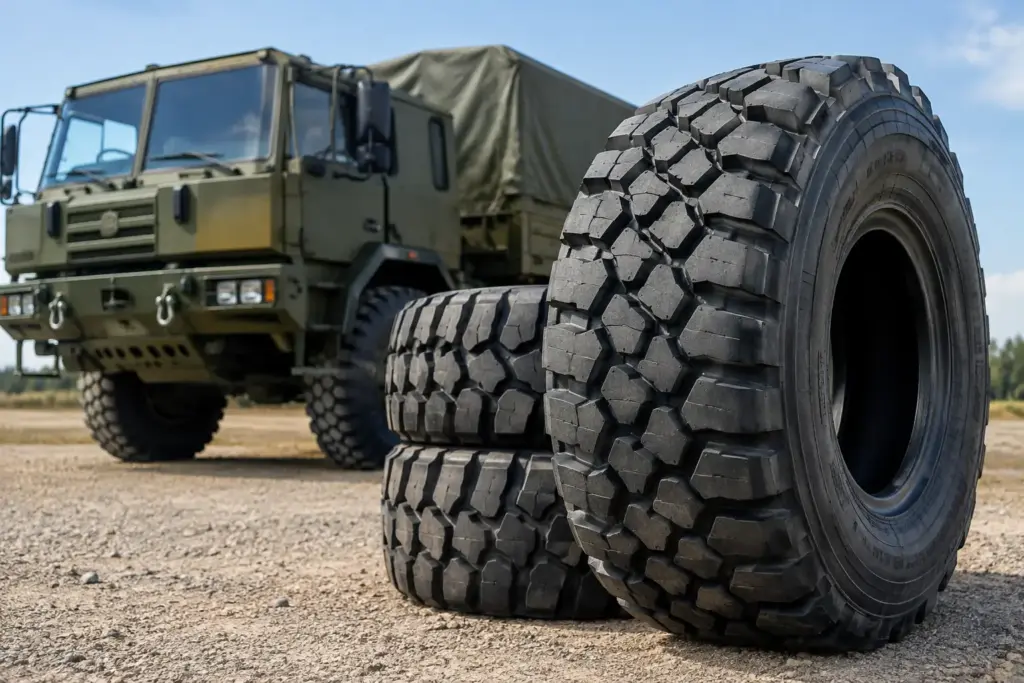
Michelin X Military Tires Review for Work Rigs
Oct
A proper Michelin X military tires review starts with the sidewall, not the name. Michelin X markings appear across several commercial and military-oriented tire lines, and the exact casing, tread pattern, size, load rating, speed symbol, and condition determine whether a tire is a strong buy or an expensive fitment mistake.
For military vehicle owners, contractors, farm operators, and fleet buyers, Michelin military tires have a reputation for heavy-duty construction and long service in demanding applications. That reputation is earned, but it does not mean every surplus Michelin X tire belongs on every truck, trailer, or off-road vehicle. The right tire can deliver serious traction and load capacity. The wrong one can create clearance problems, harsh road manners, gearing changes, or axle-matching issues.
Michelin X Military Tires Review: What You Are Buying
The Michelin X name is associated with a broad family of radial tire designs used across commercial, off-road, and military applications. Many buyers are familiar with aggressive military patterns used on tactical trucks and expedition builds, but the sidewall tells the real story. A Michelin X tire may be intended for mixed service, all-position use, off-road service, trailer work, or a specific military platform.
That matters because military-spec tires are built around a mission. A tire designed to carry equipment over unimproved roads may prioritize casing strength, cut resistance, and flotation over quiet highway operation. A tire built for a larger tactical vehicle may have a load range and overall diameter far beyond what a pickup axle, wheel, suspension, or brake package can safely support.
The practical appeal is clear. These tires are often available in uncommon sizes, with heavy-duty carcasses and tread designs that are difficult to find through ordinary retail channels. Surplus inventory can also put premium-brand tires within reach of buyers who would not pay current replacement pricing. The trade-off is that surplus buying requires more inspection and more fitment discipline.
Where Michelin Military Tires Perform Well
A good Michelin military tire is most at home where load, terrain, and durability matter more than a soft ride. On military vehicle restorations, equipment haulers, off-road service trucks, forestry rigs, agricultural support vehicles, and purpose-built overland applications, the construction can be a real advantage.
Deep, open tread patterns can clear loose soil, mud, gravel, and snow better than a highway rib tire. Strong sidewalls are useful around rock, debris, and jobsite hazards. Larger-diameter military sizes can improve ground clearance and roll-over ability on rough terrain. For buyers replacing obsolete tires on a military truck, matching the original type and size may be the only practical route.
Load capacity is another reason these tires get attention. Many military tires are designed for vehicles that carry substantial payloads or operate with changing loads over rough ground. That does not automatically make them suitable for a commercial truck, but it does mean they can be a sound option when the tire’s published rating meets the vehicle requirement.
Used correctly, a Michelin casing can offer good value. New old stock may provide unused tread and an unused casing at a lower cost than new current-production alternatives. Used takeoffs may be even more economical for slow-speed, off-road, agricultural, or project use, provided their condition is honestly evaluated.
The Road Trade-Off: Noise, Weight, and Wear
Buyers considering military tires for regular pavement use should be realistic. Aggressive lugs generate noise. Heavy casings add unsprung weight. Large tires can reduce acceleration, affect braking distance, and change effective gear ratio. None of these issues makes the tire bad. They simply make it purpose-specific.
A dedicated highway truck usually benefits from a commercial highway tire designed for lower rolling resistance, even wear, and predictable wet-road behavior. A daily-driven pickup may also be better served by a modern all-terrain tire unless it needs the size, load rating, or military appearance of a specialty tire.
Tread wear depends heavily on alignment, inflation, axle position, load, and road use. An aggressive military tire that sees mostly pavement can wear differently from the same tire used on gravel, dirt, and low-speed service roads. Do not assume a deep tread will last forever on asphalt. Tire weight and vehicle setup still control the outcome.
Ride quality is another variable. Some larger military tire sizes run at pressures and loads that do not translate well to an empty or lightly loaded vehicle. Overinflation can make a vehicle ride hard and reduce the usable contact patch. Underinflation can create heat, shoulder wear, casing damage, and handling concerns. Use the tire maker’s load-and-inflation information for the actual application, not guesswork based on appearance.
Fitment Checks Before You Buy
Before purchasing Michelin X military tires, verify the complete sidewall specification and compare it against your vehicle, wheels, and intended use. Diameter alone is not enough. Two tires that look similar can have different section widths, recommended rim widths, load ratings, and actual mounted dimensions.
Check these items carefully:
- Tire size, including whether it is metric, flotation, or an older military/commercial designation
- Overall diameter and section width at the recommended rim width
- Approved wheel width, wheel offset, and wheel load rating
- Load index or ply/load range, maximum inflation, and required operating pressure
- Tread type and whether the tire is appropriate for steer, drive, trailer, or all-position service
- Clearance at full steering lock, full suspension compression, and with chains if chains will be used
- Local road-use rules, speed limitations, and any vehicle inspection requirements
For dual-wheel applications, spacing is critical. A large section width or a different rim offset can allow dual tires to touch under load. That creates heat and sidewall damage quickly. For beadlock, split-rim, or run-flat-equipped military wheels, use only components designed to work together and have qualified personnel handle mounting. The equipment is not a casual tire-shop job.
New Old Stock vs. Used Michelin X Tires
Condition can matter as much as tread depth. New old stock is not the same as newly manufactured inventory. It may be unused, but it has still aged in storage. Storage conditions, date codes, exposure to sunlight, temperature swings, and ozone all influence rubber condition.
Inspect any surplus tire for sidewall cracking, weather checking, bead damage, cuts, repairs, exposed cords, flat spotting, uneven wear, and contamination from fuel or chemicals. A tire with impressive tread but poor sidewalls is not a bargain. Ask for clear photos of the tread, both sidewalls, bead areas, and date code when available.
Used military takeoffs can make sense for equipment that operates at lower speeds or limited annual mileage. They can also be a practical option for restoration projects where correct appearance and specialty sizing matter. For high-speed highway use, passenger transport, or heavily loaded commercial work, buyers should apply a higher standard and confirm that the tire’s age, condition, rating, and intended use are appropriate.
If buying multiples, confirm that they are a matched set. Mixing different tread depths, models, or construction types on the same axle can create handling and wear problems. On vehicles with driveline sensitivity, mismatched rolling circumference can also place unnecessary stress on differentials and transfer cases.
Is a Michelin X Military Tire Worth It?
For the right application, yes. Michelin X military tires are worth considering when you need an uncommon size, serious load capability, durable casing construction, or traction for rough ground. They are especially relevant for military truck restorations, off-road work vehicles, specialty trailers, and operators replacing hard-to-source tire sizes.
They are less compelling when the vehicle spends nearly all of its time on pavement, requires low noise, or needs the fuel economy and wet-road refinement of a current highway tire. The best purchase is not always the most aggressive tread or the lowest surplus price. It is the tire that matches the wheel, axle rating, operating speed, load, and terrain.
At MilitaryTires.ca, inventory can include new old stock and used specialty tires, so availability changes. When a hard-to-find Michelin size appears, move with the specifications in hand. Confirm fitment first, inspect condition honestly, and buy the tire for the work it will actually do.
