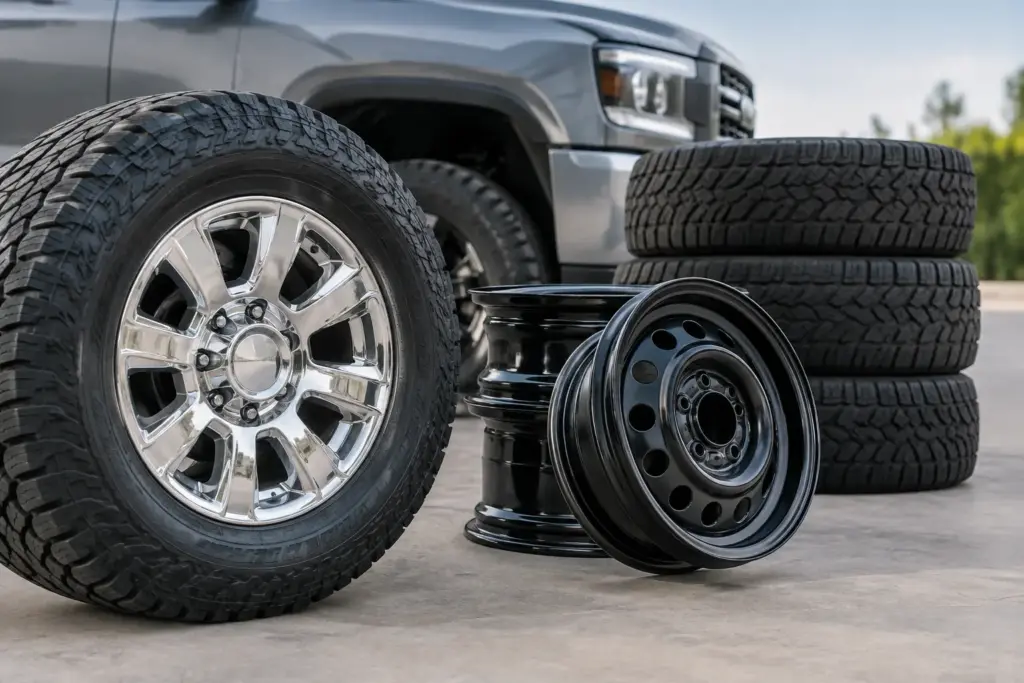
A rim that looks right can still be wrong for the truck. One mismatched bolt pattern, center bore, offset, or load rating can turn a good surplus wheel into a costly fitment problem. Knowing how to match truck rims starts with the truck’s actual working requirements, not the wheel’s appearance or advertised diameter.
For work trucks, military vehicles, commercial rigs, farm trucks, and off-road builds, the correct wheel has to carry the load, clear the brakes and suspension, hold the tire safely, and stay centered on the hub. Get those details right before buying, especially when purchasing used wheels, takeoffs, new old stock, or specialty military-spec inventory.
Start With the Truck and Its Intended Use
Before measuring a rim, identify the truck, axle configuration, and job it will perform. A light-duty pickup used for weekend trail work has different wheel requirements than a loaded service truck, a 2.5-ton military vehicle, or a medium-duty flatbed running dual rear wheels.
Check the factory wheel and tire placard, owner’s manual, axle tags, or existing wheel stampings. Record the original wheel diameter, width, bolt pattern, hub bore, offset or backspacing, and load rating. If the truck has been modified with larger brakes, lift components, axle swaps, or aftermarket hubs, factory data may no longer be enough. Measure the truck as it sits.
Tire size matters, but it is only one part of fitment. A 22.5-inch commercial tire, for example, requires a 22.5-inch rim, but the rim width must also suit that tire’s approved range. The wheel must then fit the hub and provide enough clearance for brake drums, calipers, steering components, and the body.
How to Match Truck Rims to Tire Size
The first hard rule is diameter: tire and rim diameters must match exactly. A tire marked 11R22.5 mounts only on a 22.5-inch wheel. A 16-inch tire does not fit a 16.5-inch wheel, even though the difference appears small. Never force, modify, or attempt to seat a tire on the wrong rim diameter.
Rim width is the next check. Each tire size has a recommended measuring rim width and, in many cases, an approved rim-width range. Wide flotation tires typically need wider wheels than narrow commercial tires. A rim that is too narrow can pinch the tire sidewalls and alter tread shape. A rim that is too wide can leave sidewalls exposed and increase the chance of bead or sidewall damage under hard use.
For example, a 37×12.50R17 tire is commonly used with a wheel around 8.5 to 10 inches wide, depending on the tire manufacturer’s specification. A commercial 11R22.5 tire is often fitted to an 8.25-inch wheel, while other commercial sizes may require 7.50-, 8.25-, or 9.00-inch widths. Do not guess based on what another truck is running. Confirm the tire maker’s approved wheel range for the exact tire model.
The bead-seat profile also has to match. Tubeless commercial wheels, split rims, multi-piece wheels, and military beadlock assemblies are not interchangeable systems. Multi-piece and split-rim assemblies require trained handling, correct components, proper restraint equipment, and strict inflation procedures. If components are mixed or condition is uncertain, have a qualified commercial tire shop inspect the assembly.
Confirm the Bolt Pattern and Stud Type
A wheel can have the correct diameter and width and still be unusable if the bolt pattern is wrong. Bolt pattern is defined by the number of wheel studs and the diameter of the circle they form. Common examples include 8 on 6.5, 8 on 170 mm, 10 on 285.75 mm, and 10 on 11.25 inches.
Count the studs first, then measure the bolt circle accurately. On even-numbered patterns, measure from the center of one stud directly across to the center of the opposite stud. Metric and SAE patterns can be close enough to confuse a quick measurement, but close is not correct. A wheel must match the truck’s stud pattern exactly.
Also identify whether the truck uses stud-piloted or hub-piloted wheels. Older commercial applications often use stud-piloted wheels with tapered lug nuts that center the wheel. Hub-piloted systems use flange nuts and a precise center bore that locates the wheel on the hub. These systems use different wheel designs and hardware. Do not install a wheel intended for one system onto the other.
Check Center Bore and Hub Fit
The center bore is the opening in the middle of the wheel. On hub-piloted trucks, it must fit over the hub pilot correctly. If the bore is too small, the wheel will not seat. If it is too large, the wheel may not center properly unless the application is specifically designed for that arrangement.
Hub fit is especially important on heavy trucks, trailers, military equipment, and vehicles running high loads. The hub carries the centering function on a hub-piloted wheel, reducing the chance of vibration, uneven stud loading, and wheel movement. Do not rely on lug nuts alone to correct a loose center bore on a wheel that should be hub-piloted.
Inspect the mounting face and center bore on used wheels. Rust scale, paint buildup, burrs, and damaged pilot holes can prevent full seating. Clean mating surfaces before installation, but do not grind or machine a wheel to make it fit unless a qualified wheel professional has approved the work.
Get Offset and Backspacing Right
Offset and backspacing determine where the wheel sits relative to the hub. They affect tire clearance at the suspension, steering stops, fenders, frame, and brake components.
Offset is the distance between the wheel centerline and its mounting surface. Positive offset moves the wheel inward. Negative offset pushes it outward. Backspacing measures from the wheel’s mounting surface to the inner edge of the rim. Both describe wheel position, but backspacing is often easier to measure on a loose wheel.
More negative offset can create a wider stance and clear certain suspension components, but it can also push tires into fenders, increase scrub radius, place more leverage on wheel bearings, and throw debris down the truck’s sides. More positive offset may tuck the wheel inward, but too much can cause the tire to rub control arms, leaf springs, inner fenders, or steering linkage.
Check clearance with the steering turned lock to lock and the suspension compressed. A truck that clears in the shop can still rub under articulation, a loaded front axle, or a sharp turn. This is a common issue with oversized off-road tires and non-stock wheel widths.
Brake and Suspension Clearance
Wheel diameter alone does not guarantee brake clearance. A 17-inch wheel may clear one brake package and hit another because of spoke shape, barrel design, or caliper position. This matters on trucks with brake upgrades, axle swaps, or late-model heavy-duty axles.
Test-fit one wheel before mounting a full set whenever possible. Make sure the wheel sits flush against the hub, spins freely, clears the caliper or drum, and does not contact steering or suspension parts. Use the correct lug nuts and torque procedure for the wheel system.
Match Wheel Load Rating to the Real Axle Load
A truck wheel is a load-carrying component, not a cosmetic accessory. Its rating must meet or exceed the load it will carry at that position. Check the wheel’s stamped load rating, not just the tire’s rating.
For a single rear wheel axle, each rear wheel needs enough capacity for at least half the axle’s maximum loaded weight, with a practical safety margin for uneven loading and real operating conditions. For dual rear wheels, the load is divided across more tires and wheels, but each component still needs the correct rating and dual-wheel approval.
Do not assume that an aluminum aftermarket wheel, a used takeoff, or a military wheel has the same rating as the original. Verify the part number, application, condition, and marking. Cracks around stud holes, elongated holes, bent bead seats, severe corrosion, welded repairs, or damaged lock-ring areas are reasons to remove a wheel from service.
Special Considerations for Duals, Beadlocks, and Surplus Wheels
Dual-wheel trucks need the correct inner and outer wheel arrangement, offset, and spacing. The tires must have enough room between sidewalls to prevent heat buildup and contact under load. A wheel that fits on the front axle may be wrong for a rear dual application.
Military and off-road beadlock wheels are another case where application matters. They may use special run-flat inserts, clamps, seals, hardware, and tire designs. Verify that every component belongs to the same system and that the wheel is suitable for road speed, inflation pressure, and vehicle weight. A rugged wheel is not automatically highway-legal or appropriate for every tire.
Surplus and used rims can offer serious value when the specifications are right. Inspect them closely for bent flanges, corrosion at bead seats, damaged studs or nut seats, previous repairs, and missing components. New old stock can be an excellent option, but it still needs to match the truck’s hub, brake system, tire size, and working load.
Measure Before You Buy
For hard-to-find truck, military, industrial, and commercial wheel applications, bring a complete set of numbers to the purchase: wheel diameter and width, bolt pattern, center bore, offset or backspacing, stud-piloted or hub-piloted design, tire size, and required load rating. Photos of the hub, existing wheel markings, and brake assembly can also prevent an expensive mismatch.
MilitaryTires.ca carries specialized wheel and tire inventory where those details matter more than a generic vehicle lookup. Confirm fitment before purchase, particularly on used, surplus, auction, and specialty items where configuration can vary by application.
The best truck rim is the one that seats flat, centers correctly, clears under load and steering travel, and carries the job without compromise. Measure twice, verify the stamped specifications, and test-fit before committing to a full set.


 LT225/75R16 Firestone Winterforce LT
1 × $66.37
LT225/75R16 Firestone Winterforce LT
1 × $66.37 
 14.00-24 TG American Miner SL E-2/L-2
1 × $300.00
14.00-24 TG American Miner SL E-2/L-2
1 × $300.00  4 tires16.00R20 Michelin XZL on Clearance
1 × $1,000.00
4 tires16.00R20 Michelin XZL on Clearance
1 × $1,000.00  26.5-25 Firestone Super Rock Grip E-3 L-3
1 × $965.00
26.5-25 Firestone Super Rock Grip E-3 L-3
1 × $965.00 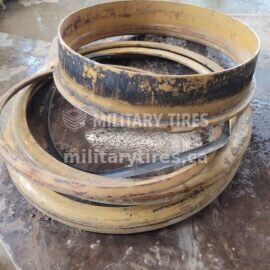 25"x17" 5-piece Wheel Rings
1 × $400.00
25"x17" 5-piece Wheel Rings
1 × $400.00