

Uncategorized
How to Choose Farm Tires That Fit the Job
Jul
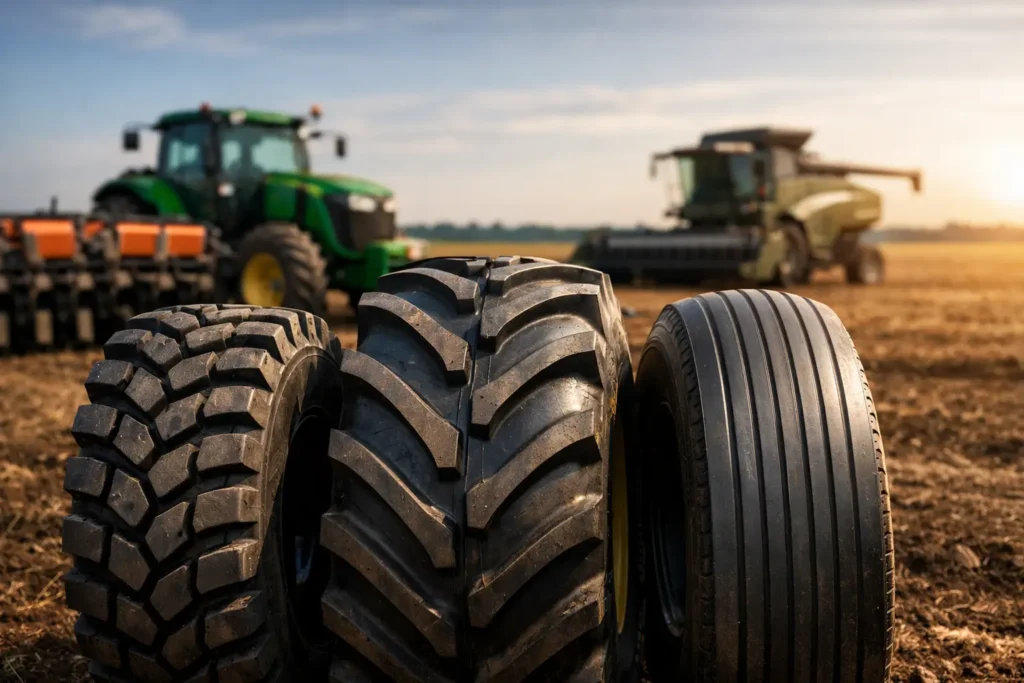
A tractor that spends half its day slipping, packing soil, or wearing out rubber too fast is usually running the wrong tire, not working too hard. If you want to know how to choose farm tires, start with the machine, the ground, and the load. That sounds basic, but most buying mistakes happen when one of those three gets ignored.
Farm tires are not a cosmetic purchase. They affect traction, fuel use, ride quality, compaction, stability, and how much work you get done before weather turns or the field changes. If you are buying for a utility tractor, sprayer, combine, loader, or implement, the right tire is the one that matches the real operating conditions, not just the size stamped on the sidewall.
How to choose farm tires without guessing
The quickest way to get off track is to shop by price alone or assume the old setup was ideal just because it fit. Plenty of farm equipment ends up with replacement tires that are acceptable, but not actually right for the application. Before you compare brands or condition, confirm five basics: tire size, ply or load rating, tread type, rim compatibility, and intended use.
Start with the sidewall information on the current tire and the equipment manufacturer specs. Tire size is only the first step. Two tires with similar overall dimensions can perform very differently depending on construction, load capacity, and tread design. If your machine runs a loader, carries mounted implements, or sees road travel between fields, those details matter.
The next question is where the machine works most. Soft ground, wet rows, hard-packed yards, gravel lanes, and mixed on-road use all push the tire choice in different directions. There is no perfect tire for every surface. Better traction in the field may come with faster wear on pavement. A tire built for flotation may not give the same bite in heavy draft work. That trade-off is normal.
Match tread to the work
For most buyers, tread pattern is where farm tire performance really starts to separate.
R-1 tires for general field traction
R-1 is the standard agricultural tread most people picture first. It is built for field work and gives strong traction in loose soil, tilled ground, and common row-crop conditions. If your tractor spends most of its time pulling in the field, this is often the baseline choice.
The trade-off is that R-1 tires can wear faster on pavement and may not be ideal for frequent hard-surface travel. They also do not solve every problem in wet ground. Lug spacing, tire width, and inflation still matter.
R-1W for wetter conditions
R-1W tires have deeper tread than standard R-1 designs. They are often a better fit for wetter ground where extra pull matters. If you routinely deal with mud, soft fields, or moisture that turns a normal workday into a traction problem, this option deserves a close look.
That said, deeper lugs are not always the answer for every machine. If your operation includes a lot of road miles or hard-surface use, the benefit in the field may be offset by wear and ride considerations.
R-3 for turf and low disturbance
R-3 tires are designed for lower ground disturbance. They make sense for specialty applications where protecting the surface matters more than maximum pull. They are less common for heavy field work and generally not the first choice for draft applications.
R-4 for mixed-use machines
R-4 industrial tread sits between farm and construction use. These tires are common on tractors with loaders, telehandlers, backhoes, and machines that split time between dirt, gravel, yards, and lighter agricultural work. They usually offer better durability on hard surfaces than R-1 tires, but less field traction in soft soil.
If your machine is doing material handling, barn work, and general property use more than row work, R-4 may be the more practical option.
Size is more than fitment
A tire that physically mounts is not automatically the correct tire. When looking at how to choose farm tires, size affects rolling circumference, ground speed, power transfer, front-to-rear lead on MFWD tractors, and implement performance.
If you are replacing one tire on a four-wheel-drive tractor, be careful. Mismatched rolling circumference can create driveline strain, uneven wear, and poor handling. On MFWD equipment, front and rear tire combinations need to stay within manufacturer tolerance. Changing one axle size without verifying the ratio can get expensive fast.
Width matters too. A wider tire can improve flotation and reduce compaction in softer ground. A narrower tire may be better for row spacing or cutting through surface moisture to reach firmer soil. Neither is universally better. It depends on crop type, machine weight, and soil conditions.
Load rating and sidewall strength
A lot of tire failures are not really tire failures. They are overload problems, inflation problems, or impact damage from using the wrong construction for the job.
Check the actual load the tire needs to carry, especially on front axles, loaders, grain carts, wagons, and implements that see varying weights. A tire may be the right size but still be underbuilt for your application. Ply rating, load index, and inflation tables all need to line up with how the machine is used in the real world.
This matters even more if you are buying used or surplus inventory. Condition can be a strong value play, but only if the casing, tread depth, and age still make sense for the workload. A hard-to-find tire from a major brand can be a smart purchase if the specs are right and the condition is clearly understood. If not, low upfront cost can turn into downtime.
Bias vs radial farm tires
This is one of the biggest buying decisions because it changes both performance and cost.
Bias tires are often less expensive upfront and can be a solid option for lower-speed work, older equipment, or machines that see seasonal or lighter use. They tend to have stiffer sidewalls and can hold up well in certain rugged applications.
Radial tires usually deliver better ride, larger contact patch, improved traction, and lower soil compaction when properly inflated. They are often the better choice for higher-hour machines, field efficiency, and operations where fuel use and soil health matter. The downside is higher purchase price.
If the machine is used hard and often, radials usually make more sense long term. If it is an older tractor used occasionally around the property, bias may be enough. The right answer depends on utilization, not just preference.
Think about soil compaction before it costs yield
Tire choice affects the ground long after the machine leaves the field. Narrow, overinflated, or overloaded tires can increase compaction, especially in damp conditions. That can affect root growth, drainage, and yield.
If compaction is already an issue, look closely at wider tires, radial construction, and inflation settings matched to load. Duals or flotation setups may also make sense depending on equipment type. A cheaper tire that packs the soil harder is not always the lower-cost option over a season.
Used, surplus, and takeoff farm tires
For many buyers, this is where real value shows up. New old stock, used inventory, and takeoffs can be a practical way to source farm tires that are hard to find, discontinued, or priced out of reach when bought new.
The key is to buy by specification and condition, not by wishful thinking. Ask about tread depth, repairs, sidewall condition, weather checking, bead condition, and storage history. If you are buying a pair or a full set, confirm they are matched closely enough for the machine. On drive axles and MFWD setups, mismatched wear can create problems.
This is also where inventory depth matters. A supplier that handles surplus, agricultural, industrial, and specialty categories is more likely to have odd sizes, major-brand takeoffs, and workable replacements for older or less common equipment. For buyers sourcing across the US and Canada, that can save a lot of downtime.
Brand, availability, and budget
Big-name brands matter because casing quality, consistency, and support tend to be better. Michelin, Goodyear, Bridgestone, BFGoodrich, and similar manufacturers have earned their place in working fleets and farm operations for a reason. But availability matters too.
Sometimes the best tire on paper is the one you cannot get in time. If your machine is down in season, a quality surplus tire or a solid used replacement may be the smarter commercial decision than waiting weeks for a perfect match at full retail. MilitaryTires.ca serves a lot of buyers who think that way because they need hard-to-find inventory, not showroom theory.
Final checks before you buy
Before you commit, verify rim size, tube or tubeless setup, axle requirements, section width clearance, and the machine’s actual use. If the tractor now carries heavier implements than it did five years ago, buy for today, not the original sales brochure. If it spends more time on the road, account for that. If it works in wet fields every spring, do not pretend a hard-surface tire will somehow become a field tire.
The right farm tire is the one that keeps the machine moving, carries the load safely, and matches the ground it actually works on. Buy with that in mind, and you will spend less time correcting tire problems in the field and more time getting work done.
