

Uncategorized
Guide to Runflat Tire Inserts for Work Vehicles
Sep
A flat tire on a service road, job site, trail, or remote property is more than an inconvenience. It can stop a truck, strand equipment, damage a wheel, and turn a routine run into a recovery job. This guide to runflat tire inserts covers what these systems actually do, where they work, and what must be checked before buying a set for a military, commercial, or off-road vehicle.
Runflat inserts are not a universal upgrade. The correct insert must match the tire size, wheel profile, vehicle load, and intended operating conditions. A system that performs well on a military HMMWV may be completely wrong for a civilian pickup, medium-duty truck, or agricultural application.
What Runflat Tire Inserts Do
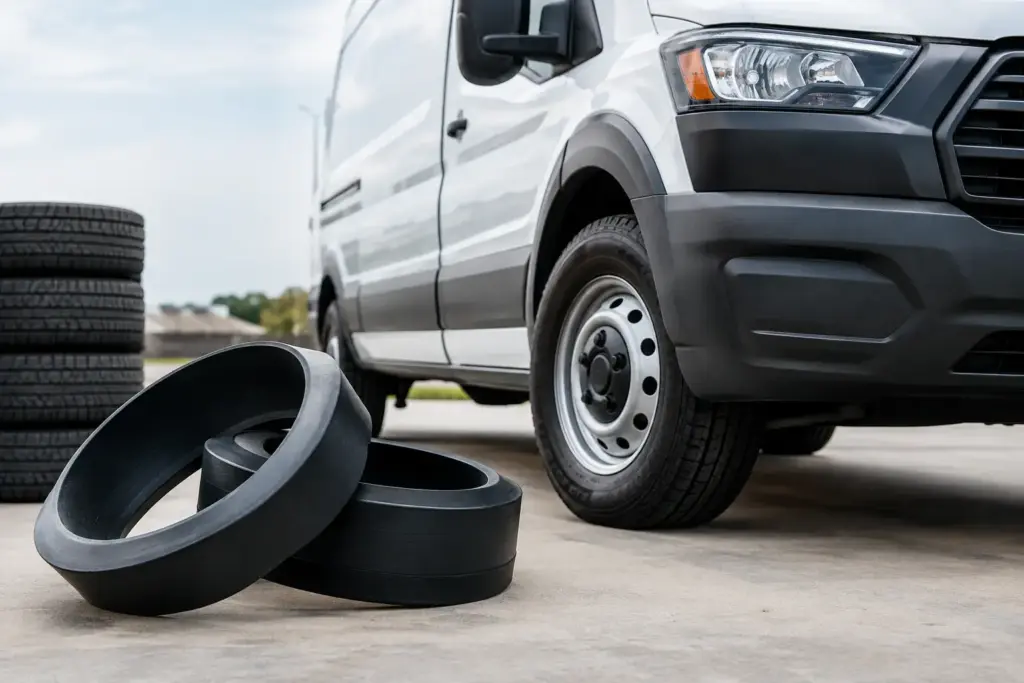
A runflat insert is a rigid or semi-rigid support installed inside a pneumatic tire. When the tire loses air pressure from a puncture, valve failure, or sidewall damage, the insert supports part of the vehicle weight and helps keep the tire on the wheel. That gives the driver limited mobility to leave an unsafe area, reach a repair point, or complete a controlled recovery.
The key word is limited. A runflat system is designed for temporary operation after air loss. It does not make a tire indestructible, and it does not allow normal speed, normal distance, or normal payload on a flat tire. Heat, speed, load, terrain, and the amount of tire damage all determine how far a vehicle can travel after a deflation event.
Many military-spec systems are built around a two-piece or multi-piece insert that locks around the wheel center. Others use a continuous rubber or composite support ring. The design depends on the wheel and tire package. Some systems are tied to specialized military wheels, while others are available for selected commercial wheel configurations.
Where Runflats Make Sense
Runflat inserts are most useful when downtime, recovery access, or safety carries a real cost. Common applications include military vehicles, armored vehicles, emergency response units, utility fleets, remote-site service trucks, off-road support rigs, and certain commercial vehicles operating away from paved roads.
For a vehicle that rarely travels beyond local roads and can safely pull over for a tire change, standard tires, a spare, and roadside support may be the more economical choice. Runflats add weight, installation cost, and servicing requirements. They earn their place when the vehicle needs to keep moving after a failure rather than immediately stop.
Off-road users should also separate puncture resistance from runflat capability. A heavy-duty tire with a strong carcass may resist some trail damage, but it will not support the vehicle once it is fully deflated. Conversely, a runflat insert can provide temporary support after air loss, but it does not prevent tread cuts, sidewall tears, or wheel damage.
Guide to Runflat Tire Inserts: Start With Fitment
Fitment begins with the complete assembly, not just the tire diameter printed on the sidewall. Before sourcing inserts, confirm the tire size, wheel diameter, wheel width, wheel construction, bolt pattern, center profile, load requirement, and whether the wheel is approved for the insert system.
A tire marked 37×12.50R16.5, for example, cannot be assumed compatible with every 16.5-inch runflat. The wheel contour, bead seat profile, and internal clearance matter. Military wheels often use specialized multi-piece designs or bead-retention features that are not found on conventional one-piece wheels.
Know whether your wheel is a single-piece wheel, a two-piece military wheel, a beadlock wheel, or a split-rim assembly. These are not interchangeable categories. A beadlock holds the tire bead mechanically, while a runflat insert supports the tire after pressure loss. Some wheel packages use both, but one does not automatically replace the other.
Verify the tire’s load range and operating pressure as well. An insert cannot compensate for an undersized tire or wheel. If a loaded service truck, trailer, or equipment carrier exceeds the tire’s load capacity, the runflat system will be working under conditions it was not designed to handle.
Choose the Right Insert Type
The two most common categories are solid support inserts and multi-piece mechanical runflat systems. Solid support inserts use dense rubber, composite material, or similar construction to carry the load temporarily after deflation. They are common in applications where a specific wheel-and-tire combination has been engineered as a package.
Multi-piece systems generally mount around the wheel center and are secured within the tire cavity. They may be easier to service on compatible wheels, particularly in military vehicle applications where the wheel was built for that design. Their performance depends heavily on correct assembly, hardware condition, lubrication, and torque procedure.
Do not buy used inserts by appearance alone. Check for cracking, distortion, missing hardware, damaged locking surfaces, excessive wear, and evidence of heat exposure. Used military surplus can offer strong value when the parts are correctly identified and inspected, but an unknown insert with incomplete hardware can create an expensive mounting problem.
New old stock can be a practical option, though storage history still matters. Rubber and polymer components age, especially if stored in direct sunlight, extreme temperatures, moisture, or chemical exposure. Date codes, part numbers, and manufacturer specifications should be part of the purchasing decision.
Installation Is a Shop Job
Runflat installation requires the right equipment and experienced tire technicians. Inserts can be difficult to compress, position, and seat correctly. Forcing parts with improper tools can damage the tire bead, wheel, insert, or mounting machine.
The assembly process may require approved lubricant, correct fasteners, specified torque values, and a particular inflation procedure. If the wheel uses a multi-piece or split-rim design, treat it with additional caution. These assemblies can be hazardous if handled incorrectly. Use trained personnel, proper safety restraints, and the manufacturer’s procedures for that wheel and tire system.
After mounting, inspect the bead seating, wheel hardware, valve components, and tire pressure. If the vehicle uses a central tire inflation system, confirm that the system is functioning and that the wheel and valve arrangement are compatible. A runflat insert does not repair a leaking valve, damaged air line, or faulty inflation control system.
Operating Limits After a Flat
Every runflat system has limits. Manufacturers may specify a maximum speed, distance, load, and duration for operation with zero pressure. Those limits are not suggestions. A deflated tire flexes differently, generates more heat, and can break down quickly when driven too fast or too far.
When a pressure loss occurs, reduce speed immediately, avoid sharp turns and sudden braking, and get the vehicle to a safe service location. On loose ground, the insert may help prevent the tire from collapsing completely, but steering response and traction can still change significantly. On pavement, a flat tire can overheat and shed material even when the insert is carrying the load.
After any runflat event, inspect the tire internally and externally. In many cases, the tire should be removed from service rather than reinflated and returned to duty. Hidden casing damage, bead damage, liner wear, and heat exposure may not be obvious from the outside.
Maintenance and Inventory Planning
For fleet operators, runflat planning starts before a failure. Keep accurate records of tire sizes, wheel part numbers, insert part numbers, compatible hardware, and installation notes. If the fleet includes mixed vehicles, do not assume a spare insert or wheel assembly fits every unit.
A practical stock plan includes replacement tires, serviceable wheels, correct insert hardware, valves, and any specialized mounting components. For remote operations, a complete mounted spare assembly can be more useful than carrying loose components that cannot be installed in the field.
Inspect stored assemblies regularly. Check inflation pressure, sidewall condition, wheel corrosion, missing hardware, and signs that the tire has shifted on the rim. For auction, surplus, or takeoff inventory, confirm exactly what is included. A wheel with an insert may not include a usable tire, and a tire-and-wheel package may not include all required runflat hardware.
The right runflat setup is a working system, not a single part. Match the insert to an approved wheel and tire package, respect its limits, and have a service plan ready before the vehicle leaves the yard.
