

Uncategorized
Flotation Tires Versus Duals for Heavy Work
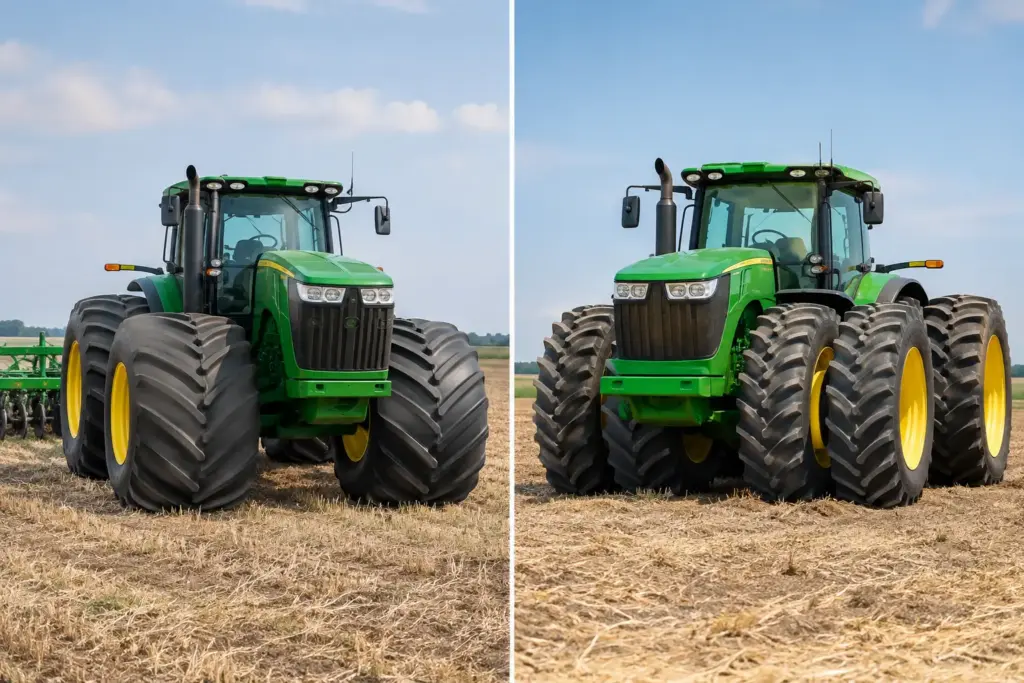
Oct
A loaded spreader cutting deep tracks across a wet field is not fixed by adding tread depth alone. The tire layout carries as much weight in the decision as the tire itself. When comparing flotation tires versus duals, the real question is how your machine needs to carry weight, turn, travel, and clear obstacles across its full working cycle.
A wide flotation tire and a dual-wheel setup can both reduce the punishment that heavy equipment delivers to soft ground. They do it differently, and each brings compromises in width, maintenance, ride, clearance, and purchase cost. The right setup is the one that fits the machine, the load, the ground conditions, and the roads between jobs.
Flotation Tires Versus Duals and Ground Pressure
Flotation tires use a wide section width, a larger air chamber, and often a lower operating pressure to spread a load across a bigger footprint. They are common on manure tankers, spreaders, trailers, harvest equipment, construction equipment, and off-road trucks that routinely work on loose, wet, sandy, or recently tilled surfaces. A single flotation tire can put a large contact patch on the ground without adding a second wheel assembly.
That larger footprint can reduce rutting and help equipment stay on top of soft terrain. It can also limit compaction, particularly when tire pressure is set correctly for the actual axle load. This matters where fields are repeatedly crossed by heavy loads and soil structure affects the next crop.
However, “flotation” is not a guarantee of low compaction. A wide tire that is overinflated for the job can still apply excessive pressure and leave a hard track. Load tables, approved rim width, speed rating, and inflation pressure all need to match the application. A tire that works well at low speed in a field may require higher pressure before a loaded road move.
Duals spread the load across two tires on each side of an axle. On tractors and some commercial or specialized off-road applications, they increase total contact area and can provide strong traction because more lugs are engaged with the surface. Duals can be especially effective where a machine needs pull as well as carrying capacity.
The trade-off is that duals do not create one continuous footprint. The tires run in separate tracks, and the space between them can collect mud, stalks, rocks, and residue. In very soft conditions, that gap can contribute to soil disturbance and make cleaning more difficult. Proper spacing is also critical. Tires that rub, trap debris, or flex into one another will create expensive problems quickly.
Width, Clearance, and Maneuverability
A flotation setup often adds less overall width than a comparable dual arrangement, though this depends on tire size, wheel offset, and axle configuration. That can be a major advantage for equipment that must pass through gates, move on public roads, load onto trailers, or work around buildings and tree lines.
Duals add width outward from the axle. That wider stance can improve stability, particularly on slopes or with tall, top-heavy equipment. But it also creates more exposure. Outer tires are more likely to contact fences, posts, bridge rails, crop rows, and roadside obstacles. On road-going equipment, legal transport width needs to be checked before a purchase is made.
Clearance deserves the same attention. Flotation tires may be taller or wider than the original equipment tires, affecting fender clearance, steering lock, mudguard fit, and suspension movement. On driven axles, a meaningful change in rolling circumference can affect gearing, four-wheel-drive lead and lag, and drivetrain behavior.
With duals, clearance issues tend to show up between the inner and outer tire, at the fender, and around hitch-mounted implements. Wheel hardware, spacers, extensions, clamps, and valve access all have to be planned. A dual setup that looks acceptable while parked can make contact under load or during a tight turn.
Traction and Ride in Real Working Conditions
Flotation tires are built primarily to carry and float. Their tread pattern may be designed for low ground disturbance, self-cleaning, highway travel, or mixed terrain depending on the tire. They can offer a smoother ride over rough ground because the larger air volume absorbs impact. For trailers, spreaders, and non-driven equipment, that can protect the machine and reduce bouncing at speed.
For a powered tractor or off-road vehicle, flotation tires may not match the pulling performance of a purpose-built agricultural tire or a properly configured set of duals. Wide tires can have excellent traction, but tread design and inflation pressure matter more than width alone. A shallow flotation tread may carry a heavy load well but struggle in deep mud where an aggressive lug is needed.
Duals offer a clear benefit when drawbar work requires sustained traction. More tread on the ground can reduce wheel slip and help transfer engine power without relying on a single tire to do all the work. They can also provide some operational backup: if one tire is damaged, the machine may remain mobile long enough to reach a safe repair area. That is not permission to keep working on a failed tire, but it can reduce an immediate recovery problem.
The downside appears during turns. Duals scrub across the ground, especially on hard surfaces and tight headlands. That increases wear and can disturb soil. A wide single flotation tire also scrubs when turned, but there is less inter-tire conflict and fewer sidewall-to-sidewall concerns.
Cost Is More Than the Tire Price
A flotation conversion can require tires, wheels, valve hardware, possible fender changes, and verification that the axle and hubs are rated for the intended load. The initial package may cost more than a standard tire replacement, particularly with large-diameter agricultural, industrial, or trailer sizes.
A dual setup adds its own costs: two tires per side, additional wheels, mounting hardware, spacers or extensions, and more labor. There are also twice as many casings to inspect, rotate, repair, and replace. If one tire in a dual pair wears significantly faster than the other, the mismatch can affect load sharing and service life.
Availability matters when equipment cannot sit. Specialty tire buyers often need a specific size, ply rating, load index, tread type, and wheel pattern rather than a general recommendation. New old stock, quality used tires, takeoffs, and surplus wheel assemblies can make a project affordable, but buyers should confirm age, casing condition, bead condition, repair history, and matching dimensions before building a set.
For commercial operators, calculate cost per operating hour rather than only purchase price. A less expensive setup that causes rut repairs, frequent downtime, poor fuel economy, or premature drivetrain wear is not a bargain. The same applies to an oversized tire package that cannot travel legally or fit onto the transport trailer you already own.
Choose Flotation Tires When Load Carrying Drives the Job
Flotation tires are often the practical choice for heavy implements, trailers, spreaders, and equipment that crosses soft ground but does not depend on the tires for maximum pulling force. They are also a strong option when a single wide tire can provide the required load capacity while keeping the machine within a workable transport width.
They make particular sense for operators trying to limit ruts, reduce ground pressure, and improve ride quality over uneven terrain. Check the tire manufacturer’s inflation table at the highest expected axle load, not the empty-machine weight. If road travel is part of the job, use the speed and pressure requirements for road travel rather than field assumptions.
Choose Duals When Traction and Stability Come First
Duals are usually worth the extra hardware on tractors and machines that pull hard, work across slopes, or need a wider stance for stability. They are familiar, field-serviceable, and available across many agricultural and commercial tire sizes. If the machine already has approved dual-wheel hardware and adequate axle capacity, a dual configuration may be the most straightforward way to increase footprint and traction.
Before fitting duals, measure overall width, inner clearance, fender clearance, and the gap between tires under load. Match tire size, construction, rolling circumference, and wear level as closely as possible within each pair. A mismatched dual pair will not share the load evenly.
Buy to the Machine, Not the Trend
There is no universal winner between flotation tires and duals. A manure tanker moving through wet fields has different needs than a tractor pulling a deep tillage tool, and both differ from an off-road service truck carrying tools over unstable ground. Start with axle weights, duty cycle, terrain, required traction, travel speed, and legal width. Then confirm wheel fitment and load ratings before committing to a tire package.
For hard-to-find flotation, agricultural, industrial, and military-spec sizes, MilitaryTires.ca can be a practical source for surplus inventory, takeoffs, used assemblies, and wheel packages. The best purchase is the one that keeps your equipment moving without asking the tire to do a job its casing, rim, or load rating was never built to handle.
