

Uncategorized
Bias Ply vs Radial Tires: Which Fits the Job?
Jun
If you are comparing bias ply vs radial tires, you are usually not shopping for looks. You are trying to match a tire to a machine, a load, a surface, and a budget. That decision matters more in agricultural, off-road, military, industrial, and commercial use than it does in ordinary passenger driving, because the wrong construction can cost you in ride quality, traction, wear, or sidewall durability.
The short version is simple. Radial tires generally run cooler, ride smoother, and last longer on hard surfaces and at higher speeds. Bias ply tires usually bring stiffer sidewalls, tougher resistance in harsh service, and a lower upfront price in many applications. But simple answers only get you so far. In real-world equipment use, the right choice depends on how and where the tire works.
Bias ply vs radial tires: the core difference
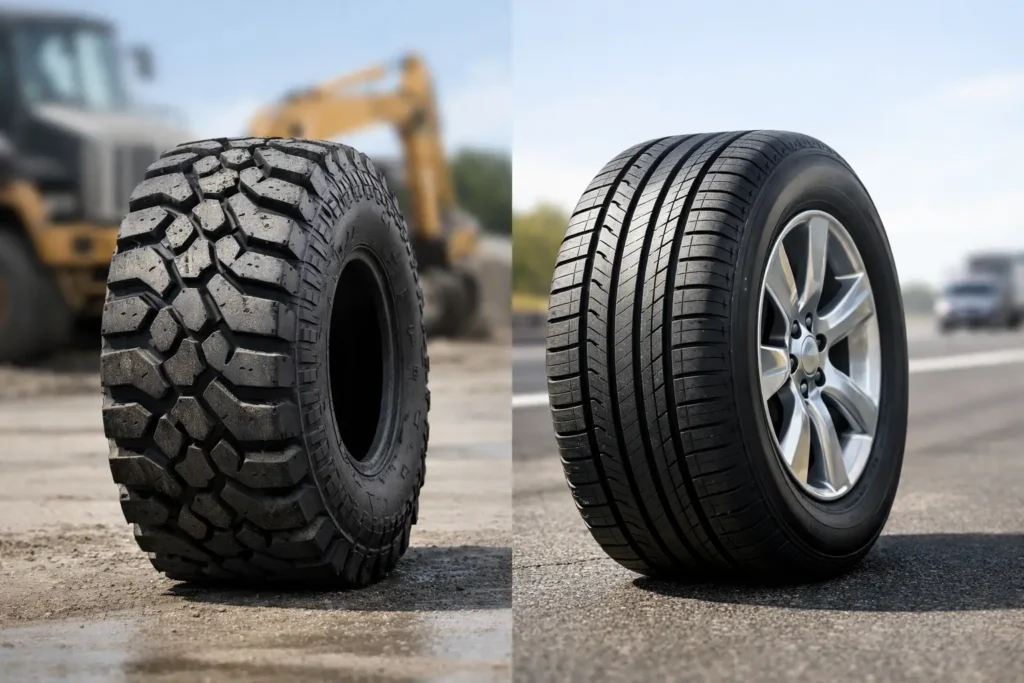
The difference starts inside the casing. A bias ply tire is built with cords laid diagonally across each other, usually at alternating angles. That construction ties the tread and sidewall together, so when the sidewall flexes, the tread flexes too.
A radial tire is built differently. Its cords run straight across from bead to bead, and the tread is stabilized by belts under the tread area. That separates tread function from sidewall function. The sidewall can flex more while the tread stays flatter on the ground.
That one design difference changes almost everything about how the tire behaves. It affects footprint, heat buildup, ride comfort, fuel use, tread wear, and how the tire handles impacts, heavy loads, and rough terrain.
Where bias ply tires still make sense
Bias ply tires are not outdated just because radial tires dominate highway applications. In a lot of specialty categories, bias still earns its place.
If you are running equipment at lower speeds over rough ground, sharp debris, uneven job sites, or off-road terrain, a bias ply casing can be a practical fit. The stiffer sidewall helps in conditions where cuts, bruises, and casing stress are a concern. That is one reason bias tires still show up on military vehicles, trailers, certain farm equipment, industrial machines, and older platforms built around that type of tire.
Bias ply tires also tend to be a straightforward choice when cost control is the main driver. If the machine sees occasional use, limited road mileage, or seasonal operation, the lower acquisition cost can matter more than long-term tread life. For buyers sourcing hard-to-find surplus or specialty inventory, bias ply options can also be easier to match to older wheel setups and original equipment specifications.
That said, bias construction asks for trade-offs. These tires typically build more heat at speed, wear faster on pavement, and do not deliver the same ride quality as radials. If the machine spends a lot of time on roads or runs long distances, those weaknesses show up fast.
Where radial tires usually win
Radial tires became the standard in many commercial and highway applications for good reason. They put more consistent tread on the ground, which generally improves traction, ride comfort, and wear.
For trucks, tractors, and equipment that travel at higher sustained speeds or spend significant time on pavement, radial construction usually makes more operational sense. The lower rolling resistance can help with fuel economy. The cooler running temperature helps under extended use. The flatter footprint often means better tread life and more even wear when inflation is kept in check.
In farm use, radials also have an advantage when flotation and soil protection matter. A radial can produce a broader contact patch at the right pressure, which can reduce compaction compared with a comparable bias tire. That does not mean every farm machine needs radials, but for higher-acreage operations and frequent field work, the case is strong.
Radials are not automatically better in every harsh-use setting, though. They can cost more up front, and in some severe off-road environments, buyers still prefer the feel and toughness profile of a bias casing. If the machine is slow, heavily exposed to sidewall hazards, and not chasing highway miles, bias may still be the better business decision.
Bias ply vs radial tires for specific applications
The fastest way to sort this out is by application, not theory.
For highway trucks and mixed on-road commercial use, radial tires are usually the default choice. They handle speed better, last longer on pavement, and reduce operator fatigue. Fleets that care about cost per mile normally lean radial unless a very specific use case says otherwise.
For agricultural equipment, it depends on the machine and workload. A tractor covering serious acreage, pulling hard, or spending long hours in the field often benefits from radial performance. A wagon, implement, or lower-speed machine with intermittent use may be perfectly well served by bias ply, especially if budget matters.
For off-road and industrial use, there is no blanket answer. Skid steer, loader, telehandler, and job site buyers often balance puncture risk, ride, load handling, and replacement cost. Bias ply may be the right fit on rough surfaces with frequent impacts. Radial may be better where comfort, traction, and service life justify the higher price.
For military vehicles and restoration projects, original fitment matters. Many older military platforms were designed around bias ply tires, and changing over to radial is not always a simple cosmetic upgrade. Handling, stance, load behavior, and clearance can all change. If authenticity or equipment compatibility is part of the job, bias ply may be the correct choice even if radial offers modern-road advantages.
For trailers, bias ply remains common in many lower-speed or specialty uses, while radials are often preferred for longer highway towing. Heat is a major factor here. If the trailer sees regular highway distance, radial construction usually pays back in durability and stability.
Ride, wear, and fuel cost are not small details
A lot of buyers focus first on price per tire. That is understandable, but the real cost is how the tire performs over time.
Radials usually wear longer under steady road use. They also tend to ride smoother, which matters for operator comfort, machine vibration, and even cargo stability. On equipment or trucks that stay in service for long stretches, those gains are real operating value, not marketing talk.
Bias ply tires can still be the better value when the machine does not log enough hours or miles to realize the radial advantage. If the tire is more likely to age out, sit in inventory, or see occasional duty on rough ground, paying extra for radial construction may not return much. That is especially true in surplus, utility, and seasonal equipment categories where uptime and fitment matter more than premium road manners.
Fuel economy follows the same pattern. Radials generally reduce rolling resistance, but that benefit is strongest in higher-speed, longer-distance use. If your machine is operating in yards, fields, gravel lots, or short-cycle service, the fuel difference may not move the numbers much.
What to check before you buy
Construction type is only part of the decision. Load rating, ply rating, size, speed capability, tread pattern, tube-type or tubeless setup, wheel compatibility, and actual service conditions all matter. A radial in the wrong size or load range is still the wrong tire.
You also need to account for inflation practices. Radials are more sensitive to getting the pressure right for the load and application. Bias tires can be more forgiving in some rough-use settings, but they still need to be matched correctly. Poor inflation will ruin either design.
Used, takeoff, and new old stock inventory adds another layer. In specialty categories, buyers often have to weigh ideal construction against actual availability. If you need a hard-to-find military, industrial, or agricultural size, the best option may be the right spec in available inventory, not the perfect theoretical choice on paper. That is where a specialized source like MilitaryTires.ca can make the search a lot shorter.
So which one should you choose?
Choose radial if your priority is road time, longer wear, lower heat, better ride, and overall efficiency. Choose bias ply if your priority is rugged lower-speed service, original equipment compatibility, sidewall stiffness, or a lower buy-in cost.
Most of the time, this is not about which design is best overall. It is about which design fits the job without wasting money. A farm tractor pulling daily field work, a restored military truck, a low-speed industrial unit, and a highway trailer do not need the same answer.
The smart buy is the one that matches the machine, the surface, the speed, and the workload. Start there, and the bias ply versus radial question gets a lot easier to answer.
