

Uncategorized
Best Wheels for Heavy Equipment by Application
Nov
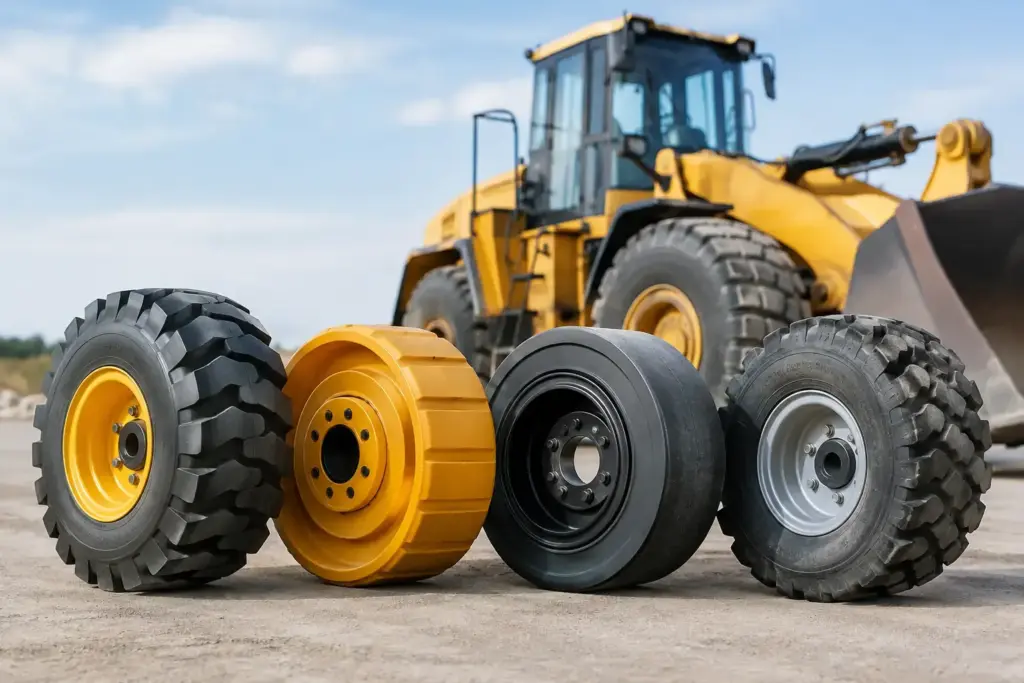
A wheel failure on a loader, grader, telehandler, or farm tractor is rarely just a wheel problem. It can stop a crew, damage a hub, ruin a tire, and turn a routine replacement into a costly downtime event. The best wheels for heavy equipment are not simply the heaviest rims available. They are the wheels that match the machine’s hub, tire, load, terrain, and operating conditions without compromise.
For commercial operators, mechanics, contractors, and equipment owners, fitment comes first. Price matters, especially when buying multiple units, but a bargain wheel with the wrong center bore, bolt circle, offset, or bead configuration is not a bargain once it reaches the jobsite.
Start With the Machine, Not the Wheel Listing
Before comparing brands, condition, or price, identify exactly what the machine requires. Use the wheel markings when available, then confirm against the equipment manual, axle information, or an existing wheel that is known to fit correctly. Do not assume that a wheel fits because it came from a similar-looking machine.
The core fitment details are wheel diameter, rim width, bolt pattern, center bore, offset or backspacing, and load capacity. Tire size also matters. A wheel must support the specified tire section width and bead diameter. For example, a 20.5R25 OTR tire requires a 25-inch bead-seat diameter, but the correct rim width still depends on the tire manufacturer’s approved range and the application.
Offset deserves close attention. A wheel that moves the tire too far outward can increase bearing and steering load. One that places the tire too far inward can create clearance problems with brakes, suspension, frame components, or steering stops. On articulated equipment and machines working in mud or rock, small clearance issues can become expensive quickly.
Confirm the bolt circle and pilot fit
Stud count alone is not enough. Measure the bolt circle accurately and verify the stud-hole style. A wheel may use stud-piloted, hub-piloted, or other mounting arrangements, and those systems are not interchangeable by appearance alone.
The center bore must also match the hub pilot where applicable. A proper pilot fit centers the wheel and helps prevent vibration, uneven clamp load, and stud damage. Never force a wheel over a hub, grind the center bore without engineering approval, or rely on lug hardware to correct an incorrect pilot fit.
Choose Wheel Construction for the Work
Heavy equipment wheels are built for different duty cycles. A quarry loader, a municipal snow-removal unit, a farm tractor, and a military vehicle may all use large pneumatic tires, but their wheel requirements can be very different.
Steel wheels remain the practical choice for many industrial, agricultural, military, and commercial applications. They handle hard use well, are common in surplus channels, and are often easier to source in unusual sizes. Steel is not immune to damage, however. Check for bent flanges, cracks around stud holes, rust-through, prior weld repairs, and bead-seat damage before installation.
Aluminum wheels can reduce unsprung weight and resist corrosion in certain applications, but they are not automatically the right choice for severe-duty equipment. Their benefits are most relevant where weight savings, appearance, or specific corrosion conditions justify the cost. For high-impact work in rock, demolition, or off-road industrial service, the correct steel wheel may be the better operational value.
Multi-piece and specialty wheels require additional care. Many OTR, agricultural, and military applications use assemblies with lock rings, side rings, or other serviceable components. These are not casual shop work. Correct matching components, inspection procedures, inflation restraints, and trained tire service practices are mandatory. Mixing rings and bases from different designs or manufacturers can create a serious safety hazard.
Best Wheels for Heavy Equipment in Different Jobs
There is no universal best wheel because equipment use changes the priorities. The right selection starts with where the machine works, what it carries, and how often it is expected to run.
Construction and earthmoving equipment
Loaders, graders, scrapers, dumpers, and compactors need wheels built for repeated loading, side stress, and rough ground. OTR wheel assemblies should be selected around the tire’s ply rating or radial load capability, inflation requirement, and intended service. A wheel that works on a hard-packed yard may not hold up in sharp aggregate or a high-cycle quarry environment.
For this equipment, inspect flange condition closely. Rocks and debris can bend a flange or damage the bead seat, leading to slow leaks and tire failure. If the machine operates under constant heavy loads, avoid wheels with unknown repairs or questionable history unless they have been professionally evaluated for the application.
Agricultural equipment
Tractors, sprayers, combines, and implements often need wheel configurations that protect soil while carrying large loads. Rim width affects tire footprint and sidewall shape, which affects traction, flotation, and field compaction. A wheel that is too narrow or too wide for the tire can reduce performance even if the tire can be mounted.
Adjustable centers, dual-capable wheels, and wide flotation setups are common in agriculture. Here, track width and offset can be as important as load rating. Verify fender, implement, and row-crop clearance before changing wheel width or tire section width.
Forklifts, telehandlers, and industrial yard equipment
Industrial machines usually run in tighter spaces and can impose high point loads on wheels during lifting and turning. The wheel must handle the rated axle load and the forces created by load shifts. Sidewall clearance, brake clearance, and hub dimensions are critical, especially on telehandlers and rough-terrain forklifts.
Solid or foam-filled tire setups can change the loads transmitted to the wheel because they offer less cushioning than pneumatic tires. If converting a machine from pneumatic to solid tires, confirm that the wheel and machine are approved for the new setup.
Military, utility, and off-road vehicles
Military-spec and utility vehicle wheels may use uncommon bolt patterns, beadlock designs, run-flat systems, and tire sizes that are difficult to replace through standard tire channels. Original-spec wheels are often the cleanest solution for restoration, fleet maintenance, or off-road builds because they preserve the correct hub interface and tire system.
A surplus wheel can be a strong value in this category, but condition needs to be judged honestly. Surface rust is one thing. Cracked centers, damaged beadlock hardware, distorted flanges, or missing run-flat components are another. Buy based on usable specifications and condition, not just the fact that the wheel is military surplus.
New, Used, and New Old Stock Wheels
Condition is a purchasing decision, not a footnote. New wheels offer the clearest path when a machine has demanding uptime requirements or safety-sensitive service. They may also be necessary when the wheel is part of a matched system with specific hardware, seals, or bead components.
Used wheels can make sense for fleet spares, older equipment, restorations, seasonal machines, and budget-conscious repairs. The trade-off is inspection time. Ask for clear photos of the front and back of the wheel, bead seats, stud holes, valve area, and any visible repairs. Confirm whether the wheel has been tested, whether it includes components such as clamps or rings, and whether it is sold as a bare wheel or complete assembly.
New old stock can offer an excellent middle ground when the correct discontinued size is hard to find. It may be unused, but age and storage conditions still matter. Check for corrosion, storage damage, deteriorated seals, missing hardware, and compatibility with current tire and wheel service components.
Do Not Buy by Diameter Alone
Two wheels with the same nominal diameter can have completely different applications. A 20-inch wheel is not automatically compatible with every 20-inch tire or every machine using that diameter. Bead-seat profile, rim width, offset, center design, and mounting details can all differ.
Before placing an order, have these details ready:
- Equipment make, model, and axle position
- Current tire size and the tire size you intend to run
- Wheel diameter and width markings
- Bolt count, bolt-circle measurement, and center-bore measurement
- Offset or backspacing, plus clearance concerns
- Required load rating and operating environment
This information reduces back-and-forth and helps identify hard-to-find inventory correctly. It is particularly useful when sourcing surplus OTR, agricultural, military, or commercial wheels where part numbers may be incomplete or no longer current.
Think About the Complete Wheel and Tire System
A wheel is only one part of the assembly. The tire, tube or tubeless setup, valve hardware, bead components, inflation pressure, and axle rating all need to work together. A high-capacity tire cannot compensate for an underspecified wheel, and a heavy-duty wheel cannot make an incorrect tire safe for the load.
For fleets and wholesale buyers, standardizing where possible can lower operating costs. Keeping compatible spare wheels on hand for common machines reduces downtime and prevents rushed fitment decisions. For less common equipment, buying an extra matching wheel when inventory is available can be smart, especially when dealing with discontinued military or industrial sizes.
MilitaryTires.ca carries specialized surplus, used, and new old stock wheel inventory for buyers who need more than standard passenger or light-truck fitments. Availability changes, so the practical approach is to verify every specification before committing to a purchase.
The right wheel should make the next tire service easier, keep the machine working, and hold up to the job it was built to do. Measure first, inspect condition closely, and buy the wheel that fits the equipment rather than the one that merely looks close.
