

Uncategorized
Are Used Industrial Tires Reliable for Work?
Oct
A used industrial tire can be a smart purchase or an expensive downtime event. The difference is not the word “used.” It is the tire’s actual condition, its prior job, and whether its specifications match the machine. So, are used industrial tires reliable? Yes, when they are properly inspected, correctly rated, and put back into an application they can handle. No, when a buyer chases low price while ignoring casing damage, age, load capacity, or fitment.
For contractors, farms, yards, warehouses, and off-road operators, used tires often make sense because industrial sizes are costly and difficult to source. Surplus inventory, takeoffs, and military-spec tires can offer substantial tread and proven construction at a lower acquisition cost. Reliability still has to be earned tire by tire.
Are Used Industrial Tires Reliable in Demanding Service?
Reliability depends first on the type of work. A used tire with sound sidewalls and 70 percent usable tread may be a strong value on a loader, trailer, farm implement, or yard vehicle operating at controlled speeds. That same tire may be the wrong choice for a high-speed commercial application, a machine that runs continuously under maximum load, or equipment where a failure creates a serious safety risk.
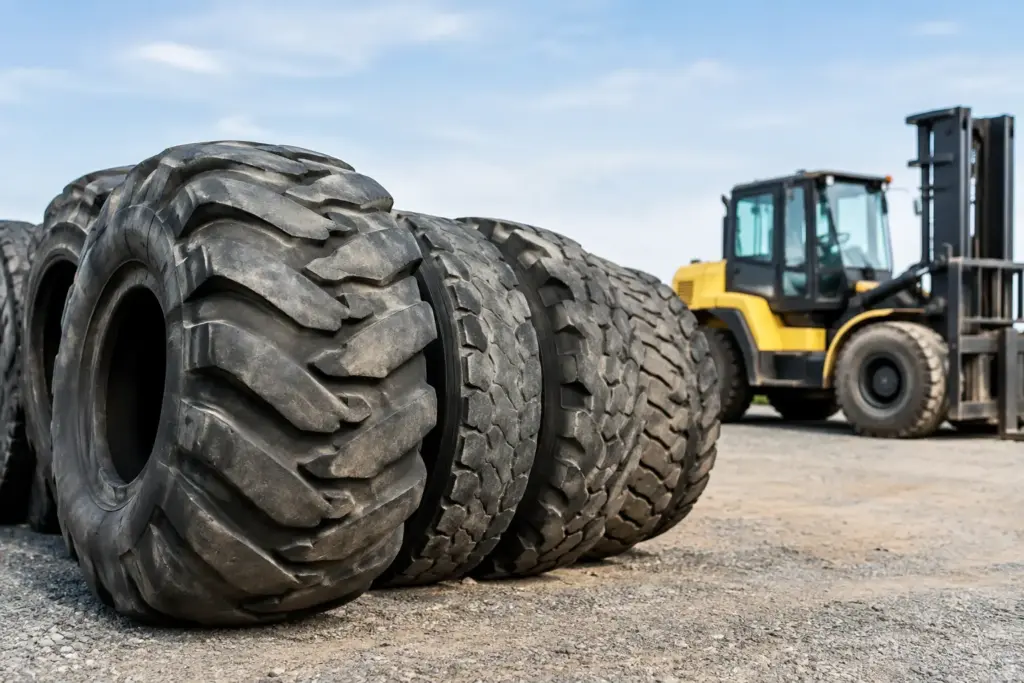
Industrial tires are not all built alike. Pneumatic forklift tires, solid forklift tires, OTR loader tires, skid steer tires, agricultural tires, military takeoffs, and truck tires have different duty cycles and failure points. A tire that looks aggressive or has deep tread is not automatically suitable for the machine in front of it.
A used tire is most dependable when its previous service was less severe than its next service. For example, a lightly used radial tire removed during an equipment upgrade may have a better remaining service life than a visually similar tire that spent years overloaded on sharp aggregate. Ask what equipment it came from, where it was used, and why it was removed when that information is available.
Condition Matters More Than Tread Depth Alone
Tread depth is easy to see, so it gets too much attention. It matters for traction, mud clearing, braking, and resistance to wear, but it does not tell the full story. The casing is the working structure of the tire. If the casing has been compromised, a tire with attractive tread can still be a poor buy.
Start with the sidewalls. Look for deep cuts, exposed cord, cracking that reaches into the rubber, bulges, separations, and evidence of bead damage. Sidewall repairs deserve special caution because the sidewall flexes under load. A repair that may be acceptable in one low-speed, limited-duty setting may not be appropriate for another application.
Then inspect the tread area for puncture repairs, irregular wear, missing lugs, chunking, and stone drilling. A professionally repaired puncture in the crown area is different from multiple old repairs, a large injury near the shoulder, or a repair with visible deterioration. Be direct about the tire’s job: carrying a light implement across a property is not the same as supporting a heavily loaded machine through a full shift.
The bead area also matters. Torn bead rubber, crushed sections, corrosion from a damaged wheel, or signs that the tire was repeatedly run flat can cause mounting problems and air loss. On tubeless assemblies, a poor bead seat can turn a bargain into repeated service calls.
A practical inspection checklist
Before putting a used industrial tire into service, verify these points:
- The tire size, ply rating or load index, and speed rating match the equipment requirement.
- The casing has no exposed cord, bulges, major sidewall damage, or separation.
- Remaining tread is even enough for the intended traction and wear life.
- Repairs are disclosed, visible, and appropriate for the planned duty cycle.
- The date code, storage history, wheel condition, and matching requirements have been considered.
If a seller cannot provide clear photos, dimensions, condition notes, or answers on major defects, treat that as a purchasing risk. Specialty tires are often hard to replace, but that is a reason to inspect carefully, not a reason to accept unknown condition.
Age and Storage Can Shorten Service Life
A tire can have plenty of tread and still be too old or too weathered for demanding use. Rubber changes over time, particularly when tires sit outdoors in sun, heat, ozone, moisture, or chemical exposure. Industrial and military surplus stock may have low use but long storage periods. That is why buyers should separate “low miles” from “good condition.”
Check the DOT date code where applicable, then inspect the rubber rather than relying on the date alone. Fine surface checking may be manageable on a limited-use machine, while deeper cracking around the sidewall, bead, or tread blocks is a warning sign. Tires stored inside, out of direct sunlight, and away from petroleum products generally hold up better than tires left exposed for years.
New old stock deserves the same practical review. It may be unused, but it is not automatically equivalent to a current-production tire. For restoration, low-hour equipment, trailers, or specialized applications, new old stock can solve a hard-to-find fitment problem. For daily production equipment, verify age, specifications, and storage before treating it as a long-term replacement.
Load Rating and Inflation Are Non-Negotiable
The most reliable used tire will fail early if it is undersized, underinflated, overloaded, or mounted on the wrong rim. Industrial equipment places intense stress on tires during turns, lifting, side loading, and travel over uneven ground. The machine’s tire placard, operator manual, and wheel specifications should guide the purchase, not the outside appearance of the tire.
Match the full specification: nominal size, overall diameter, section width, construction type, load rating, approved rim width, and intended inflation pressure. Do not assume two tires with similar markings carry the same load. A radial and bias-ply tire can behave differently, and changing construction may affect ride, traction, heat buildup, and handling.
On four-wheel-drive machines and equipment with paired tires, matching matters. Significant differences in rolling circumference can create drivetrain strain, uneven pull, or poor stability. When replacing one tire, measure the remaining tires and compare actual diameter, not just labeled size. On dual assemblies, use compatible tires with similar wear and inflation characteristics.
When Used Tires Are a Strong Buy
Used industrial tires are often a practical choice for equipment with seasonal use, low annual hours, controlled jobsite travel, or a temporary replacement need. They also make sense when a specialty size is discontinued, when an older machine needs period-correct fitment, or when a fleet needs a cost-controlled spare for noncritical equipment.
Recognized brands can be especially attractive in used and surplus inventory because their casings and industrial designs are familiar to many tire service shops. That does not eliminate the need for inspection, but it can make specifications, mounting guidance, and replacement planning easier.
MilitaryTires.ca carries surplus, takeoff, and specialty tire inventory for buyers who need uncommon industrial, off-road, agricultural, and military fitments. The practical approach is to review the listing condition, confirm the markings, and ask for details before committing to a tire for a specific machine.
When to Buy New Instead
Buy new when the machine is a critical revenue producer, operates at high speed, carries people, works near the tire’s maximum rated load, or runs in conditions where failure would stop a crew or damage equipment. New tires also make more sense when you need a matched set, predictable wear life, manufacturer warranty coverage, or current production dates.
Do not use a questionable used tire as a shortcut for safety-critical service. A tire that fails under a loaded forklift, loader, truck, or agricultural machine can damage rims, equipment, product, and people. Savings disappear quickly when downtime, service labor, and emergency replacement enter the picture.
A reliable used industrial tire is not the cheapest tire available. It is the tire with enough remaining structure, correct specifications, and a duty cycle that leaves a margin for the work ahead. Inspect it like a working component, mount it correctly, maintain the proper pressure, and let the application decide whether used is the right value.
