

Uncategorized
Used Semi Tire Bundles: Buy Smarter for Fleets
Aug
A truck parked for a tire shortage is not earning. When several positions need replacement at once, used semi tire bundles can be a practical way to get matching commercial tires without paying new-tire pricing across the whole axle group. The value is real, but only when the bundle matches the truck, the route, and the job.
A bundle is not automatically a bargain because it has a low per-tire price. The right purchase starts with the tire’s exact size, remaining tread, load capacity, casing condition, and the delivered cost. Buyers who check those details before ordering can put usable inventory on the ground quickly. Buyers who skip them can end up with a mismatched set that costs more in mounting, downtime, and early replacement.
What Used Semi Tire Bundles Are Good For
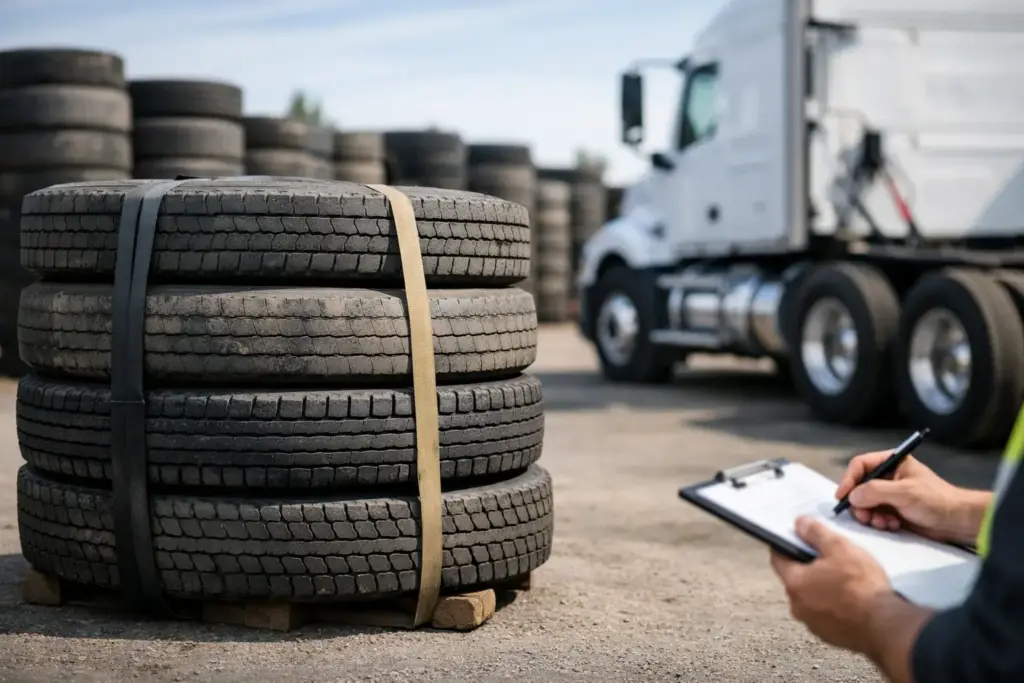
Used commercial tire bundles are groups of two, four, six, eight, or more tires sold together. They may be matched takeoffs from a fleet, surplus inventory, liquidation stock, or used casings removed from trucks, trailers, buses, or specialty equipment. Some bundles are selected as close matches. Others are sold as assorted used inventory, where the buyer needs to inspect sizes and conditions carefully.
They make the most sense when multiple tires are needed for the same application. A fleet manager may need to refresh trailer tires before a busy season. An independent owner-operator may need a matched drive pair after a jobsite route has worn down existing tires. A tire shop or reseller may need commercial inventory it can inspect, mount, and sell locally. In each case, buying a group can reduce the cost per tire and simplify sourcing.
The fit depends on the position. A used trailer tire bundle may be a good value for regional hauling if the tires have even wear, suitable tread depth, and compatible load ratings. Drive tires demand more attention because traction, tread design, and matching circumference affect performance. Steer positions are the least forgiving. For highway trucks, steer tires should be selected with a stricter standard for condition, tread wear, repairs, age, and casing integrity.
Check These Details Before Buying a Used Semi Tire Bundle
Commercial tires are application-specific. Start by matching the tire size shown on the sidewall and on the truck’s tire placard or manufacturer specification. Common sizes such as 11R22.5, 11R24.5, 285/75R24.5, 295/75R22.5, and 275/80R22.5 may look similar at a glance, but they are not interchangeable in every setup. Diameter, section width, wheel fitment, load range, and dual spacing all matter.
Next, confirm the tire type. A rib tread is generally intended for steer or trailer service. A deep-lug drive tire is built for traction and may be better suited to drive axles, gravel routes, winter conditions, or mixed-service work. An aggressive tread does not automatically make a tire better. On a highway trailer, the wrong tread can wear poorly, run noisier, and give up fuel economy.
Tread depth needs context. A tire with usable remaining tread can still be the wrong buy if it has uneven shoulder wear, cupping, feathering, or signs of alignment problems. Ask whether tread depth is measured at the shallowest point or a representative point across the tire. For a set going on the same axle, look for similar tread depth and wear pattern. The closer the match, the easier it is to maintain predictable handling and rotation intervals.
Casing condition is just as important as tread. Review photos and condition notes for cuts, exposed cords, sidewall damage, bead damage, bulges, separations, repairs, weather checking, and evidence of run-flat use. A repair may be acceptable for some applications when performed properly and located in an appropriate area, but it should never be treated as irrelevant. A tire intended for a critical steer position deserves a more conservative standard than a tire used on a low-speed yard trailer.
Age also matters, particularly when a tire has spent time in storage. Read the DOT date code when available. A tire can show good tread and still have age-related cracking or reduced service life. Storage conditions, prior use, inflation history, and exposure all influence a used tire’s remaining value. There is no single age cutoff that fits every commercial application, so weigh the date code alongside the actual visual condition and intended duty cycle.
Matching Matters on Duals and Axles
A semi-truck tire bundle should not be treated as a pile of interchangeable rubber. Dual assemblies need closely matched rolling circumference. Significant differences can force one tire to carry more load, create heat, and accelerate wear. This is especially relevant on drive axles, where mismatched tires can also affect traction and drivetrain performance.
For dual positions, compare size, tread design, tread depth, and overall diameter. The best used bundles provide tires that are close enough to work together without one tire doing more than its share. If a bundle includes a range of tread depths, it may still be useful, but plan how each tire will be assigned. Put the closest pairings together and avoid assuming that every tire in a lot belongs on the same axle.
The same approach applies across an axle. A mixed set can be workable in some trailer or lower-demand applications, but it is not the first choice for trucks that see long highway miles, heavy loads, or demanding weather. Consistency reduces guesswork later.
Do Not Ignore Wheel and Rim Fitment
If the purchase includes wheels or rims, verify bolt pattern, pilot type, offset, diameter, width, and condition before committing. A 22.5-inch commercial tire may require a specific wheel width, and hub-piloted and stud-piloted wheel systems are not interchangeable. Check for cracked rims, bent flanges, corrosion around mounting surfaces, damaged bolt holes, or prior weld repairs.
A tire-and-wheel bundle can save substantial mounting labor and get equipment moving faster. It can also create an expensive problem if the wheel does not fit the hub, brake setup, or dual spacing. Exact fitment beats a rough visual match every time.
Price the Bundle by Delivered Usable Value
The purchase price is only one line in the job. Used semi tire bundles may ship by freight because of weight, quantity, and dimensions. A low auction bid or clearance price can lose its advantage if shipping, unloading, mounting, balancing, tire disposal, and local taxes are not included in the plan.
For a fair comparison, calculate the delivered cost per usable tire. Then compare that figure against the expected remaining service life, not just the cost of a new tire. A lower-tread bundle may be the right choice for a temporary trailer, farm operation, equipment move, or resale inventory. A fleet truck running long distances may justify spending more for deeper, more evenly matched tires with stronger casings.
Buyers should also account for downtime. A bundle that is available now and matches the required specification can be worth more than a cheaper option that leaves a truck waiting. Specialized commercial, military, off-road, and surplus inventory is often purchased because it solves a sourcing problem that standard tire channels cannot fill quickly.
Where Used Bundles Fit Best
Used bundles are often strongest in applications where the buyer understands the equipment and can assign tires according to condition. Trailer fleets, farm operations, yard trucks, vocational trucks, service vehicles, construction support equipment, and tire dealers can all benefit from group purchases. Wholesale buyers may also use bundles to build inventory across common commercial sizes.
They are less suitable when there is no tolerance for variation. High-speed highway steer positions, severe-duty hauling, and equipment with strict manufacturer requirements may call for new tires or a narrowly selected used set. The correct answer depends on axle position, load, route, speed, climate, and maintenance practices.
MilitaryTires.ca carries specialized surplus and used tire inventory for buyers who need commercial, off-road, industrial, agricultural, and hard-to-source fitments. For buyers in the United States and Canada, the advantage is access to inventory that may not be sitting at a local retail tire counter.
Before placing an order, have the truck or trailer specifications in hand, know the axle position each tire will serve, and confirm the quantity needed. A well-matched used bundle can keep equipment working at a sensible cost. A few minutes spent checking fitment and condition is cheaper than discovering the wrong tire once the freight arrives.
