

Uncategorized
Best Skid Steer Tire Patterns for Tough Jobs
Oct
A skid steer can have plenty of hydraulic power and still waste time spinning, sliding, or chewing through tires. The best skid steer tire patterns are not the ones with the deepest lugs or the most aggressive appearance. They are the patterns that match the ground under the machine, the material being moved, and the amount of pavement travel required between jobs.
For contractors, farms, yards, and equipment fleets, tire pattern affects more than traction. It affects ride quality, fuel use, sidewall damage, turning resistance, cleanup time, and how often the machine is parked for tire service. Start with the job site, then choose the tread.
Best Skid Steer Tire Patterns by Surface
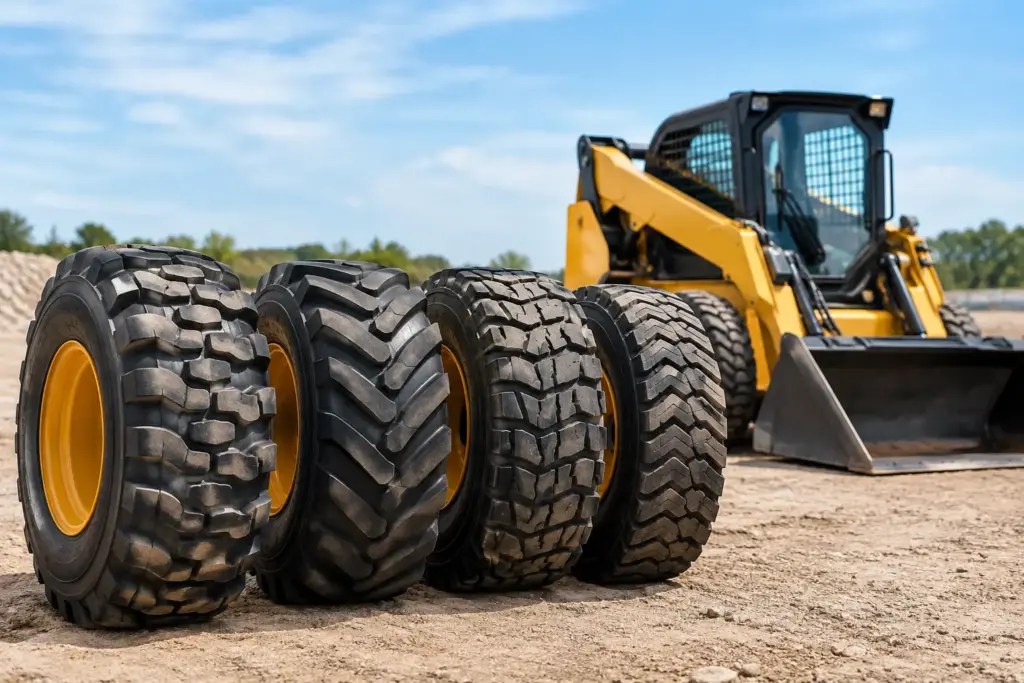
Most skid steer tires fall into a few practical tread categories. There is overlap between them, especially in severe-duty lines, but each pattern has a clear strength and a clear compromise.
Deep lug patterns for dirt and loose material
Deep lug tires use widely spaced, pronounced tread bars to bite into loose soil, clay, sand, and farm ground. They are a practical choice for land clearing, excavation, feedlots, construction sites with soft subgrade, and properties where the machine regularly leaves hard surfaces.
The open void between lugs helps the tire shed loose dirt rather than packing solid. That matters in wet soil, where a shallow tread can quickly turn into a slick, mud-covered surface. Directional lug designs can add forward pulling power, especially when pushing into piles or climbing grades.
The trade-off is hard-surface wear. Deep lugs flex more on concrete and asphalt, can wear unevenly during frequent skid turns, and may ride rougher than a block-style tire. If the loader spends half its working hours on pavement, an aggressive agricultural-style lug may cost more in replacement tires than it saves in off-road grip.
Block and lug patterns for mixed construction work
Block patterns are often the best all-around choice for skid steers that work across dirt, gravel, compacted fill, recycled material, and occasional pavement. Instead of long, open lugs, they use closely spaced tread blocks with reinforced shoulders and a larger rubber contact patch.
This pattern gives a stable feel when carrying palletized loads or operating on compacted job sites. The center tread provides usable traction in loose material, while the blocks resist rapid wear during frequent turns. Many premium pneumatic skid steer tires and heavy-duty skid loader tires use a variation of this design.
For a contractor with one machine moving between residential grading, gravel work, material yards, and loading duties, a block-lug tire is usually the sensible starting point. It will not clear deep mud as well as an open lug tire, and it will not last as long as a smooth industrial tire on concrete, but it covers the broadest range of conditions.
Severe-duty tread patterns for demolition and scrap
Demolition yards, transfer stations, recycling facilities, and scrap operations punish tread differently. The main threat is not always loss of traction. It is punctures, cuts, chunking, and sidewall damage from rebar, broken concrete, sharp metal, and debris.
Severe-duty patterns typically have thick tread blocks, broad shoulders, more rubber between voids, and a flatter profile. The tighter pattern reduces the chance of sharp objects entering deep open channels. Thick tread also helps resist chunking when the machine turns repeatedly on abrasive concrete or crushed material.
A severe-duty tire is heavier and usually more expensive than a standard pneumatic tire. That added carcass strength can be worth it when one puncture stops a crew, delays a truck loadout, or damages a wheel. On clean dirt, however, its tighter tread may not evacuate mud as effectively as a dedicated lug pattern.
Turf and low-impact patterns for finished ground
Turf tread uses many shallow blocks or closely spaced lugs to spread the machine’s weight over more surface area. It is designed for grass, landscaped properties, sports fields, compacted soil, and other sites where ground disturbance matters.
These tires provide predictable steering and a smoother ride on hard ground, but they are not intended for wet excavation or deep loose material. A skid steer can still tear turf while turning, especially with a loaded bucket, so operator technique matters as much as tread selection. Wider tires or flotation-focused sizes can further reduce ground pressure where fitment allows.
Smooth and near-smooth tires for hard surfaces
Smooth industrial patterns are built for concrete, asphalt, warehouse yards, and clean material handling areas. With maximum rubber on the ground, they wear slowly on hard surfaces and offer a stable footprint for loading, sweeping, and forklift-style work.
They are not a mud tire. A smooth tire can lose traction quickly on wet clay, snow, or loose gravel. Still, for a machine that rarely leaves a paved yard, a smooth or near-smooth pattern can provide more service life than an aggressive tread that gets scrubbed down in a few months.
Tread Depth Is Only Part of the Decision
It is easy to assume deeper means better. On a skid steer, that is only true when the surface gives the lugs something to bite into. Deep, widely spaced tread works in loose dirt because it can penetrate and clean itself. On concrete, that same tread flexes, heats up, and wears at the edges during turns.
Look at the tread-to-void ratio. More void area generally improves self-cleaning and loose-ground traction. More rubber contact generally improves wear life and stability on pavement. The right balance depends on where the machine works most of the time, not where it works once in a while.
Shoulder design also matters. Reinforced side lugs protect the tire during side loading and turning, while a rounded shoulder can reduce damage to finished surfaces. For machines that carry heavy buckets or forks, a square, stable shoulder often gives better control than a narrow, aggressive profile.
Match the Pattern to Tire Construction
Tread pattern cannot solve a construction problem. A standard pneumatic tire may have the right lug design for dirt work but still be a poor fit for a debris-filled demolition site. Likewise, a solid tire may eliminate flats but create a harsher ride and put more shock load into the machine on rough ground.
Pneumatic tires are usually the most versatile option. They provide cushioning, reasonable traction, and broad availability in common skid steer sizes. Heavy-duty pneumatic tires add thicker sidewalls and tougher casings for more demanding work.
Foam-filled tires keep the pneumatic tire’s outer tread while removing downtime from flats. They are heavier, do not provide the same cushioning as air-filled tires, and cannot be adjusted with tire pressure, but they make sense where punctures are routine.
Solid and semi-solid tires are built for severe puncture exposure and hard-surface wear. Their tread patterns are often blocky or smooth because they are commonly used in industrial, recycling, and demolition applications. Before fitting them, confirm the machine, wheels, and job conditions can handle the added weight and firmer ride.
How to Choose Without Guessing
Before buying, identify the surface that consumes the most operating hours. A machine that works 70 percent of the time on compacted gravel and 30 percent in loose soil should be equipped for gravel first, not for the occasional muddy job. That is where tire cost accumulates.
Check these four points before selecting a tread pattern:
- Primary surface: mud, soil, gravel, concrete, asphalt, turf, or mixed material.
- Damage risk: nails, rebar, sharp rock, scrap metal, stumps, or sidewall hazards.
- Duty cycle: long travel distances, repeated skid turns, loader work, grading, or stationary loading.
- Tire fitment: size, rim width, load capacity, clearance, machine weight, and attachment weight.
Do not ignore load rating. A tire with an aggressive pattern but insufficient capacity can run hot, flex excessively, and fail early under heavy bucket loads or pallet forks. The tire must carry the machine safely before tread design becomes a performance advantage.
Also consider whether the machine works in winter. A block pattern can perform well on packed snow, while open lugs help in loose snow and soft ground. On ice, neither replaces proper operating practices, added ballast where appropriate, or purpose-built traction solutions.
Get More Life From the Tread You Buy
Even the right pattern will wear fast if it is run flat, overloaded, or used outside its intended surface. Maintain recommended tire pressure for pneumatic tires, inspect tread and sidewalls regularly, and remove embedded debris before it works deeper into the casing.
Avoid unnecessary high-speed spinning. Skid steering naturally scrubs rubber during turns, but spinning on concrete or sharp aggregate burns through tread quickly. Operators who ease into turns, keep loads controlled, and avoid forcing the machine through unsuitable ground get more service from every tire.
For buyers sourcing uncommon sizes, surplus takeoffs, military-spec tires, or heavy-duty industrial inventory, condition matters as much as pattern. Check tread depth, weather checking, repairs, bead condition, casing damage, and whether tires are sold individually or as matched sets. MilitaryTires.ca carries specialized tire and wheel inventory for buyers who need practical options beyond standard retail stock.
The right tire pattern should make the machine more productive without creating a new problem somewhere else. Choose the tread for the ground that pays the bills, verify the load and fitment, and keep a tougher option available when the job site changes.
